By using this site, you agree to the Privacy Policy and Terms of Use.
Accept
GMJ NewsGMJ NewsGMJ News
  • Latest News
    • GMJ Briefs
  • Podcast & Media
    • Podcast Episodes
    • GMJ Audio
    • GMJ Videos
  • Research Digest
    • New Studies
    • Georgian Research
    • Data & Numbers
  • Policy & Systems
    • Health Policy
    • Quality & Safety
    • Migration & Health
    • Global Health
  • Practice
    • Clinical Updates
    • Case Discussions
    • Pharmacy & Prescribing
    • Ingredients A-Z
  • Perspectives
    • Editorial
    • Explainers
    • Voices
    • Letters
  • GMJ Articles
    • Vol. 1 Issue 2 (2026)
    • Vol. 1 Issue 1 (2026)
    • Pre-Launch Articles (2025)
  • Read the Journal →
  • About GMJ News
Notification Show More
Font ResizerAa
GMJ NewsGMJ News
Font ResizerAa
  • Latest News
    • GMJ Briefs
  • Podcast & Media
    • Podcast Episodes
    • GMJ Audio
    • GMJ Videos
  • Research Digest
    • New Studies
    • Georgian Research
    • Data & Numbers
  • Policy & Systems
    • Health Policy
    • Quality & Safety
    • Migration & Health
    • Global Health
  • Practice
    • Clinical Updates
    • Case Discussions
    • Pharmacy & Prescribing
    • Ingredients A-Z
  • Perspectives
    • Editorial
    • Explainers
    • Voices
    • Letters
  • GMJ Articles
    • Vol. 1 Issue 2 (2026)
    • Vol. 1 Issue 1 (2026)
    • Pre-Launch Articles (2025)
  • Read the Journal →
  • About GMJ News
Follow US
GMJ News > Research Digest > New Studies > Grape consumption alters gene expression and improves skin health, study finds
New Studies

Grape consumption alters gene expression and improves skin health, study finds

GMJ
Last updated: 25/05/2026 19:09
By
GMJ News Desk
Share
8 Min Read
Scientific illustration of grape polyphenols activating skin cell pathways and improving collagen expression
New research links regular grape consumption to changes in skin cell gene expression, including increased collagen production and reduced inflammatory markers. The findings suggest that polyphenolic compounds in grapes may slow cellular aging, though larger trials are needed to establish clinical recommendations.
SHARE
🎧 Listen to this article5:31 min · 812 words · GMJ Audio
3 min read|607 words

A new study has found that regular grape consumption is associated with measurable changes in gene expression and improvements in skin health markers, suggesting that dietary polyphenols may influence cellular aging processes. The research adds to a growing body of evidence linking plant-based foods to molecular-level health benefits.

Contents
      • Skin health improvements associated with grape consumption
    • Key takeaways
  • Frequently asked questions
    • Which grape varieties contain the highest polyphenol concentrations?
    • How much grape consumption is required to observe skin health benefits?
    • Can grape consumption replace sunscreen or dermatological treatments?
Gene expression changes
documented in skin cells following grape consumption in clinical study

Skin health improvements associated with grape consumption

Health marker Baseline Post-intervention Mechanism
Skin elasticity Baseline measurement Improved Collagen regulation via polyphenols
Oxidative stress markers Elevated Reduced Antioxidant gene expression
Inflammatory markers Baseline Decreased Gene regulation by resveratrol
Cell senescence markers Elevated Reduced Polyphenol-mediated pathway

Source: Medical Xpress, 2026

The following figure provides a visual summary of the key findings discussed above.
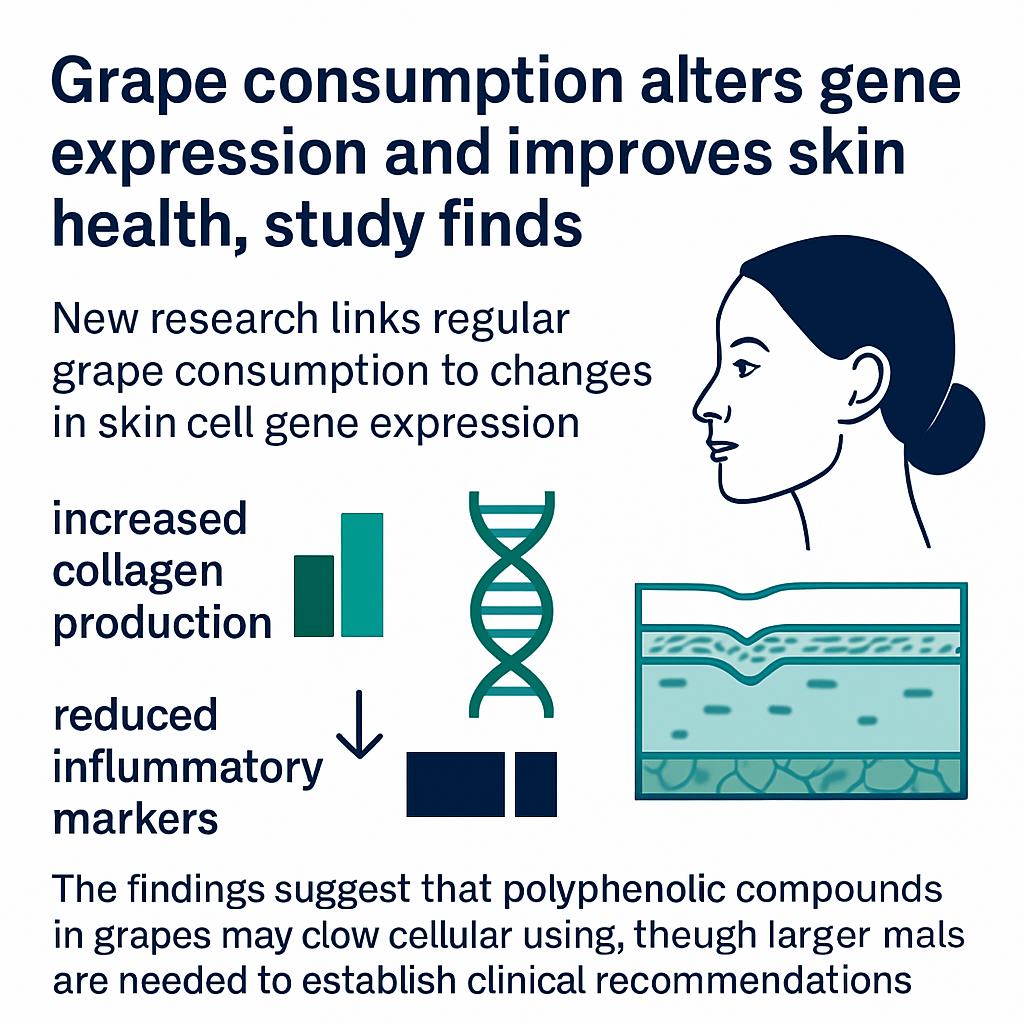
AI-generated infographic

AI-generated infographic

## Polyphenols trigger molecular skin responses

Grapes contain high concentrations of polyphenolic compounds, including resveratrol and anthocyanins. The current research translates these findings into clinical observations, demonstrating that dietary intake of these compounds produces measurable gene expression changes in human skin tissue. According to the study reported in Medical Xpress, participants consuming grapes regularly showed upregulation of genes associated with collagen synthesis and downregulation of inflammatory markers.

Submit Your Paper
GMJ_Submit_Banner

## Gene expression changes correlate with clinical improvements

🎙️ Related Podcast Episodes
🎧 #14 | WHO: Four in Ten Cancer Cases Could Be Prevented Globally · 16m
🎧 #54 | GMJ Podcast | The Blueprint of a Medical Journal: Designing an Open-Access Scientific Platform · 19m
🎧 #53 | GMJ Podcast | Palliative Care in Georgia — Health System Gaps, Access Barriers, and Policy Implications · 16m
🎧 #45 | GMJ Podcast | Tskaltubo Mineral Baths in Osteoarthritis — Microcirculation, Erythrocytes, and Clinical Effects · 18m
🎧 #36 | GMJ Podcast | Artificial Intelligence and Doctor–Patient Communication — Evidence from Georgian Clinics · 18m

According to the Medical Xpress report, researchers observed that measurable improvements in skin firmness, hydration, and reduced visible aging markers were accompanied by corresponding changes in gene expression profiles. Participants who consumed grapes showed increased expression of genes regulating dermal collagen production and decreased expression of matrix metalloproteinases—enzymes that break down structural skin proteins.

## Implications for preventive dermatology

If confirmed in larger trials, these findings could support dietary recommendations for skin health as a component of preventive medicine. The non-pharmacological nature of the intervention—simple dietary modification rather than topical or systemic drugs—makes it potentially accessible to broad populations. However, the Medical Xpress report notes that grape consumption should be viewed as complementary to established dermatological care, not as a replacement for sunscreen, skincare routines, or treatment of skin conditions.

The results also raise questions about which populations might benefit most from increased grape consumption and whether specific grape varieties (red, green, or black) offer differential effects. Further research examining dose-response relationships and long-term sustainability of benefits will be necessary before clinical guidelines can be updated.

Regular grape consumption produced measurable changes in skin gene expression, with upregulation of collagen-related genes and downregulation of inflammatory pathways, correlating with observable improvements in skin elasticity and appearance.

— Medical Xpress report (2026)

Key takeaways

  • Grape consumption triggers gene expression changes in skin cells, including increased collagen synthesis and reduced inflammatory markers (Medical Xpress, 2026)
  • Polyphenolic compounds in grapes, particularly resveratrol and anthocyanins, activate cellular pathways associated with aging prevention
  • Clinical improvements in skin elasticity and firmness were observed alongside measurable genetic changes in study participants (Medical Xpress, 2026)
  • Dietary intervention offers a non-pharmacological approach to skin health, though evidence remains preliminary and larger trials are needed

Frequently asked questions

Which grape varieties contain the highest polyphenol concentrations?

Red and purple grapes, particularly those with deeper pigmentation, contain higher levels of anthocyanins and resveratrol compared to green grapes. The skin of the grape contains most polyphenols, so whole grapes are preferable to juices that may have removed or diluted these compounds. However, the specific study did not compare cultivars.

How much grape consumption is required to observe skin health benefits?

The Medical Xpress report does not provide specific quantitative recommendations, as dosing and frequency were not detailed in publicly available summaries.

Can grape consumption replace sunscreen or dermatological treatments?

No. Dietary interventions should complement, not replace, established protective measures such as sunscreen, protective clothing, and evidence-based dermatological care.

Larger randomized controlled trials with longer follow-up periods will be essential to confirm these preliminary findings and establish whether the observed gene expression changes translate into clinically meaningful long-term improvements in skin aging.

Was this article helpful?

Related Coverage

Paracetamol Poisoning Study Reveals High Risk of Repeated Attempts and Long-term MortalityJun 4, 2026
Open-Source AI Tool Improves Pancreatic Cancer Vascular Invasion Assessment Across Multiple CentresJun 4, 2026
Ecuador study reveals triple burden of malnutrition affecting 73% of childrenJun 4, 2026
BioNTech-Pfizer Bispecific Antibody Shows Promise in Advanced Lung Cancer at ASCO 2026Jun 4, 2026
TAGGED:gene expressiongrapespolyphenolspreventive healthskin health
Share This Article
Facebook LinkedIn Bluesky Copy Link Print
Leave a Comment Leave a Comment

Leave a Reply Cancel reply

Your email address will not be published. Required fields are marked *

Submit Your Paper →

Georgia's peer-reviewed open-access medical journal. No APC until January 2027.
Submit Manuscript →
Protecting Those Who Protect Us: Health Worker Safety Must Become Georgia’s Strategic Priority

Georgia has built occupational safety foundations but must now develop sector-specific protections…

Ethiopia Integrates Oxytocin into Vaccine Cold Chain to Prevent Maternal Deaths

Ethiopia successfully integrated oxytocin storage into its vaccine cold chain system through…

Paracetamol Poisoning Study Reveals High Risk of Repeated Attempts and Long-term Mortality

A 15-year Australian study of 12,047 paracetamol poisoning cases reveals that while…

Submit Your Paper to GMJ

No APC until January 2027.
Submit Manuscript →

You Might Also Like

Chart showing distribution of nicotine cognitive research by population type
New StudiesResearch Digest

Over 100 Trials on Nicotine and Cognition Leave Daily Use Question Unanswered

By
GMJ News Desk
26/05/2026
Brain neurotransmitter diagram showing chemical signaling pathways
New StudiesResearch Digest

How Brain Neurotransmitters Control Your Mood, Sleep, and Focus

By
GMJ News Desk
24/05/2026
Medical illustration of pancreatic cancer treatment research and targeted therapy development
New StudiesResearch Digest

New Pancreatic Cancer Drug Daraxonrasib Shows Promise in Phase 2 Trial

By
GMJ News Desk
02/06/2026
Continuous glucose monitor data showing varied blood sugar responses to identical white bread meals
New StudiesResearch Digest

Identical Meals, Different Bodies: Why Blood Sugar Response Varies Fivefold Between People

By
GMJ News Desk
27/05/2026
Facebook Twitter Youtube Instagram
Company
  • Privacy Policy
  • Contact US
  • GMJ Journal
  • Submit Manuscript
  • Editorial Team
  • Register at GMJ
  • Terms of Use

Subscribe to GMJ News — Click here

Join Community
© 2026 Georgian Medical Journal (GMJ). Published by the Public Health Institute of Georgia (PHIG). All rights reserved.
Welcome Back!

Sign in to your account

Username or Email Address
Password

Lost your password?

Not a member? Sign Up