By using this site, you agree to the Privacy Policy and Terms of Use.
Accept
GMJ NewsGMJ NewsGMJ News
  • Latest News
    • GMJ Briefs
  • Podcast & Media
    • Podcast Episodes
    • GMJ Audio
    • GMJ Videos
  • Research Digest
    • New Studies
    • Georgian Research
    • Data & Numbers
  • Policy & Systems
    • Health Policy
    • Quality & Safety
    • Migration & Health
    • Global Health
  • Practice
    • Clinical Updates
    • Case Discussions
    • Pharmacy & Prescribing
    • Ingredients A-Z
  • Perspectives
    • Editorial
    • Explainers
    • Voices
    • Letters
  • GMJ Articles
    • Vol. 1 Issue 2 (2026)
    • Vol. 1 Issue 1 (2026)
    • Pre-Launch Articles (2025)
  • Read the Journal →
  • About GMJ News
Notification Show More
Font ResizerAa
GMJ NewsGMJ News
Font ResizerAa
  • Latest News
    • GMJ Briefs
  • Podcast & Media
    • Podcast Episodes
    • GMJ Audio
    • GMJ Videos
  • Research Digest
    • New Studies
    • Georgian Research
    • Data & Numbers
  • Policy & Systems
    • Health Policy
    • Quality & Safety
    • Migration & Health
    • Global Health
  • Practice
    • Clinical Updates
    • Case Discussions
    • Pharmacy & Prescribing
    • Ingredients A-Z
  • Perspectives
    • Editorial
    • Explainers
    • Voices
    • Letters
  • GMJ Articles
    • Vol. 1 Issue 2 (2026)
    • Vol. 1 Issue 1 (2026)
    • Pre-Launch Articles (2025)
  • Read the Journal →
  • About GMJ News
Follow US
GMJ News > Research Digest > New Studies > Japanese Researcher Develops Novel Malaria Vaccine Strategy Against Transmission-Blocking Targets
New Studies

Japanese Researcher Develops Novel Malaria Vaccine Strategy Against Transmission-Blocking Targets

GMJ
Last updated: 25/05/2026 17:42
By
GMJ Research Desk
Share
8 Min Read
Laboratory researcher examining malaria parasite samples under microscope
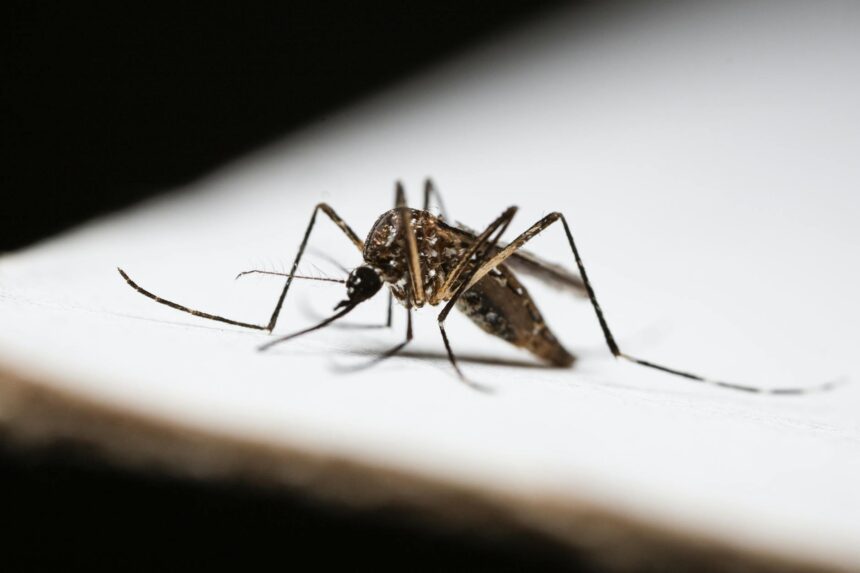
Japanese researcher Professor Eizo Takashima pioneers transmission-blocking malaria vaccines targeting sexual-stage parasites in mosquitoes. His innovative approach could revolutionize malaria elimination efforts by interrupting community transmission cycles. — Photo: Ignacio Vazquez / Pexels
SHARE
🎧 Listen to this article5:39 min · 806 words · GMJ Audio

Updated 25/05/2026

Contents
      • Global Malaria Burden Remains Critical
  • From Parasitology Student to Malaria Pioneer
  • Transmission-Blocking Vaccines: A New Frontier
  • Molecular Targets and Technical Challenges
  • Global Collaboration and Future Prospects
    • Key takeaways
  • Frequently asked questions
    • How do transmission-blocking vaccines differ from traditional malaria vaccines?
    • Why is Japan contributing to malaria research despite being malaria-free?
    • What challenges do transmission-blocking vaccines face in development?
4 min read|750 words

A Japanese malaria researcher is pioneering a novel approach to vaccine development that could fundamentally change how the world fights one of its deadliest infectious diseases. Professor Eizo Takashima of Ehime University has dedicated his career to developing transmission-blocking vaccines that target the parasite’s sexual stages, potentially breaking the cycle of malaria transmission at its most vulnerable point.

627,000
malaria deaths globally in 2022, according to WHO estimates

Global Malaria Burden Remains Critical

Deaths and cases in millions, 2022 WHO data

249m
total malaria
cases globally
627,000
deaths from
malaria
76%
of deaths in
children under 5

Source: World Health Organization, 2023 | Georgian Medical Journal News

Submit Your Paper
GMJ_Submit_Banner

From Parasitology Student to Malaria Pioneer

Takashima’s journey into malaria research began during his first-year parasitology classes at Azabu University in Kanagawa, Japan. Despite Japan having eliminated malaria in the last century, the complexity of parasitic organisms captured his scientific imagination. “At the time, parasites seemed completely different from any other living organisms I had encountered,” Takashima told The Lancet Infectious Diseases.

Now serving as professor of malaria research and head of the Division of Malaria Research at Ehime University’s Proteo-Science Center in Matsuyama, Takashima represents a growing movement of researchers from non-endemic countries contributing crucial expertise to global malaria elimination efforts.

🎙️ Related Podcast Episodes
🎧 #16 | WHO Prequalifies New Oral Polio Vaccine to Strengthen Global Eradication Efforts · 20m
🎧 #7 | WHO Health Tax Strategy: Sugary Drinks, Alcohol, and the Global Fight Against Noncommunicable Diseases · 21m
🎧 #23 | WHO: Next-Generation Influenza Vaccines Could Save Millions of Lives · 18m
🎧 #21 | WHO Issues New Guidance on Novel Snakebite Treatments · 14m
🎧 #17 | WHO: Global Population Requiring Trachoma Interventions Falls Below 100 Million · 16m

Transmission-Blocking Vaccines: A New Frontier

Traditional malaria vaccines target the parasite’s blood stages that cause disease symptoms. Takashima’s approach focuses on the sexual stages of the parasite lifecycle—the gametocytes that mosquitoes ingest when they bite infected humans. By preventing these sexual forms from developing in the mosquito gut, transmission-blocking vaccines could theoretically halt malaria spread even if they don’t protect the vaccinated individual from infection.

This strategy addresses a critical gap in current malaria control measures. While bed nets and antimalarial drugs reduce disease burden, they don’t eliminate transmission.

Molecular Targets and Technical Challenges

Takashima’s research focuses on identifying and characterizing proteins essential for parasite development within mosquitoes. His work involves understanding how malaria parasites interact with mosquito gut epithelium and the molecular signals that trigger gametocyte activation.

However, developing effective transmission-blocking vaccines presents unique challenges. Unlike traditional vaccines that protect the vaccinated individual, these vaccines must generate antibodies that remain active in the mosquito gut after a blood meal.

Global Collaboration and Future Prospects

Takashima’s work exemplifies the international nature of modern malaria research. His laboratory collaborates with institutions across Africa, where malaria remains endemic, sharing expertise in molecular biology and vaccine development. These partnerships ensure that research conducted in well-resourced laboratories addresses the real-world challenges faced by malaria-endemic countries.

The researcher’s approach also reflects broader trends in malaria research, where scientists from diverse backgrounds contribute specialized knowledge to global health challenges.

For Georgia and other countries working to maintain malaria-free status, Takashima’s research represents an important development in the fight against malaria transmission.

“At the time, parasites seemed completely different from any other living organisms I had encountered,” reflecting the fundamental curiosity that drives breakthrough research in parasitology and vaccine development.

— Professor Eizo Takashima, Ehime University (The Lancet Infectious Diseases, 2026)

Key takeaways

  • Transmission-blocking vaccines target parasite sexual stages rather than disease-causing blood stages
  • International collaboration between researchers in non-endemic and endemic countries accelerates vaccine development
  • New molecular targets for vaccine development emerge from improved understanding of parasite-mosquito interactions
  • Japan eliminated malaria in the last century but continues contributing to global research efforts

Frequently asked questions

How do transmission-blocking vaccines differ from traditional malaria vaccines?

Traditional vaccines protect the vaccinated individual from disease by targeting blood-stage parasites. Transmission-blocking vaccines target sexual-stage parasites to prevent transmission to mosquitoes, potentially protecting entire communities even if the vaccine doesn’t prevent individual infections.

Why is Japan contributing to malaria research despite being malaria-free?

Japan eliminated malaria in the last century but maintains strong research capabilities in parasitology and molecular biology. Japanese researchers like Takashima contribute specialized technical expertise to global malaria elimination efforts through international collaborations.

What challenges do transmission-blocking vaccines face in development?

These vaccines must generate antibodies that remain active in mosquito guts after blood meals, requiring sustained high antibody levels. They also need broad efficacy against diverse parasite strains and must be tested using specialized assays that measure transmission reduction rather than individual protection.

As malaria research enters a new era of molecular precision and international collaboration, scientists like Takashima demonstrate how curiosity-driven research can address humanity’s most persistent health challenges. The development of transmission-blocking vaccines represents a paradigm shift that could finally provide the tools needed to eliminate malaria globally, protecting future generations from one of history’s deadliest diseases.

Source: [Profile] Eizo Takashima—developing a new class of malaria vaccines

Was this article helpful?

Disclaimer. This article is health journalism intended for general information and education. It is not medical advice and is not a substitute for professional diagnosis or treatment. Always consult a qualified healthcare provider about your individual circumstances. Full disclaimer →

Related Coverage

Weekly Dual-Hormone Injection Reduces Liver Fat by 67% in Obesity TrialJul 5, 2026
Defective HIV copies explain persistent viral traces in treated patients, new study revealsJul 5, 2026
Minocycline Stroke Trial Debate Highlights Neuroprotection Research ChallengesJul 5, 2026
First In Vivo CRISPR Gene Editing Treatment Shows Promise for Rare Blood DisorderJul 4, 2026
Related reference
  • Malaria · Condition
PG
Written by
Prof. Giorgi Pkhakadze, MD, MPH, PhD
Editor-in-Chief, GMJ News
Full profile →  ·  ORCID 0000-0001-7609-4515
Medical disclaimer. This article is health journalism intended for general information. It is not medical advice and is not a substitute for consultation with a qualified healthcare professional. Always seek your physician's advice regarding any medical condition.
Medically reviewed by Prof. Giorgi Pkhakadze, MD, MPH, PhD. Spotted an error? Contact the editorial team.

Get the GMJ News digest
Evidence-based health journalism in your inbox. No spam; unsubscribe anytime.
TAGGED:global-healthmalaria vaccineparasitologytransmission blockingvaccine development
Share This Article
Facebook LinkedIn Bluesky Copy Link Print
GMJ
ByGMJ Research Desk
Follow:
GMJ Research Desk is part of GMJ News, the newsroom of the Georgian Medical Journal (gmj.ge), published by the Public Health Institute of Georgia. Every article is editorially reviewed before publication.
Leave a Comment Leave a Comment

Leave a Reply Cancel reply

Your email address will not be published. Required fields are marked *

Submit Your Paper →

Georgia's peer-reviewed open-access medical journal. No APC until January 2027.
Submit Manuscript →
Uganda Confirms First Marburg Case Amid Ongoing Ebola Outbreak

The World Health Organization confirmed Uganda's first Marburg virus disease case in…

Medical Aid in Dying Expands to Nearly One-Third of US States by September 2024

By September 2024, nearly one-third of Americans will have legal access to…

NHS Rolls Out AI Tools to 500,000 Staff to Reduce Administrative Burden

NHS England announces AI tool deployment to over 500,000 healthcare workers, potentially…

Submit Your Paper to GMJ

No APC until January 2027.
Submit Manuscript →

You Might Also Like

Medical illustration showing muscle metabolism activation for diabetes treatment
Clinical UpdatesNew StudiesPracticeResearch Digest

New diabetes pill activates muscle metabolism, burns fat without appetite suppression

By
GMJ Practice Desk
08/06/2026
Diagram showing gut-brain communication pathways and circadian rhythm regulation
New StudiesResearch Digest

Gut Microbes Drive Body’s Internal Clock Through Four Key Pathways

By
GMJ Research Desk
26/05/2026
Medical research showing weather pattern analysis and headache correlation data visualization
New StudiesResearch Digest

Two Weather Patterns Linked to Increased Headache Risk in New Study

By
GMJ Research Desk
11/06/2026
Medical chart showing cardiovascular risk reduction percentages with prediabetes reversalIllustrative image · Photo by Towfiqu barbhuiya on Unsplash (Unsplash License)
New StudiesResearch Digest

Reversing Prediabetes Cuts Cardiovascular Death Risk by 58%, Long-term Studies Show

By
GMJ Research Desk
02/07/2026
Facebook Twitter Youtube Instagram
Company
  • Privacy Policy
  • Contact US
  • GMJ Journal
  • Submit Manuscript
  • Editorial Team
  • Register at GMJ
  • Terms of Use

Subscribe to GMJ News — Click here

Join Community
© 2026 Georgian Medical Journal (GMJ). Published by the Public Health Institute of Georgia (PHIG). All rights reserved.
Welcome Back!

Sign in to your account

Username or Email Address
Password

Lost your password?

Not a member? Sign Up