By using this site, you agree to the Privacy Policy and Terms of Use.
Accept
GMJ NewsGMJ NewsGMJ News
  • Latest News
    • GMJ Briefs
  • Podcast & Media
    • Podcast Episodes
    • GMJ Audio
    • GMJ Videos
  • Research Digest
    • New Studies
    • Georgian Research
    • Data & Numbers
  • Policy & Systems
    • Health Policy
    • Quality & Safety
    • Migration & Health
    • Global Health
  • Practice
    • Clinical Updates
    • Case Discussions
    • Pharmacy & Prescribing
    • Ingredients A-Z
  • Perspectives
    • Editorial
    • Explainers
    • Voices
    • Letters
  • GMJ Articles
    • Vol. 1 Issue 2 (2026)
    • Vol. 1 Issue 1 (2026)
    • Pre-Launch Articles (2025)
  • Read the Journal →
  • About GMJ News
Notification Show More
Font ResizerAa
GMJ NewsGMJ News
Font ResizerAa
  • Latest News
    • GMJ Briefs
  • Podcast & Media
    • Podcast Episodes
    • GMJ Audio
    • GMJ Videos
  • Research Digest
    • New Studies
    • Georgian Research
    • Data & Numbers
  • Policy & Systems
    • Health Policy
    • Quality & Safety
    • Migration & Health
    • Global Health
  • Practice
    • Clinical Updates
    • Case Discussions
    • Pharmacy & Prescribing
    • Ingredients A-Z
  • Perspectives
    • Editorial
    • Explainers
    • Voices
    • Letters
  • GMJ Articles
    • Vol. 1 Issue 2 (2026)
    • Vol. 1 Issue 1 (2026)
    • Pre-Launch Articles (2025)
  • Read the Journal →
  • About GMJ News
Follow US
GMJ News > Policy & Systems > Global Health > Andes Hantavirus Outbreak Infects 15 on Antarctic Cruise Ship
Global HealthPolicy & Systems

Andes Hantavirus Outbreak Infects 15 on Antarctic Cruise Ship

GMJ
Last updated: 25/05/2026 14:44
By
GMJ Policy Desk
Share
5 Min Read
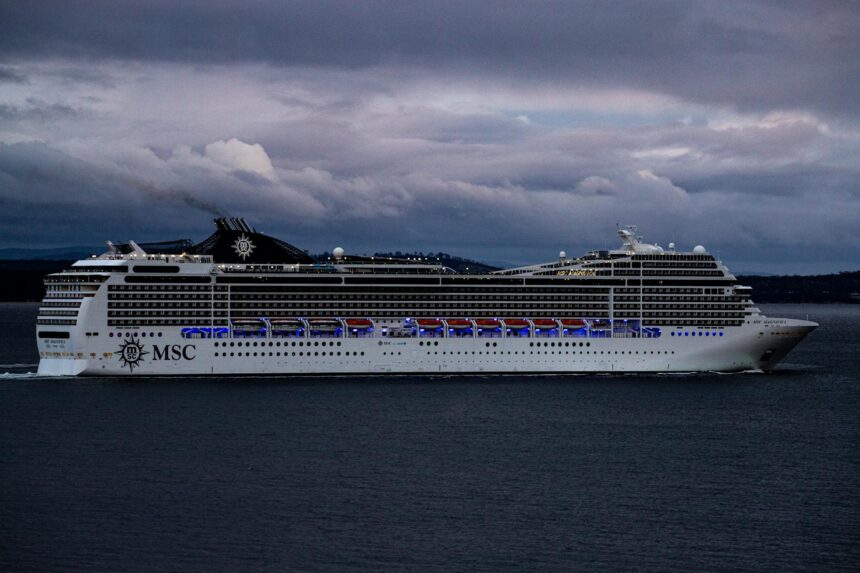
Cruise ship in Antarctic waters with medical emergency response illustration
Fifteen people contracted Andes hantavirus during an Antarctic cruise, marking the first documented outbreak of this South American pathogen in a maritime setting. The New England Journal of Medicine reports a 20% fatality rate among confirmed cases. — Photo: Heather Soo / Pexels
SHARE
🎧 Listen to this article3:39 min · 510 words · GMJ Audio
3 min read|510 words

A cluster of Andes hantavirus infections aboard an Antarctic cruise ship has highlighted the potential for rare zoonotic diseases to spread in confined travel environments. The New England Journal of Medicine reports 15 confirmed cases among passengers and crew during a 2026 expedition cruise, marking the first documented outbreak of this South American pathogen outside its endemic regions.

Contents
  • Unprecedented Transmission Pattern
  • Clinical Presentation and Outcomes
  • Public Health Response
    • Key takeaways
  • Frequently asked questions
    • What is Andes hantavirus and how does it spread?
    • How dangerous is Andes hantavirus infection?
    • What precautions should cruise passengers take?
15 cases
confirmed Andes hantavirus infections on single cruise ship

Unprecedented Transmission Pattern

According to the NEJM report, this represents the first documented person-to-person transmission of Andes hantavirus in a maritime setting. The outbreak occurred during a 14-day Antarctic expedition.

Genomic sequencing confirmed the viral strain matched those circulating in southern Chile and Argentina, according to the study. For more context on global health implications of emerging infectious diseases, health authorities are closely monitoring similar patterns worldwide.

Clinical Presentation and Outcomes

The NEJM study documented a case fatality rate of 20%, with three deaths among the 15 confirmed cases. The report noted that symptoms included fever, myalgia, and rapidly progressing respiratory distress.

Submit Your Paper
GMJ_Submit_Banner

Most cases developed symptoms between days 7-12 of the cruise, consistent with the virus’s typical incubation period, according to the published findings. The ship’s medical team implemented immediate isolation protocols once the first cases were identified. Recent advances in clinical management of hantavirus infections have improved outcomes in healthcare settings.

Public Health Response

The NEJM report describes how health authorities conducted extensive contact tracing among all passengers and crew. The World Health Organization issued updated guidance for cruise operators traveling through hantavirus-endemic regions.

Enhanced screening protocols now require pre-boarding health assessments for passengers with recent travel to South America, according to the study. The outbreak prompted reviews of ventilation systems and cabin spacing on expedition vessels operating in remote regions.

This outbreak demonstrates that Andes hantavirus can achieve sustained human-to-human transmission in confined environments, with genomic evidence supporting at least three transmission generations aboard the vessel.

— New England Journal of Medicine study, 2026

Key takeaways

  • 15 passengers and crew infected with Andes hantavirus during Antarctic cruise (NEJM, 2026)
  • 20% case fatality rate with 3 deaths among confirmed cases (NEJM, 2026)
  • First documented person-to-person transmission in maritime setting (NEJM, 2026)
  • Enhanced screening protocols implemented for South America travelers

Frequently asked questions

What is Andes hantavirus and how does it spread?

Andes hantavirus is a rodent-borne virus endemic to South America that typically spreads through inhalation of contaminated rodent droppings. Unlike other hantaviruses, the Andes strain can transmit between humans through respiratory droplets.

How dangerous is Andes hantavirus infection?

The virus causes hantavirus pulmonary syndrome. Early symptoms include fever and muscle aches, progressing rapidly to severe respiratory distress.

What precautions should cruise passengers take?

Passengers should report any recent travel to South America during pre-boarding screening. Those with fever or respiratory symptoms should delay travel and seek medical evaluation before boarding.

This outbreak underscores the need for enhanced surveillance systems aboard cruise vessels, particularly those operating in regions where emerging infectious diseases circulate. As expedition cruising expands into remote areas, public health preparedness must evolve to address the unique challenges of managing outbreaks in isolated maritime environments where medical evacuation options are limited.

Source: Andes Hantavirus Outbreak on a Cruise Ship, 2026

Was this article helpful?

Disclaimer. This article is health journalism intended for general information and education. It is not medical advice and is not a substitute for professional diagnosis or treatment. Always consult a qualified healthcare provider about your individual circumstances. Full disclaimer →

Related Coverage

How US immigration policy shapes maternal and child health outcomesJul 9, 2026
The Hidden Cost of Secrecy: How Missing Research Data Undermines Clinical GuidanceJul 9, 2026
Silent spread of chronic wasting disease raises cross-species transmission concernsJul 9, 2026
New AI Model Strips Personal Data From ECGs While Preserving Heart Risk InformationJul 9, 2026
Related reference
  • Iron · Ingredient
PG
Written by
Prof. Giorgi Pkhakadze, MD, MPH, PhD
Editor-in-Chief, GMJ News
Full profile →  ·  ORCID 0000-0001-7609-4515
Medical disclaimer. This article is health journalism intended for general information. It is not medical advice and is not a substitute for consultation with a qualified healthcare professional. Always seek your physician's advice regarding any medical condition.
Medically reviewed by Prof. Giorgi Pkhakadze, MD, MPH, PhD. Spotted an error? Contact the editorial team.
Get the GMJ News digest
Evidence-based health journalism in your inbox. No spam; unsubscribe anytime.
TAGGED:Antarcticacruise shiphantavirusoutbreakzoonotic disease
Share This Article
Facebook LinkedIn Bluesky Copy Link Print
GMJ
ByGMJ Policy Desk
Follow:
GMJ Policy Desk is part of GMJ News, the newsroom of the Georgian Medical Journal (gmj.ge), published by the Public Health Institute of Georgia. Every article is editorially reviewed before publication.
Leave a Comment Leave a Comment

Leave a Reply Cancel reply

Your email address will not be published. Required fields are marked *

Submit Your Paper →

Georgia's peer-reviewed open-access medical journal. No APC until January 2027.
Submit Manuscript →
Digital health tools increase physical activity in heart disease patients, meta-analysis shows

A meta-analysis published in the Journal of the American Heart Association confirms…

Personalized Cartilage Grafts Offer New Hope for Infants with Life-Threatening Airway Narrowing

Researchers at Children's Hospital of Philadelphia have developed personalized cartilage grafts using…

Beyond GLP-1 drugs: Why obesity care requires more than medication

GLP-1 medications like semaglutide and tirzepatide have transformed obesity treatment, yet leading…

Submit Your Paper to GMJ

No APC until January 2027.
Submit Manuscript →

You Might Also Like

Medical professional preparing 4CMenB vaccine for gonorrhoea prevention programme
Health PolicyPolicy & Systems

UK Launches First National Gonorrhoea Vaccination Programme Using 4CMenB Vaccine

By
GMJ Policy Desk
01/06/2026
Conceptual illustration showing interconnected flags of middle power countries around health AI technology symbolsIllustrative image · Photo by Markus Winkler on Unsplash (Unsplash License)
Health PolicyPolicy & Systems

Middle powers must unite on health data and AI to challenge tech dominance

By
GMJ Policy Desk
24/06/2026
NHS healthcare workers in hospital corridor discussing new uniform policy restrictionsIllustrative image · Photo by Maria Oswalt on Unsplash (Unsplash License)
Health PolicyPolicy & Systems

NHS Review Proposes Ban on Political Badges for Doctors Amid Antisemitism Concerns

By
GMJ Policy Desk
16/06/2026
WOAH laboratory network showing digital monitoring systems and global connectivityIllustrative image · Photo by Mehul Patel on Pexels (Pexels License)
Global HealthPolicy & Systems

WOAH Introduces Simplified Laboratory Reconfirmation Process for Veterinary Standards

By
GMJ Policy Desk
20/06/2026
Facebook Twitter Youtube Instagram
Company
  • Privacy Policy
  • Contact US
  • GMJ Journal
  • Submit Manuscript
  • Editorial Team
  • Register at GMJ
  • Terms of Use

Subscribe to GMJ News — Click here

Join Community
© 2026 Georgian Medical Journal (GMJ). Published by the Public Health Institute of Georgia (PHIG). All rights reserved.
Welcome Back!

Sign in to your account

Username or Email Address
Password

Lost your password?

Not a member? Sign Up