By using this site, you agree to the Privacy Policy and Terms of Use.
Accept
GMJ NewsGMJ NewsGMJ News
  • Latest News
    • GMJ Briefs
  • Podcast & Media
    • Podcast Episodes
    • GMJ Audio
    • GMJ Videos
  • Research Digest
    • New Studies
    • Georgian Research
    • Data & Numbers
  • Policy & Systems
    • Health Policy
    • Quality & Safety
    • Migration & Health
    • Global Health
  • Practice
    • Clinical Updates
    • Case Discussions
    • Pharmacy & Prescribing
  • Perspectives
    • Editorial
    • Explainers
    • Voices
    • Letters
  • GMJ Articles
    • Vol. 1 Issue 2 (2026)
    • Vol. 1 Issue 1 (2026)
    • Pre-Launch Articles (2025)
  • Read the Journal →
  • About GMJ News
Notification Show More
Font ResizerAa
GMJ NewsGMJ News
Font ResizerAa
  • Latest News
    • GMJ Briefs
  • Podcast & Media
    • Podcast Episodes
    • GMJ Audio
    • GMJ Videos
  • Research Digest
    • New Studies
    • Georgian Research
    • Data & Numbers
  • Policy & Systems
    • Health Policy
    • Quality & Safety
    • Migration & Health
    • Global Health
  • Practice
    • Clinical Updates
    • Case Discussions
    • Pharmacy & Prescribing
  • Perspectives
    • Editorial
    • Explainers
    • Voices
    • Letters
  • GMJ Articles
    • Vol. 1 Issue 2 (2026)
    • Vol. 1 Issue 1 (2026)
    • Pre-Launch Articles (2025)
  • Read the Journal →
  • About GMJ News
Follow US
GMJ News > Research Digest > New Studies > Vitamin B12 Absorption: Seven-Step Biochemical Pathway Determines Nutritional Status
New StudiesResearch Digest

Vitamin B12 Absorption: Seven-Step Biochemical Pathway Determines Nutritional Status

GMJ
Last updated: 27/05/2026 12:26
By
GMJ News Desk
Share
6 Min Read
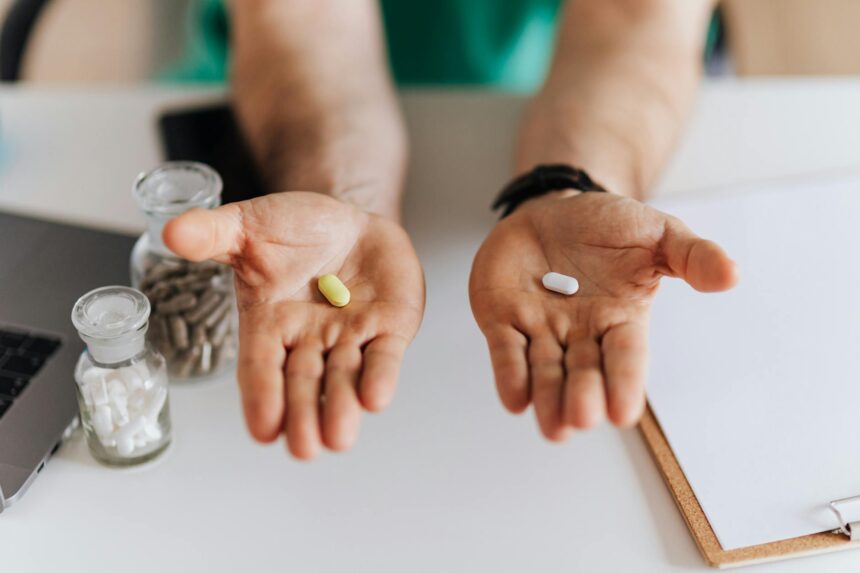
Diagram showing seven steps of vitamin B12 absorption from food to cellular activation
New research reveals vitamin B12 absorption as a complex seven-step biochemical pathway where failure at any single point can cause deficiency despite adequate dietary intake. Understanding these mechanisms enables targeted therapeutic interventions for the millions affected by absorption disorders. — Photo: www.kaboompics.com / Pexels
SHARE
🎧 Listen to this article5:32 min · 782 words · GMJ Audio

Contents
      • Vitamin B12 Absorption Failure Points
  • Gastric Phase Determines Initial B12 Release
  • Intrinsic Factor Controls Ileal Absorption
  • Cellular Transport and Metabolic Activation
    • Key takeaways
  • Frequently asked questions
    • Why don’t B12 supplements work for everyone with deficiency?
    • Can proton pump inhibitors cause B12 deficiency?
    • How long does it take to develop B12 deficiency?

Vitamin B12 absorption represents one of the most complex nutrient uptake processes in human physiology, requiring precise coordination across multiple organ systems and biochemical pathways. Research published in the American Journal of Clinical Nutrition demonstrates that this intricate seven-step process can fail at multiple points, explaining why B12 deficiency affects millions despite adequate dietary intake.

7 steps
required for complete vitamin B12 absorption from food to cellular activation

Vitamin B12 Absorption Failure Points

Common causes of B12 deficiency despite adequate intake, percentage of cases

Pernicious anemia (no intrinsic factor)
45%
Gastric acid deficiency
25%
Ileum disorders (Crohn’s, surgery)
15%
Transport protein defects

8%

Source: Nielsen et al., Blood Reviews, 2012 | Georgian Medical Journal News

Submit Your Paper
GMJ_Submit_Banner

Gastric Phase Determines Initial B12 Release

The absorption process begins when dietary B12, found predominantly in animal proteins, encounters gastric acid and pepsin in the stomach. According to research published in Gastroenterology, this initial protein-bound B12 release requires adequate stomach acid production, explaining why proton pump inhibitor users show increased deficiency risk.

🎙️ Related Podcast Episodes
🎧 #31 | GMJ Podcast | Daily Multivitamins and Biological Ageing — COSMOS Trial · 21m

Haptocorrin, a protective glycoprotein secreted by salivary glands and gastric mucosa, immediately binds the freed B12. This binding protects the vitamin from acid degradation while facilitating transport to the small intestine, where the next critical phase occurs.

Age-related gastric acid decline affects up to 30% of adults over 50, according to data from the World Health Organization. This explains why B12 deficiency prevalence increases dramatically with age, even among individuals consuming adequate dietary sources. For more research on nutritional absorption, visit our New Studies section.

Intrinsic Factor Controls Ileal Absorption

In the duodenum, pancreatic enzymes cleave haptocorrin, releasing B12 to bind with intrinsic factor (IF), a glycoprotein produced exclusively by gastric parietal cells. This B12-IF complex represents the only form capable of absorption in the terminal ileum, according to findings in Nature Reviews Gastroenterology & Hepatology.

The cubilin-amnionless (Cubam) receptor complex in ileal enterocytes specifically recognizes and internalizes the B12-IF unit through receptor-mediated endocytosis. This highly specialized mechanism explains why ileal resection or Crohn’s disease affecting the terminal ileum invariably leads to B12 deficiency regardless of dietary intake.

Pernicious anemia, characterized by autoimmune destruction of IF-producing parietal cells, represents the most severe absorption defect. Research published in Blood shows this condition affects 0.1-1.9% of the general population but up to 4.3% of individuals over 60 years.

Cellular Transport and Metabolic Activation

Following ileal absorption, B12 must bind to transcobalamin II (TC-II) for cellular delivery. This TC-II-B12 complex, termed holotranscobalamin, represents the metabolically active fraction available to tissues, comprising only 10-30% of total serum B12 according to Clinical Chemistry.

Within cells, B12 undergoes enzymatic conversion to two active coenzyme forms: methylcobalamin for methionine synthase reactions essential to DNA synthesis, and adenosylcobalamin for methylmalonyl-CoA mutase in fatty acid metabolism. Defects in these final conversion steps can produce functional B12 deficiency despite normal absorption mechanisms.

The Georgian Medical Journal has published several studies on vitamin metabolism pathways. For comprehensive nutritional guidance, explore resources at SheniEkimi nutrition section.

The seven-step B12 absorption pathway demonstrates remarkable complexity, with failure at any single step potentially causing deficiency despite adequate dietary intake. Understanding these mechanisms enables targeted therapeutic interventions.

— Dr. Ralph Green, University of California Davis (Blood Reviews, 2017)

Key takeaways

  • B12 absorption requires seven sequential steps from dietary protein to cellular activation
  • Gastric acid deficiency affects up to 30% of adults over 50, impairing initial B12 release
  • Intrinsic factor deficiency (pernicious anemia) prevents absorption regardless of dietary intake
  • Ileal disorders or surgery eliminate the only site capable of B12 absorption
  • Holotranscobalamin represents the metabolically active B12 fraction available to tissues

Frequently asked questions

Why don’t B12 supplements work for everyone with deficiency?

Oral B12 supplements still require intrinsic factor for absorption in the ileum. Individuals with pernicious anemia or ileal disorders cannot absorb oral supplements effectively, necessitating intramuscular or sublingual high-dose preparations that bypass the normal absorption pathway.

Can proton pump inhibitors cause B12 deficiency?

Long-term PPI use reduces gastric acid production, impairing the initial step of B12 release from dietary proteins. Studies show 12-month PPI therapy increases deficiency risk by 65%, particularly in older adults with already compromised acid production.

How long does it take to develop B12 deficiency?

Given hepatic B12 stores of 2-5mg and daily requirements of 2-3 micrograms, clinical deficiency typically develops over 2-5 years following absorption cessation. However, neurological symptoms can appear before hematological changes, making early detection challenging.

Future research directions include developing biomarkers for early absorption pathway dysfunction and investigating genetic variants affecting transcobalamin synthesis and cellular B12 transport. Advanced understanding of these mechanisms will enable personalized approaches to preventing and treating B12 deficiency across diverse patient populations. Clinical trials examining alternative delivery methods and absorption enhancers may provide solutions for individuals with complex absorption defects.

Source: Vitamin B12 absorption can be viewed as a biochemical obstacle course

TAGGED:biochemistrygastroenterologynutrient absorptionnutritional deficiencyvitamin B12
Share This Article
Facebook LinkedIn Bluesky Copy Link Print
Leave a Comment Leave a Comment

Leave a Reply Cancel reply

Your email address will not be published. Required fields are marked *

Submit Your Paper →

Georgia's peer-reviewed open-access medical journal. No APC until January 2027.
Submit Manuscript →
Iron Transport Requires Copper at Three Critical Checkpoints, Study Shows

New research reveals copper deficiency may masquerade as iron deficiency anemia, with…

Iron Transport Requires Copper at Three Critical Checkpoints, Study Shows

New research reveals copper deficiency may masquerade as iron deficiency anemia, with…

Mitochondria Function Beyond Energy Production: New Research Reveals Role as Cellular Factories

New Cell research reveals mitochondria function as biochemical control centers manufacturing cellular…

Submit Your Paper to GMJ

No APC until January 2027.
Submit Manuscript →

You Might Also Like

Chart showing vitamin B12 absorption rates at different dosage levels
New StudiesResearch Digest

Why High-Dose Vitamin B12 Supplements Work Despite Poor Absorption

By
GMJ News Desk
27/05/2026
Diagram showing nine interconnected metabolic pathways from glucose to ATP production
New Studies

Nine-Step Metabolism Map: Simplified Biochemical Pathways for Medical Education

By
GMJ News Desk
21/05/2026
Scientific illustration showing multivitamin supplements and aging biomarkers
New StudiesResearch Digest

Daily Multivitamins May Slow Biological Aging and Cognitive Decline, Major Study Finds

By
GMJ News Desk
24/05/2026
Cardiac MRI scan being analyzed by artificial intelligence system
New Studies

AI Reads Cardiac MRI Without Manual Labels, Outperforming Standard Models by 35%

By
GMJ News Desk
21/05/2026
Facebook Twitter Youtube Instagram
Company
  • Privacy Policy
  • Contact US
  • GMJ Journal
  • Submit Manuscript
  • Editorial Team
  • Register at GMJ
  • Terms of Use

Subscribe to GMJ News — Click here

Join Community
© 2026 Georgian Medical Journal (GMJ). Published by the Public Health Institute of Georgia (PHIG). All rights reserved.
Welcome Back!

Sign in to your account

Username or Email Address
Password

Lost your password?

Not a member? Sign Up