By using this site, you agree to the Privacy Policy and Terms of Use.
Accept
GMJ NewsGMJ NewsGMJ News
  • Latest News
    • GMJ Briefs
  • Podcast & Media
    • Podcast Episodes
    • GMJ Audio
    • GMJ Videos
  • Research Digest
    • New Studies
    • Georgian Research
    • Data & Numbers
  • Policy & Systems
    • Health Policy
    • Quality & Safety
    • Migration & Health
    • Global Health
  • Practice
    • Clinical Updates
    • Case Discussions
    • Pharmacy & Prescribing
    • Ingredients A-Z
  • Perspectives
    • Editorial
    • Explainers
    • Voices
    • Letters
  • GMJ Articles
    • Vol. 1 Issue 2 (2026)
    • Vol. 1 Issue 1 (2026)
    • Pre-Launch Articles (2025)
  • Read the Journal →
  • About GMJ News
Notification Show More
Font ResizerAa
GMJ NewsGMJ News
Font ResizerAa
  • Latest News
    • GMJ Briefs
  • Podcast & Media
    • Podcast Episodes
    • GMJ Audio
    • GMJ Videos
  • Research Digest
    • New Studies
    • Georgian Research
    • Data & Numbers
  • Policy & Systems
    • Health Policy
    • Quality & Safety
    • Migration & Health
    • Global Health
  • Practice
    • Clinical Updates
    • Case Discussions
    • Pharmacy & Prescribing
    • Ingredients A-Z
  • Perspectives
    • Editorial
    • Explainers
    • Voices
    • Letters
  • GMJ Articles
    • Vol. 1 Issue 2 (2026)
    • Vol. 1 Issue 1 (2026)
    • Pre-Launch Articles (2025)
  • Read the Journal →
  • About GMJ News
Follow US
GMJ News > Research Digest > New Studies > Molecular Switch Driving Alzheimer’s Brain Inflammation Identified by Scripps Research
New StudiesResearch Digest

Molecular Switch Driving Alzheimer’s Brain Inflammation Identified by Scripps Research

GMJ
Last updated: 02/06/2026 15:36
By
GMJ Research Desk
Share
6 Min Read
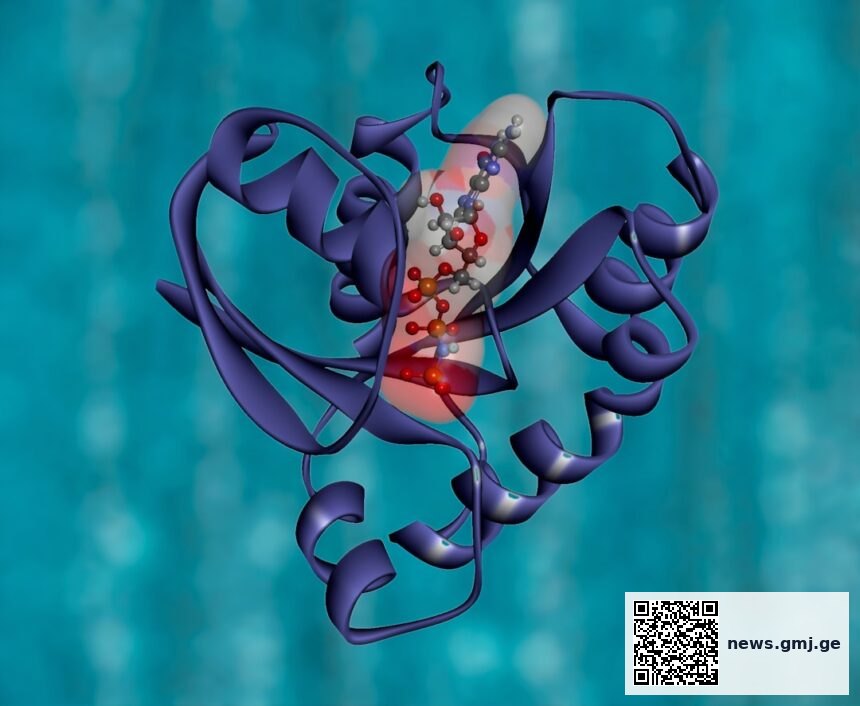
Scientific illustration of STING protein molecular structure and brain inflammation pathways
Scripps Research scientists have identified a molecular switch involving STING protein modifications that drives chronic brain inflammation in Alzheimer's disease. The discovery reveals how brain immune cells become trapped in a destructive inflammatory state, offering new therapeutic targets. — Photo: National Cancer Institute / Pexels
SHARE
🎧 Listen to this article4:55 min · 703 words · GMJ Audio
4 min read|703 words
✓ Medically reviewed by Prof. Giorgi Pkhakadze, MD, MPH, PhD · ORCID 0000-0001-7609-4515

🟡 Preliminary Evidence

Contents
    • Key takeaways
      • Study at a Glance
      • Brain Inflammation Process in Alzheimer’s Disease
  • STING Protein Modifications Drive Persistent Inflammation
  • Brain Immune System Stuck in Overdrive
  • Implications for Therapeutic Development
  • Next Steps in Research
    • What this means
  • Frequently asked questions
    • What is the STING protein and why is it important?
    • How does this discovery differ from current Alzheimer’s research?
    • Could this lead to new Alzheimer’s treatments?

Scientists at Scripps Research have identified a molecular “switch” that drives the chronic brain inflammation characteristic of Alzheimer’s disease. The researchers discovered that a protein called STING (Stimulator of Interferon Genes) becomes chemically modified in ways that trap the brain’s immune system in a destructive inflammatory state.

Key takeaways

  • STING protein modifications create persistent brain inflammation in Alzheimer’s disease
  • The molecular switch keeps brain immune cells stuck in overdrive, damaging nerve connections
  • Discovery could lead to new therapeutic targets for slowing Alzheimer’s progression

Study at a Glance

Source Scripps Research findings
Study type Molecular biology research
Focus STING protein modifications
Population Alzheimer’s disease models
Institution Scripps Research Institute
STING protein
identified as molecular switch driving chronic brain inflammation in Alzheimer’s disease

Brain Inflammation Process in Alzheimer’s Disease

Key molecular players in neuroinflammatory cascade

STING
Primary switch protein
Microglia
Brain immune cells affected
Synapses
Nerve connections damaged

Source: Scripps Research, 2026 | Georgian Medical Journal News

Submit Your Paper
GMJ_Submit_Banner

STING Protein Modifications Drive Persistent Inflammation

The Scripps Research team found that the STING protein undergoes specific chemical modifications that fundamentally alter its function in Alzheimer’s disease. Rather than providing appropriate immune responses, the modified STING keeps brain immune cells called microglia in a state of chronic activation.

🎙️ Related Podcast Episodes
🎧 #39 | GMJ Podcast | Acne and Metabolic Dysfunction — Insulin Resistance, IGF-1, and Clinical Implications · 15m
🎧 #38 | GMJ Podcast | Acne and Metabolic Dysfunction — Insulin Resistance, IGF-1, and Clinical Implications · 21m

This persistent inflammatory state appears to damage synaptic connections between neurons, which are crucial for memory and cognitive function. The research suggests that targeting these STING modifications could offer new approaches for treating neurodegenerative diseases.

Brain Immune System Stuck in Overdrive

The study reveals how the brain’s immune system becomes trapped in a destructive cycle. When STING proteins are chemically altered, they send continuous danger signals to microglia, preventing these immune cells from returning to their normal, protective state.

This finding helps explain why brain inflammation persists throughout Alzheimer’s disease progression, even in the absence of active infection or injury. The research provides new insights into the molecular basis of neuroinflammation and its role in cognitive decline.

Implications for Therapeutic Development

The identification of STING as a key inflammatory switch opens new avenues for drug development. Researchers suggest that compounds designed to reverse or prevent these protein modifications could help restore normal immune function in the brain.

Current Alzheimer’s treatments focus primarily on amyloid plaques and tau tangles, but this research highlights the importance of addressing chronic inflammation. The findings complement ongoing research into anti-inflammatory approaches for neurodegenerative diseases.

Next Steps in Research

The Scripps Research team is now working to develop compounds that can specifically target the modified STING proteins while preserving normal immune functions. This represents a challenging but potentially transformative approach to treating Alzheimer’s disease.

Future studies will need to validate these findings in human brain tissue and test potential therapeutic interventions in clinical trials. The research also raises questions about whether similar mechanisms operate in other neurodegenerative conditions characterized by chronic inflammation.

STING protein modifications create a molecular switch that traps brain immune cells in a destructive inflammatory state, damaging nerve connections crucial for memory and cognition.

— Scripps Research Team (2026 findings)

What this means

For patients: This research may lead to new treatments that target brain inflammation rather than just amyloid plaques
For clinicians: Understanding STING modifications could inform biomarker development and treatment selection strategies
For policymakers: Investment in neuroinflammation research may yield novel therapeutic approaches for Alzheimer’s disease

Frequently asked questions

What is the STING protein and why is it important?

STING (Stimulator of Interferon Genes) is a protein that normally helps coordinate immune responses. In Alzheimer’s disease, chemical modifications to STING create a molecular switch that keeps brain inflammation active.

How does this discovery differ from current Alzheimer’s research?

Most current research focuses on amyloid plaques and tau tangles. This study reveals how chronic brain inflammation develops and persists, offering a new target for potential treatments.

Could this lead to new Alzheimer’s treatments?

The research opens new possibilities for drugs that could restore normal immune function in the brain by targeting STING modifications, though clinical development will require years of additional research.

The discovery of STING protein modifications as drivers of Alzheimer’s brain inflammation represents a significant advance in understanding disease mechanisms. As researchers work to translate these findings into therapeutic interventions, this molecular switch could become a key target for preserving cognitive function and slowing disease progression.

Source: Scientists found the hidden switch fueling alzheimer’s brain inflammation

Was this article helpful?

Disclaimer. This article is health journalism intended for general information and education. It is not medical advice and is not a substitute for professional diagnosis or treatment. Always consult a qualified healthcare provider about your individual circumstances. Full disclaimer →

Related Coverage

Astrocytes as Brain Regulators: How a 1989 Video Revealed Hidden Neural IntelligenceJul 17, 2026
Beyond the Powerhouse: How Mitochondria Control Energy, Stress, and Cell SurvivalJul 17, 2026
Frozen produce rivals fresh in most vitamins, UC Davis study findsJul 17, 2026
Magnesium's hidden role in insulin signalling: why the mineral matters for glucose controlJul 17, 2026
PG
Written by
Prof. Giorgi Pkhakadze, MD, MPH, PhD
Editor-in-Chief, GMJ News
Full profile →  ·  ORCID 0000-0001-7609-4515
Medical disclaimer. This article is health journalism intended for general information. It is not medical advice and is not a substitute for consultation with a qualified healthcare professional. Always seek your physician's advice regarding any medical condition.
Medically reviewed by Prof. Giorgi Pkhakadze, MD, MPH, PhD. Spotted an error? Contact the editorial team.
Get the GMJ News digest
Evidence-based health journalism in your inbox. No spam; unsubscribe anytime.
TAGGED:Alzheimer's diseasebrain inflammationneuroinflammationScripps ResearchSTING protein
Share This Article
Facebook LinkedIn Bluesky Copy Link Print
GMJ
ByGMJ Research Desk
Follow:
GMJ Research Desk is part of GMJ News, the newsroom of the Georgian Medical Journal (gmj.ge), published by the Public Health Institute of Georgia. Every article is editorially reviewed before publication.
Leave a Comment Leave a Comment

Leave a Reply Cancel reply

Your email address will not be published. Required fields are marked *

Submit Your Paper →

Georgia's peer-reviewed open-access medical journal. No APC until January 2027.
Submit Manuscript →
Astrocytes as Brain Regulators: How a 1989 Video Revealed Hidden Neural Intelligence

A landmark 1989 video by Yale neuroscientist Prof. Stephen J. Smith revealed…

Beyond the Powerhouse: How Mitochondria Control Energy, Stress, and Cell Survival

Mitochondria perform four critical functions: ATP generation, ROS balance, mitochondrial DNA maintenance,…

Why Vitamin C Is Essential for Collagen Formation—and Why Supplements Often Miss the Mark

Vitamin C is not optional in collagen formation—it is catalytic. Your body…

Submit Your Paper to GMJ

No APC until January 2027.
Submit Manuscript →

You Might Also Like

Diagram showing caffeine half-life variation across fast and slow metabolizers, smokers, and contraceptive usersIllustrative image · Photo by Alari Tammsalu on Pexels (Pexels License)
ExplainersNew StudiesPerspectivesResearch Digest

Why the ‘2pm coffee cutoff’ is a myth: genetics and lifestyle create a 15-fold range in caffeine metabolism

By
GMJ Perspectives Desk
16/07/2026
CoQ10 supplement comparison chart showing bioavailability differences between formulations
New StudiesResearch Digest

Ubiquinol Marketing Claims Don’t Match Scientific Evidence on CoQ10 Absorption

By
GMJ Research Desk
27/05/2026
Medical illustration showing iron transport pathways and copper enzyme checkpoints in human metabolism
New StudiesResearch Digest

Iron Transport Requires Copper at Three Critical Checkpoints, Study Shows

By
GMJ Research Desk
27/05/2026
Senior adult performing supervised preoperative exercise program before spinal surgeryIllustrative image · Photo by World Sikh Organization of Canada on Pexels (Pexels License)
Clinical UpdatesNew StudiesPracticeResearch Digest

Preoperative Exercise Improves Recovery in Elderly Spinal Fusion Patients, New Trial Shows

By
GMJ Practice Desk
13/07/2026
Facebook Twitter Youtube Instagram
Company
  • Privacy Policy
  • Contact US
  • GMJ Journal
  • Submit Manuscript
  • Editorial Team
  • Register at GMJ
  • Terms of Use

Subscribe to GMJ News — Click here

Join Community
© 2026 Georgian Medical Journal (GMJ). Published by the Public Health Institute of Georgia (PHIG). All rights reserved.
Welcome Back!

Sign in to your account

Username or Email Address
Password

Lost your password?

Not a member? Sign Up