Updated 13/09/2026
🟠 Moderate Evidence
A randomized, double-blind, crossover trial shows that caffeine enhances strength and power output in resistance-trained men, but the effect works through the central nervous system rather than muscle growth. The study, published in the International Journal of Sport Nutrition and Exercise Metabolism, demonstrates that caffeine’s ergogenic benefit relies on neural mechanisms—not on building larger muscles.
Key takeaways
- Caffeine at 4 mg per kilogram of body weight increased 1-rep max strength, especially in lower-body lifts like the back squat
- The mechanism is neural: caffeine blocks adenosine receptors, increasing central nervous system excitability and motor unit recruitment
- The effect is acute and performance-based, not a training adaptation that builds muscle tissue
- Results were strongest for lower-body exercises and across 25–90% of 1-rep maximum intensity
Study at a Glance
| Source | International Journal of Sport Nutrition and Exercise Metabolism |
| Study type | Randomized controlled trial, double-blind crossover design |
| Sample size | Resistance-trained men |
| Intervention | 4 mg caffeine per kg body weight (~300 mg for 165-lb lifter), administered 60 minutes before training |
| Primary outcome | 1-rep max strength, bar velocity, power output, muscle size (via imaging) |
Caffeine’s Effect on Strength Across Exercise Intensity Levels
Changes in bar velocity and power output at different percentages of 1-rep maximum, back squat vs bench press

Source: International Journal of Sport Nutrition and Exercise Metabolism, 2025 | Georgian Medical Journal News
How Caffeine Enhances Neural Drive Without Building Muscle
The study’s mechanism of action reveals why caffeine is ergogenic despite not triggering muscle hypertrophy. Caffeine blocks adenosine receptors in the central nervous system, which normally signal fatigue and reduced alertness. By antagonizing these receptors, caffeine increases neural excitability and allows the brain to recruit more motor units—particularly fast-twitch muscle fibers—during heavy resistance exercise.
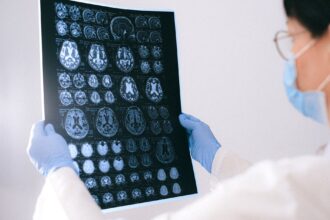
This neural enhancement translates directly to measurable performance gains. Participants demonstrated increased 1-rep max strength across both bench press and back squat movements, with stronger effects observed in the lower body. Bar velocity—a key indicator of power output—improved consistently across 25% to 90% of maximum lifting capacity. Importantly, imaging assessment showed no acute changes in muscle cross-sectional area, confirming that the strength improvement was purely neurological rather than attributable to immediate muscle growth.
Lower-Body Lifts Show Strongest Response to Caffeine
The differential effect between upper-body and lower-body exercises suggests that caffeine’s neural benefits are exercise-dependent. Back squat performance improved more substantially than bench press performance at equivalent intensity levels. This pattern reflects the biomechanical and neuromuscular demands of each lift: lower-body exercises engage larger muscle groups and require greater whole-body motor unit coordination, making them more responsive to enhanced neural drive.
The dose-response relationship also proved critical. Researchers administered 4 mg of caffeine per kilogram of body weight—approximately 300 mg for a 75-kilogram (165-pound) lifter—consumed 60 minutes before the resistance-training session. This timing and dosage window optimized peak plasma caffeine concentrations during the strength-testing protocol, consistent with established caffeine pharmacokinetics literature.
Caffeine increased bar velocity and power output across 25–90% of 1-rep maximum intensity, with the strongest effects in the back squat. These gains occurred without any acute change in muscle size, indicating a purely neural mechanism of enhancement.
— International Journal of Sport Nutrition and Exercise Metabolism, 2025
Important Limitations: Context Matters for Generalizability
The study enrolled only resistance-trained participants, meaning results may not extend directly to untrained individuals or different populations. Caffeine sensitivity varies based on chronic exposure, genetic polymorphisms in the CYP1A2 gene (which encodes the primary caffeine-metabolizing enzyme), and individual adenosine receptor density. Beginners to resistance training, older adults, and individuals with cardiovascular contraindications may experience different effects—or potential adverse events.
Additionally, the strength enhancement observed was an acute, immediate effect, not a training adaptation. Chronic caffeine consumption does not independently build muscle mass or produce long-term strength gains beyond the immediate performance window. Lifters seeking hypertrophy must rely on progressive resistance overload, adequate protein intake, and recovery—factors well established in evidence-based resistance training science. Caffeine’s role is to optimize acute neuromuscular function within existing muscle capacity.
What this means
Frequently asked questions
Does caffeine build muscle?
No. This trial and the broader literature show that caffeine enhances acute strength and power output through neural mechanisms—increasing motor unit recruitment and central nervous system excitability. Muscle hypertrophy requires progressive mechanical tension, metabolic stress, and muscle damage over weeks and months of training, supported by adequate protein and calories. Caffeine does not trigger these long-term adaptations on its own.
When should I take caffeine before lifting?
This study used 4 mg per kilogram of body weight administered 60 minutes before resistance training. This timing aligns with caffeine’s peak plasma concentration (~30–60 minutes post-ingestion). For a 165-pound (75 kg) lifter, this equates to approximately 300 mg of caffeine—roughly equivalent to a strong cup of coffee or two espresso shots. Individual response varies; some athletes may benefit from 45 minutes, others 75 minutes post-ingestion.
Does caffeine work for beginners?
This study enrolled only resistance-trained men, so results cannot be generalized directly to untrained individuals. Beginners may experience different responses due to lower baseline neural efficiency and motor control. Additionally, caffeine sensitivity is highly individual and influenced by genetic factors. Beginners should prioritize learning proper technique, progressive overload, and consistent training before relying on ergogenic aids.
The evidence from this randomized controlled trial reinforces that caffeine is one of the most reliable ergogenic aids for resistance athletes—not because it builds muscle, but because it allows your nervous system to recruit and activate muscle more completely during heavy lifts. For strength and power athletes already following sound training and nutrition protocols, caffeine represents a low-cost, evidence-backed strategy to optimize acute performance. Future research should examine whether repeated caffeine use produces tolerance, how individual genetic variation affects response, and whether the neural enhancement differs across diverse populations and training statuses.
Source: International Journal of Sport Nutrition and Exercise Metabolism, 2025
🗺️ Find certified Georgian healthcare providers: sheniekimi.ge — Georgia Health Map · 998 clinics · 6,600+ doctors · 2,296 pharmacies
Was this article helpful?
Disclaimer. This article is health journalism intended for general information and education. It is not medical advice and is not a substitute for professional diagnosis or treatment. Always consult a qualified healthcare provider about your individual circumstances. Full disclaimer →
Related Coverage



Editorial standards. This article was produced under the GMJ News editorial process, with oversight by the GMJ Editorial Board. Our editorial process. Spotted an error? Contact the editorial team.