By using this site, you agree to the Privacy Policy and Terms of Use.
Accept
GMJ NewsGMJ NewsGMJ News
  • Latest News
    • GMJ Briefs
  • Podcast & Media
    • Podcast Episodes
    • GMJ Audio
    • GMJ Videos
  • Research Digest
    • New Studies
    • Georgian Research
    • Data & Numbers
  • Policy & Systems
    • Health Policy
    • Quality & Safety
    • Migration & Health
    • Global Health
  • Practice
    • Clinical Updates
    • Case Discussions
    • Pharmacy & Prescribing
    • Ingredients A-Z
  • Perspectives
    • Editorial
    • Explainers
    • Voices
    • Letters
  • Health Topics
  • GMJ Articles
    • Vol. 1 Issue 2 (2026)
    • Vol. 1 Issue 1 (2026)
    • Pre-Launch Articles (2025)
  • Read the Journal →
  • About GMJ News
Notification Show More
Font ResizerAa
GMJ NewsGMJ News
Font ResizerAa
  • Latest News
    • GMJ Briefs
  • Podcast & Media
    • Podcast Episodes
    • GMJ Audio
    • GMJ Videos
  • Research Digest
    • New Studies
    • Georgian Research
    • Data & Numbers
  • Policy & Systems
    • Health Policy
    • Quality & Safety
    • Migration & Health
    • Global Health
  • Practice
    • Clinical Updates
    • Case Discussions
    • Pharmacy & Prescribing
    • Ingredients A-Z
  • Perspectives
    • Editorial
    • Explainers
    • Voices
    • Letters
  • Health Topics
  • GMJ Articles
    • Vol. 1 Issue 2 (2026)
    • Vol. 1 Issue 1 (2026)
    • Pre-Launch Articles (2025)
  • Read the Journal →
  • About GMJ News
Follow US
GMJ News > Practice > Clinical Updates > One in three young adults lack a primary care doctor, survey finds
Clinical UpdatesHealth PolicyPolicy & SystemsPractice

One in three young adults lack a primary care doctor, survey finds

GMJ
Last updated: 12/07/2026 13:29
By
GMJ Practice Desk
Share
9 Min Read
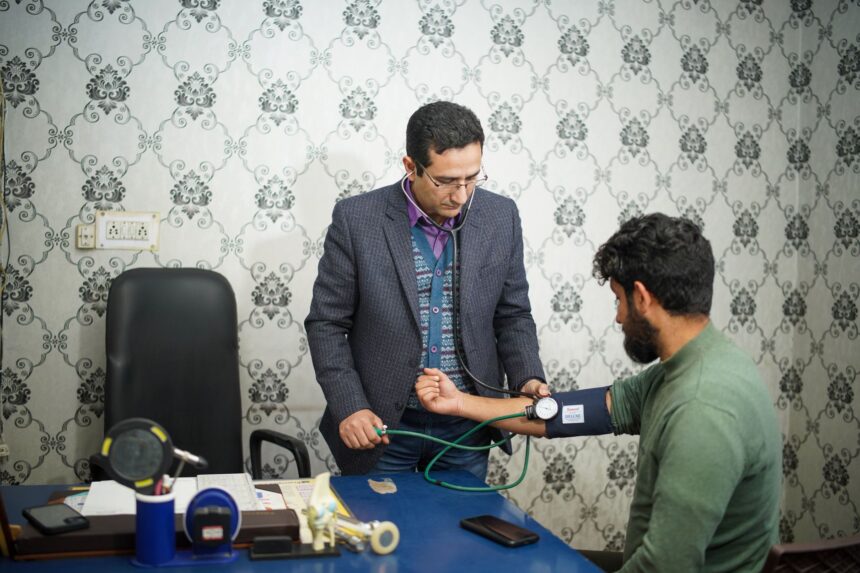
Chart showing 30% of young adults lack primary care physicianIllustrative image · Photo by Imad Clicks on Pexels (Pexels License)
A survey by Ohio State University Wexner Medical Center reveals that approximately 30% of young adults lack a primary care physician, and among those who have one, most do not maintain regular contact, indicating a significant gap in preventive care engagement. — Photo by Imad Clicks on Pexels (Pexels License)
SHARE
5 min read|1,085 words
✓ Reviewed by GMJ News Editorial Team

🟠 Moderate Evidence

Contents
    • Key takeaways
      • Study at a Glance
      • Primary care access among young adults
  • A widening gap in preventive care access
  • Low engagement even among those with established care
  • Implications for chronic disease prevention and early detection
    • What this means
  • Frequently asked questions
    • Why is primary care important for young, healthy adults?
    • What barriers prevent young adults from accessing primary care?
    • How can young adults re-engage with primary care?

A new survey commissioned by The Ohio State University Wexner Medical Center reveals that approximately three in ten young adults in the United States do not have a primary care physician. Among those who do have one, the majority report infrequent or no contact, indicating a significant gap in routine preventive care engagement among this demographic. The findings raise concerns about missed opportunities for early disease detection and health promotion in a population that represents a crucial window for establishing lifelong health behaviours.

Key takeaways

  • Approximately 30% of young adults lack a primary care doctor, according to the Ohio State University Wexner Medical Center survey
  • Among young adults who do have a primary care physician, most do not see them regularly
  • Absence of consistent primary care may result in delayed diagnosis of chronic diseases and reduced preventive health screening

Study at a Glance

Source Ohio State University Wexner Medical Center
Study type Cross-sectional survey
Population Young adults in the United States
Key finding 3 in 10 young adults lack a primary care doctor
Country United States
30%
of young adults do not have a primary care physician, according to Ohio State University Wexner Medical Center

Primary care access among young adults

Proportion of young adults with and without established primary care relationships

70%
Have a primary care doctor
30%
Do not have a primary care doctor

Source: Ohio State University Wexner Medical Center, 2026 | Georgian Medical Journal News

Submit Your Paper
GMJ_Submit_Banner

A widening gap in preventive care access

The survey reveals that young adulthood represents a critical but neglected period in the healthcare continuum. The Ohio State University Wexner Medical Center research demonstrates that the absence of a stable primary care relationship during these formative years can have downstream consequences for disease prevention and health management. Young adults aged roughly 18–40 often experience a period of relative good health, which may paradoxically reduce motivation to establish ongoing care relationships.

🎙️ Related Podcast Episodes
🎧 #36 | GMJ Podcast | Artificial Intelligence and Doctor–Patient Communication — Evidence from Georgian Clinics · 18m
🎧 #28 | GMJ Podcast | SheniEkimi.ge #1: Top 5 Evidence-Based Public Health News · 19m
🎧 #15 | WHO: One in Two People Facing Cataract Blindness Still Need Access to Surgery · 21m

This pattern mirrors broader trends in health system utilization across developed nations. The Clinical Updates section of GMJ News has documented similar access challenges in various healthcare systems, reflecting both systemic and behavioural barriers to primary care engagement. The Ohio State findings suggest that reliance on episodic, acute-care-focused visits may be displacing the traditional primary care model among younger cohorts.

Low engagement even among those with established care

The survey findings are particularly concerning because they reveal two distinct problems: first, the absence of a primary care relationship for a substantial minority, and second, the underutilization of primary care among those who nominally have one. The Ohio State Wexner Medical Center data indicate that young adults with an assigned or established primary care physician frequently do not schedule or maintain regular visits, reducing the preventive value of that relationship.

This low engagement pattern may reflect multiple factors, including competing demands on time, cost concerns (despite insurance coverage), perceived irrelevance of preventive care during health, and the increasing availability of urgent care and telehealth alternatives that bypass traditional primary care gatekeeping. Understanding these barriers is essential for designing interventions that restore primary care’s central role in health maintenance and early disease detection in this population.

Implications for chronic disease prevention and early detection

The absence of consistent primary care relationships in young adulthood may have long-term public health consequences. Primary care physicians serve as the first point of clinical contact for risk factor screening—including hypertension, hyperlipidemia, prediabetes, and behavioural health conditions—that often begin in the third and fourth decades of life. Without these interactions, conditions may progress undetected until they reach advanced stages or manifest as acute events.

The Health Policy category at GMJ News has explored similar concerns in other healthcare systems. Research indicates that primary care-focused health systems achieve better long-term population health outcomes and lower total healthcare costs than fragmented, specialty-led models. The Ohio State findings underscore the need for targeted strategies to re-engage young adults with primary care during a critical window for intervention.

Approximately 30% of young adults in the United States do not have a primary care physician, and among those who do, most do not maintain regular contact.

— Ohio State University Wexner Medical Center survey, 2026

What this means

For patients: Young adults should proactively identify a primary care physician and schedule annual preventive visits for risk screening, even during periods of good health. Early detection of chronic disease risk factors can prevent serious complications later.
For clinicians: Primary care physicians must develop engagement strategies that appeal to young adults, including flexible scheduling, telehealth options, and clear communication about the value of preventive care and risk assessment in this age group.
For policymakers: Healthcare systems and insurers should strengthen financial and structural incentives for young adults to establish and maintain primary care relationships, recognizing that population-level health outcomes depend on robust preventive infrastructure across the lifespan.

Frequently asked questions

Why is primary care important for young, healthy adults?

Primary care physicians conduct risk screening and early detection of conditions such as hypertension, elevated cholesterol, prediabetes, and depression that often begin in young adulthood but may progress silently. Early intervention at these stages can prevent or delay serious complications. A consistent primary care relationship also ensures continuity of care and coordination across the healthcare system.

What barriers prevent young adults from accessing primary care?

Barriers include time constraints, cost concerns despite insurance, perception that preventive care is unnecessary during periods of health, and competition from urgent care centres and telehealth platforms that do not require an established primary care relationship. Additionally, some young adults lack awareness of the value of preventive care or have had negative experiences with healthcare providers.

How can young adults re-engage with primary care?

Young adults should schedule an initial appointment with a primary care physician for a comprehensive health assessment and risk screening. Many health systems now offer flexible, telehealth-enabled visits and extended hours to accommodate busy schedules. Employers and insurers can support this engagement by removing financial barriers and clearly communicating the preventive benefits of annual visits.

The Ohio State University Wexner Medical Center survey highlights an urgent need to restore primary care as the foundation of health maintenance in young adulthood. As healthcare systems increasingly focus on value and population health outcomes, reconnecting young adults with primary care practitioners represents both a clinical imperative and an opportunity to shape healthier trajectories across the lifespan. Policymakers, health systems, and clinicians must collaborate to design and implement interventions that make primary care accessible, engaging, and clearly valuable to this demographically important population.

Source: Survey finds 3 in 10 young adults don’t have a doctor; if they do, most don’t see them

Was this article helpful?

Disclaimer. This article is health journalism intended for general information and education. It is not medical advice and is not a substitute for professional diagnosis or treatment. Always consult a qualified healthcare provider about your individual circumstances. Full disclaimer →

Related Coverage

Expanding Heart Failure Care With Pharmacists and Nurse Practitioners Cuts Costs and Saves LivesAug 12, 2026
Assistive Technology Access in Sri Lanka Reveals Stark Disparities Across Age, Sex, and GeographyAug 12, 2026
Physicians as Political Voices: 250 Years of Medicine and American DemocracyAug 12, 2026
Cat Scratch Disease Returns: What Clinicians and Patients Need to KnowAug 12, 2026
Explore more on this topic:🧭 Erectile Dysfunction hub
🔥 Most read this week
1Creatine Kidney Damage Myth Debunked by Major Safety Review of 26,000 Participants
2Magnesium Form May Not Matter for Cognitive Benefits, New Meta-Analysis Suggests
3Why High-Dose Vitamin B12 Supplements Work Despite Poor Absorption
4How Coffee Brewing Method Affects Cholesterol: The Science Behind Diterpenes and Filters
Related reference
  • Hypertension · Condition
PG
Editorial oversight
Prof. Giorgi Pkhakadze, MD, MPH, PhD
Editor-in-Chief, GMJ News
Full profile →  ·  ORCID 0000-0001-7609-4515
Medical disclaimer. This article is health journalism intended for general information. It is not medical advice and is not a substitute for consultation with a qualified healthcare professional. Always seek your physician's advice regarding any medical condition.
Editorial standards. This article was produced under the GMJ News editorial process, with oversight by the GMJ Editorial Board. Our editorial process. Spotted an error? Contact the editorial team.
📬 GMJ Health Digest
Evidence-based medical news, once a week. Free, no spam, unsubscribe anytime.
TAGGED:healthcare accesspreventive medicineprimary caresurveyyoung adults
Share This Article
Facebook LinkedIn Bluesky Copy Link Print
GMJ
ByGMJ Practice Desk
Follow:
GMJ Practice Desk is part of GMJ News, the newsroom of the Georgian Medical Journal (gmj.ge), published by the Public Health Institute of Georgia. Every article is editorially reviewed before publication.
Leave a Comment Leave a Comment

Leave a Reply Cancel reply

Your email address will not be published. Required fields are marked *

Submit Your Paper →

Georgia's peer-reviewed open-access medical journal. No APC until January 2027.
Submit Manuscript →
Expanding Heart Failure Care With Pharmacists and Nurse Practitioners Cuts Costs and Saves Lives

An economic analysis in the Canadian Journal of Cardiology demonstrates that integrating…

Assistive Technology Access in Sri Lanka Reveals Stark Disparities Across Age, Sex, and Geography

A mixed-methods study in The Lancet Regional Asia documents how age, sex,…

Physicians as Political Voices: 250 Years of Medicine and American Democracy

A New England Journal of Medicine historical analysis examines 250 years of…

Submit Your Paper to GMJ

No APC until January 2027.
Submit Manuscript →

You Might Also Like

Rick Pazdur speaking at ASCO 2026 conference about FDA restructuring and regulatory competition
Health PolicyPolicy & Systems

FDA’s Pazdur Calls for Agency Restructuring Amid China Competition and Internal Upheaval

By
GMJ Policy Desk
09/06/2026
Diagram showing exercise intensity spectrum from very light to maximal effort across resistance and endurance training zones with corresponding heart rate, VO2max, and lactate threshold markersIllustrative image · Photo by Andrea Piacquadio on Pexels (Pexels License)
Clinical UpdatesExplainersPerspectivesPractice

Exercise Intensity, Effort, and Physiological Stress: A Framework for Understanding Training Zones

By
GMJ Practice Desk
01/08/2026
Medical professional discussing psychedelic therapy regulations with patient in clinical settingIllustrative image · Photo by Annie Spratt on Unsplash (Unsplash License)
Health PolicyPolicy & Systems

New NEJM Analysis: States Lead Psychedelic Therapy Expansion Despite Federal Restrictions

By
GMJ Policy Desk
02/07/2026
Illustration of GLUT4 glucose transporter activation in muscle cells during contractionIllustrative image · Photo by Bioscience Image Library by Fayette Reynolds on Unsplash (Unsplash License)
Clinical UpdatesExplainersPerspectivesPractice

How muscle movement clears blood glucose through a second pathway independent of insulin

By
GMJ Practice Desk
02/08/2026
Facebook Twitter Youtube Instagram
Company
  • Privacy Policy
  • Contact US
  • GMJ Journal
  • Submit Manuscript
  • Editorial Team
  • Register at GMJ
  • Terms of Use

Subscribe to GMJ News — Click here

Join Community
© 2026 Georgian Medical Journal (GMJ). Published by the Public Health Institute of Georgia (PHIG). All rights reserved.
Welcome Back!

Sign in to your account

Username or Email Address
Password

Lost your password?

Not a member? Sign Up