By using this site, you agree to the Privacy Policy and Terms of Use.
Accept
GMJ NewsGMJ NewsGMJ News
  • Latest News
    • GMJ Briefs
  • Podcast & Media
    • Podcast Episodes
    • GMJ Audio
    • GMJ Videos
  • Research Digest
    • New Studies
    • Georgian Research
    • Data & Numbers
  • Policy & Systems
    • Health Policy
    • Quality & Safety
    • Migration & Health
    • Global Health
  • Practice
    • Clinical Updates
    • Case Discussions
    • Pharmacy & Prescribing
    • Ingredients A-Z
  • Dictionary
    • Browse A–Z
    • About the Project
    • Contribute a Term
  • Perspectives
    • Editorial
    • Explainers
    • Voices
    • Letters
  • Health Topics
  • GMJ Articles
    • Vol. 1 Issue 2 (2026)
    • Vol. 1 Issue 1 (2026)
    • Pre-Launch Articles (2025)
  • Read the Journal →
  • About GMJ News
Notification Show More
Font ResizerAa
GMJ NewsGMJ News
Font ResizerAa
  • Latest News
    • GMJ Briefs
  • Podcast & Media
    • Podcast Episodes
    • GMJ Audio
    • GMJ Videos
  • Research Digest
    • New Studies
    • Georgian Research
    • Data & Numbers
  • Policy & Systems
    • Health Policy
    • Quality & Safety
    • Migration & Health
    • Global Health
  • Practice
    • Clinical Updates
    • Case Discussions
    • Pharmacy & Prescribing
    • Ingredients A-Z
  • Dictionary
    • Browse A–Z
    • About the Project
    • Contribute a Term
  • Perspectives
    • Editorial
    • Explainers
    • Voices
    • Letters
  • Health Topics
  • GMJ Articles
    • Vol. 1 Issue 2 (2026)
    • Vol. 1 Issue 1 (2026)
    • Pre-Launch Articles (2025)
  • Read the Journal →
  • About GMJ News
Follow US
GMJ News > Perspectives > Explainers > Dawn French Highlights Loneliness Crisis Among Older Women in New BBC Discussion
ExplainersPerspectives

Dawn French Highlights Loneliness Crisis Among Older Women in New BBC Discussion

GMJ
Last updated: 25/05/2026 15:58
By
GMJ Perspectives Desk
Share
6 Min Read
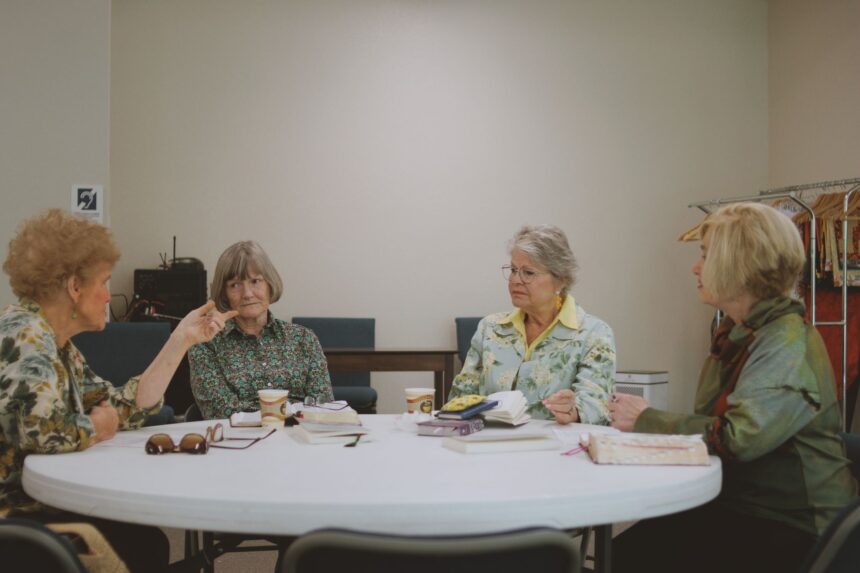
Dawn French discussing loneliness issues on BBC Radio 4 Woman's Hour
Dawn French's BBC discussion highlights the loneliness crisis affecting older women, with research showing 3.83 million UK older adults experiencing chronic isolation. The health impacts rival those of smoking, requiring evidence-based interventions beyond simple social contact. — Photo: Daniel & Hannah Snipes / Pexels
SHARE
🎧 Listen to this article5:31 min · 794 words · GMJ Audio

Updated 25/05/2026

Contents
      • Loneliness rates by age group in the UK
  • The Hidden Nature of Social Isolation
  • Health Implications of Chronic Loneliness
  • Addressing the Loneliness Epidemic
    • Key takeaways
  • Frequently asked questions
    • Why are older women more likely to experience loneliness?
    • How does loneliness affect physical health?
    • What interventions are most effective for treating loneliness?
3 min read|577 words

Comedian and actress Dawn French has highlighted the pervasive issue of loneliness among older women during a candid discussion on BBC Radio 4’s Woman’s Hour. French emphasized how social isolation can affect individuals regardless of their social circumstances, noting that meaningful connection extends far beyond physical proximity to others.

3.83 million
older people in the UK experience chronic loneliness, according to Age UK research

Loneliness rates by age group in the UK

Percentage reporting chronic loneliness across different demographics, 2023

Ages 16-24
24%
Ages 25-34
18%
Ages 55-64
15%
Ages 65+
22%

Source: Age UK, 2023 | Georgian Medical Journal News

Submit Your Paper
GMJ_Submit_Banner

The Hidden Nature of Social Isolation

French’s observation that “people can feel lonely in a crowd” reflects research findings from the University of Chicago showing that loneliness is fundamentally about perceived social isolation rather than objective social contact. The discussion highlighted how older women, in particular, face unique challenges in maintaining meaningful social connections as they age.

According to research published by Age UK, women over 75 are significantly more likely than men to live alone, with 49% of women in this age group living in single-person households compared to 29% of men.

🎙️ Related Podcast Episodes
🎧 #31 | GMJ Podcast | Daily Multivitamins and Biological Ageing — COSMOS Trial · 21m
🎧 #26 | Denmark Becomes First EU Country to Eliminate Mother-to-Child Transmission of HIV and · 14m
🎧 #53 | GMJ Podcast | Palliative Care in Georgia — Health System Gaps, Access Barriers, and Policy Implications · 16m
🎧 #47 | GMJ Podcast | Tskaltubo and the Future of Spa-Based Medicine — Radon Therapy, Rehabilitation, and Preventive Health · 19m
🎧 #46 | GMJ Podcast | Angioplasty of Saphenous Vein Grafts — Risks, Outcomes, and Clinical Strategies · 21m

Health Implications of Chronic Loneliness

A meta-analysis by Dr. Julianne Holt-Lunstad from Brigham Young University published in PLOS Medicine demonstrates that social isolation increases mortality risk by 26-32%, comparable to the health impact of smoking or obesity.

Dr. Julianne Holt-Lunstad’s research has documented that the physiological effects include increased inflammation, elevated cortisol levels, and compromised immune function. These findings underscore the importance of addressing loneliness as a serious clinical concern rather than merely a social issue.

Addressing the Loneliness Epidemic

The UK government appointed a Minister for Loneliness in 2018, following research showing 9 million people often or always feel lonely. Research published in Clinical Psychological Science shows that cognitive behavioral approaches addressing negative thought patterns about social relationships are more effective than simply increasing social opportunities. This research supports French’s emphasis on meaningful connection over mere social presence.

Social isolation increases mortality risk by 26-32%, equivalent to the health impact of smoking 15 cigarettes daily or being obese

— Dr. Julianne Holt-Lunstad, Brigham Young University (PLOS Medicine, 2015)

Key takeaways

  • 3.83 million older people in the UK experience chronic loneliness, with women over 75 disproportionately affected
  • Loneliness increases mortality risk by 26-32%, comparable to smoking or obesity
  • Quality of relationships matters more than quantity of social contacts for addressing loneliness
  • Cognitive behavioral interventions show greater effectiveness than simply increasing social opportunities

Frequently asked questions

Why are older women more likely to experience loneliness?

Women typically live longer than men and are more likely to be widowed. Additionally, 49% of women over 75 live alone compared to 29% of men in the same age group, according to Age UK research.

How does loneliness affect physical health?

According to Dr. Julianne Holt-Lunstad’s research, chronic loneliness triggers inflammatory responses, elevates stress hormones like cortisol, and compromises immune function. Research shows it increases mortality risk by 26-32%, equivalent to smoking 15 cigarettes daily.

What interventions are most effective for treating loneliness?

Research published in Clinical Psychological Science indicates that cognitive behavioral approaches addressing negative thought patterns about relationships are more effective than simply increasing social contact opportunities. Quality of connection matters more than quantity of interactions.

As public awareness of loneliness as a health crisis continues to grow, discussions like French’s contribute to destigmatizing the experience while highlighting the need for evidence-based interventions. The integration of loneliness screening into routine healthcare assessments and the development of targeted support programs for vulnerable populations, particularly older women, represent crucial next steps in addressing this epidemic.

Source: ‘People can feel lonely in a crowd’

Was this article helpful?

Disclaimer. This article is health journalism intended for general information and education. It is not medical advice and is not a substitute for professional diagnosis or treatment. Always consult a qualified healthcare provider about your individual circumstances. Full disclaimer →

Related Coverage

Supreme Court's Roundup ruling exposes a fundamental divide between legal and scientific causation standardsAug 21, 2026
Can laughter improve health? Researchers launch study to find outAug 21, 2026
Vegan, Gluten-Free, Cruelty-Free: What a Manufacturer's Declaration Is WorthAug 20, 2026
Astaxanthin Doses in the Clinic: What 6–12 mg Actually ShowedAug 20, 2026
Explore more on this topic:🧭 Mental Health hub🧭 Suicide Prevention hub
🔥 Most read this week
1High-Dose Zinc Supplements May Create Copper Deficiency, Warn Nutrition Experts
2Evidence-Based Hydration Protocol: How Much Fluid and Sodium Athletes Actually Need
3L-Theanine Improves Sleep Quality Without Drowsiness, Systematic Review Finds
4Why High-Dose Vitamin B12 Supplements Work Despite Poor Absorption
Related reference
  • Obesity · Condition
  • SAMe · Ingredient
PG
Editorial oversight
Prof. Giorgi Pkhakadze, MD, MPH, PhD
Editor-in-Chief, GMJ News
Full profile →  ·  ORCID 0000-0001-7609-4515
Medical disclaimer. This article is health journalism intended for general information. It is not medical advice and is not a substitute for consultation with a qualified healthcare professional. Always seek your physician's advice regarding any medical condition.
Editorial standards. This article was produced under the GMJ News editorial process, with oversight by the GMJ Editorial Board. Our editorial process. Spotted an error? Contact the editorial team.

📬 GMJ Health Digest
Evidence-based medical news, once a week. Free, no spam, unsubscribe anytime.
TAGGED:Dawn FrenchlonelinessMental Healtholder womensocial isolation
Share This Article
Facebook LinkedIn Bluesky Copy Link Print
GMJ
ByGMJ Perspectives Desk
Follow:
GMJ Perspectives Desk is part of GMJ News, the newsroom of the Georgian Medical Journal (gmj.ge), published by the Public Health Institute of Georgia. Every article is editorially reviewed before publication.
Leave a Comment Leave a Comment

Leave a Reply Cancel reply

Your email address will not be published. Required fields are marked *

Submit Your Paper →

Georgia's peer-reviewed open-access medical journal. No APC until January 2027.
Submit Manuscript →
Ethiopia Study Reveals Stakeholder Concerns Over Novel Malaria Treatments

A qualitative study in Ethiopia reveals that health workers and patients view…

Sitafloxacin monotherapy matches doxycycline-rifampicin for brucellosis treatment in landmark trial

A multicenter randomized trial in The Lancet Regional Health – Western Pacific…

Ultra-processed foods linked to higher kidney cancer risk in large US study

A prospective analysis of over 300,000 US adults found that higher consumption…

Submit Your Paper to GMJ

No APC until January 2027.
Submit Manuscript →

You Might Also Like

EFSA evaluates the science behind permitted health claims in the EU
ExplainersHealth Policy

What EFSA Health Claims Actually Mean for Supplements

By
GMJ Perspectives Desk
20/08/2026
Comparison chart showing BPA migration levels from microwaved polycarbonate containers versus FDA regulatory thresholdIllustrative image · Photo by Loren Castillo on Pexels (Pexels License)
ExplainersNew StudiesPerspectivesResearch Digest

Microwave Plastic Safety: What the Science Actually Shows About Migration Into Food

By
GMJ Perspectives Desk
18/07/2026
Conceptual illustration of human brain with stress pathways and botanical compounds highlightedIllustrative image · Photo by www.kaboompics.com on Pexels (Pexels License)
Clinical UpdatesExplainersNew StudiesPerspectivesPracticeResearch Digest

Stress impairs memory and attention by up to 20%, study finds—but botanical interventions show promise

By
GMJ Practice Desk
21/07/2026
Medical professionals being honored in memorial serviceIllustrative image · Photo by www.kaboompics.com on Pexels (Pexels License)
PerspectivesVoices

Medical Community Mourns Leaders Lost in June 2026

By
GMJ Perspectives Desk
18/06/2026
Facebook Twitter Youtube Instagram
Company
  • Privacy Policy
  • Contact US
  • GMJ Journal
  • Submit Manuscript
  • Editorial Team
  • Register at GMJ
  • Terms of Use

Subscribe to GMJ News — Click here

Join Community
© 2026 Georgian Medical Journal (GMJ). Published by the Public Health Institute of Georgia (PHIG). All rights reserved.
Welcome Back!

Sign in to your account

Username or Email Address
Password

Lost your password?