By using this site, you agree to the Privacy Policy and Terms of Use.
Accept
GMJ NewsGMJ NewsGMJ News
  • Latest News
    • GMJ Briefs
  • Podcast & Media
    • Podcast Episodes
    • GMJ Audio
    • GMJ Videos
  • Research Digest
    • New Studies
    • Georgian Research
    • Data & Numbers
  • Policy & Systems
    • Health Policy
    • Quality & Safety
    • Migration & Health
    • Global Health
  • Practice
    • Clinical Updates
    • Case Discussions
    • Pharmacy & Prescribing
    • Ingredients A-Z
  • Perspectives
    • Editorial
    • Explainers
    • Voices
    • Letters
  • GMJ Articles
    • Vol. 1 Issue 2 (2026)
    • Vol. 1 Issue 1 (2026)
    • Pre-Launch Articles (2025)
  • Read the Journal →
  • About GMJ News
Notification Show More
Font ResizerAa
GMJ NewsGMJ News
Font ResizerAa
  • Latest News
    • GMJ Briefs
  • Podcast & Media
    • Podcast Episodes
    • GMJ Audio
    • GMJ Videos
  • Research Digest
    • New Studies
    • Georgian Research
    • Data & Numbers
  • Policy & Systems
    • Health Policy
    • Quality & Safety
    • Migration & Health
    • Global Health
  • Practice
    • Clinical Updates
    • Case Discussions
    • Pharmacy & Prescribing
    • Ingredients A-Z
  • Perspectives
    • Editorial
    • Explainers
    • Voices
    • Letters
  • GMJ Articles
    • Vol. 1 Issue 2 (2026)
    • Vol. 1 Issue 1 (2026)
    • Pre-Launch Articles (2025)
  • Read the Journal →
  • About GMJ News
Follow US
GMJ News > Policy & Systems > Migration & Health > Lebanon Ceasefire Fails to Protect Children as 59 Casualties Reported in One Week
Migration & HealthPolicy & Systems

Lebanon Ceasefire Fails to Protect Children as 59 Casualties Reported in One Week

GMJ
Last updated: 20/06/2026 11:06
By
GMJ Policy Desk
Share
4 Min Read
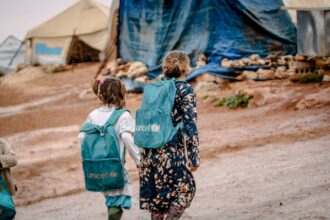
Children affected by conflict in Lebanon requiring medical attentionIllustrative image · Photo by Rudy Issa on Unsplash (Unsplash License)
UNICEF reports 59 children killed or injured in Lebanon during past week despite ongoing ceasefire. The casualties highlight continued vulnerability of children in conflict zones. — Photo by Rudy Issa on Unsplash (Unsplash License)
SHARE
2 min read|499 words

At least 59 children were killed or injured in Lebanon during the past week despite an ongoing ceasefire, according to UNICEF. The casualties highlight the continued vulnerability of children in conflict zones even when formal hostilities are supposed to have ceased.

Contents
      • Child casualties continue despite ceasefire declaration
  • Ceasefire violations threaten child safety
  • International response to protect children
  • Regional implications for child welfare
    • Key takeaways
  • Frequently asked questions
    • What protection do children have during ceasefires?
    • How does conflict affect children’s health?
    • What can international organizations do to help?
59
children killed or injured in Lebanon in one week despite ceasefire

Child casualties continue despite ceasefire declaration

Reported child deaths and injuries in Lebanon, past week

59
children killed
or injured
1
week since
ceasefire
0
days of complete
safety

Source: UNICEF, 2024 | Georgian Medical Journal News

Ceasefire violations threaten child safety

The casualties occurred despite international efforts to maintain peace in the region. UNICEF has repeatedly emphasized that children must be protected during armed conflicts under international humanitarian law.

Submit Your Paper
GMJ_Submit_Banner

The organization has documented ongoing violations of children’s rights in conflict zones across the Middle East. These incidents raise serious concerns about the effectiveness of current protection mechanisms for civilian populations, particularly children.

🎙️ Related Podcast Episodes
🎧 #26 | Denmark Becomes First EU Country to Eliminate Mother-to-Child Transmission of HIV and · 14m
🎧 #10 | WHO Child-Friendly Cities: Safe and Inclusive Public Spaces for Children · 18m
🎧 #9 Leprosy in 2026: Bridging Medical Cure and Social Inclusion – WHO World Leprosy Day Message · 18m

International response to protect children

Child protection agencies have called for immediate action to strengthen ceasefire monitoring mechanisms. The World Health Organization has also expressed concern about the impact of continued violence on children’s physical and mental health.

International humanitarian organizations are working to provide emergency medical care and psychosocial support to affected families. However, access to some areas remains limited due to ongoing security concerns.

Regional implications for child welfare

The situation in Lebanon reflects broader challenges facing children in conflict-affected areas across the Middle East. According to recent analyses, children in war zones face increased risks of injury, malnutrition, and psychological trauma.

Healthcare systems in the region continue to struggle with providing adequate care for injured children. Medical facilities have reported shortages of essential supplies and specialized pediatric care capacity.

At least 59 children were reportedly killed or injured in Lebanon during the past week despite the ceasefire agreement

— UNICEF Emergency Response Team (UNICEF Press Release, 2024)

Key takeaways

  • 59 children were killed or injured in Lebanon in one week despite ceasefire
  • UNICEF calls for stronger protection mechanisms for children in conflict zones
  • International humanitarian law requires protection of children during armed conflicts

Frequently asked questions

What protection do children have during ceasefires?

International humanitarian law requires all parties to protect civilians, especially children, even during temporary ceasefires. Children must have access to medical care, education, and basic services regardless of conflict status.

How does conflict affect children’s health?

Children in conflict zones face increased risks of physical injury, malnutrition, infectious diseases, and psychological trauma. Healthcare access is often severely limited during active hostilities and their aftermath.

What can international organizations do to help?

Organizations like UNICEF and WHO provide emergency medical care, nutrition support, and psychosocial services. They also advocate for stronger protection mechanisms and ceasefire monitoring to prevent further casualties.

The continued casualties among children despite ceasefire agreements underscore the urgent need for more robust protection mechanisms and international monitoring. As humanitarian organizations work to provide immediate assistance, the international community must address the underlying causes that continue to put children at risk in conflict zones.

Source: At least 59 children reportedly killed or injured in Lebanon in the past week despite ceasefire – UNICEF

Was this article helpful?

Disclaimer. This article is health journalism intended for general information and education. It is not medical advice and is not a substitute for professional diagnosis or treatment. Always consult a qualified healthcare provider about your individual circumstances. Full disclaimer →

Related Coverage

Gaza Children Face Educational Crisis as 625,000 Students Lose Access to SchoolingJun 21, 2026
Nearly 19.5 Million Sudanese Face Acute Food Insecurity as Famine Risk PersistsJun 21, 2026
Climate Crisis Threatens 2.2 Billion Children's Health and Wellbeing, UNICEF ReportsJun 21, 2026
IOM Governance Structure Reinforces Global Migration Health FrameworkJun 20, 2026
PG
Written by
Prof. Giorgi Pkhakadze, MD, MPH, PhD
Editor-in-Chief, GMJ News
Full profile →  ·  ORCID 0000-0001-7609-4515
Medical disclaimer. This article is health journalism intended for general information. It is not medical advice and is not a substitute for consultation with a qualified healthcare professional. Always seek your physician's advice regarding any medical condition.
Medically reviewed by Prof. Giorgi Pkhakadze, MD, MPH, PhD. Spotted an error? Contact the editorial team.
Get the GMJ News digest
Evidence-based health journalism in your inbox. No spam; unsubscribe anytime.
TAGGED:ceasefirechildrenconflictLebanonUNICEF
Share This Article
Facebook LinkedIn Bluesky Copy Link Print
GMJ
ByGMJ Policy Desk
Follow:
GMJ Policy Desk is part of GMJ News, the newsroom of the Georgian Medical Journal (gmj.ge), published by the Public Health Institute of Georgia. Every article is editorially reviewed before publication.
Leave a Comment Leave a Comment

Leave a Reply Cancel reply

Your email address will not be published. Required fields are marked *

Submit Your Paper →

Georgia's peer-reviewed open-access medical journal. No APC until January 2027.
Submit Manuscript →
Gaza Children Face Educational Crisis as 625,000 Students Lose Access to Schooling

Over 625,000 children in Gaza have lost access to education for more…

Nearly 19.5 Million Sudanese Face Acute Food Insecurity as Famine Risk Persists

Nearly 19.5 million people in Sudan face acute food insecurity with 755,000…

Climate Crisis Threatens 2.2 Billion Children’s Health and Wellbeing, UNICEF Reports

UNICEF reports that over 2.2 billion children worldwide face heightened health risks…

Submit Your Paper to GMJ

No APC until January 2027.
Submit Manuscript →

You Might Also Like

Colorado health officials and lawmakers discussing childhood vaccination policy at state capitol
Health PolicyPolicy & Systems

Colorado Forms Vaccine Coalition as Federal Support Weakens

By
GMJ Policy Desk
27/05/2026
World map showing climate zones with disease vector expansion indicators and outbreak hotspots
Global Health

Climate Change Is Reshaping Infectious Disease Patterns Worldwide

By
GMJ Policy Desk
21/05/2026
Healthcare workers in Vietnam clinic discussing patient care and research integration
Global Health

Building Equitable Health Access: Lessons from Vietnam’s Research-to-Care Bridge

By
GMJ Policy Desk
21/05/2026
Illustration of AI chatbot interface with medical symbols and trust indicatorsIllustrative image · Photo by Vitaly Gariev on Unsplash (Unsplash License)
Health PolicyPolicy & Systems

Pennsylvania AI Chatbot Lawsuit Reveals Critical Trust Gaps in Medical Technology

By
GMJ Policy Desk
16/06/2026
Facebook Twitter Youtube Instagram
Company
  • Privacy Policy
  • Contact US
  • GMJ Journal
  • Submit Manuscript
  • Editorial Team
  • Register at GMJ
  • Terms of Use

Subscribe to GMJ News — Click here

Join Community
© 2026 Georgian Medical Journal (GMJ). Published by the Public Health Institute of Georgia (PHIG). All rights reserved.
Welcome Back!

Sign in to your account

Username or Email Address
Password

Lost your password?

Not a member? Sign Up