By using this site, you agree to the Privacy Policy and Terms of Use.
Accept
GMJ NewsGMJ NewsGMJ News
  • Latest News
    • GMJ Briefs
  • Podcast & Media
    • Podcast Episodes
    • GMJ Audio
    • GMJ Videos
  • Research Digest
    • New Studies
    • Georgian Research
    • Data & Numbers
  • Policy & Systems
    • Health Policy
    • Quality & Safety
    • Migration & Health
    • Global Health
  • Practice
    • Clinical Updates
    • Case Discussions
    • Pharmacy & Prescribing
    • Ingredients A-Z
  • Perspectives
    • Editorial
    • Explainers
    • Voices
    • Letters
  • GMJ Articles
    • Vol. 1 Issue 2 (2026)
    • Vol. 1 Issue 1 (2026)
    • Pre-Launch Articles (2025)
  • Read the Journal →
  • About GMJ News
Notification Show More
Font ResizerAa
GMJ NewsGMJ News
Font ResizerAa
  • Latest News
    • GMJ Briefs
  • Podcast & Media
    • Podcast Episodes
    • GMJ Audio
    • GMJ Videos
  • Research Digest
    • New Studies
    • Georgian Research
    • Data & Numbers
  • Policy & Systems
    • Health Policy
    • Quality & Safety
    • Migration & Health
    • Global Health
  • Practice
    • Clinical Updates
    • Case Discussions
    • Pharmacy & Prescribing
    • Ingredients A-Z
  • Perspectives
    • Editorial
    • Explainers
    • Voices
    • Letters
  • GMJ Articles
    • Vol. 1 Issue 2 (2026)
    • Vol. 1 Issue 1 (2026)
    • Pre-Launch Articles (2025)
  • Read the Journal →
  • About GMJ News
Follow US
GMJ News > Practice > Clinical Updates > Teclistamab Shows Strong Response Rates in Earlier-Line Multiple Myeloma Treatment
Clinical UpdatesPractice

Teclistamab Shows Strong Response Rates in Earlier-Line Multiple Myeloma Treatment

GMJ
Last updated: 09/06/2026 12:07
By
GMJ Practice Desk
Share
5 Min Read
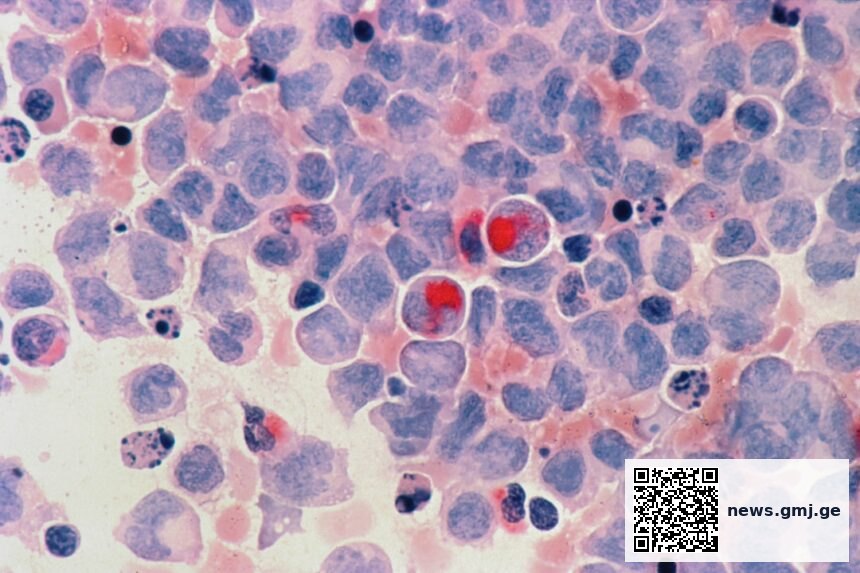
Medical illustration showing teclistamab bispecific antibody mechanism in multiple myeloma treatment
Phase 3 trial shows teclistamab extends progression-free survival by 7.3 months compared with standard treatments in multiple myeloma patients with fewer prior therapies. Bispecific antibody demonstrates 70% reduction in progression risk. — Photo: National Cancer Institute / Pexels
SHARE
🎧 Listen to this article4:29 min · 629 words · GMJ Audio
3 min read|629 words

A new bispecific antibody targeting both B-cell maturation antigen and CD3 has demonstrated significant efficacy when used earlier in multiple myeloma treatment sequences, according to findings from the MajesTEC-3 phase 3 trial published in The New England Journal of Medicine.

Contents
      • Progression-Free Survival by Treatment Group
  • Trial Design Targets Earlier Treatment Lines
  • Efficacy Results Show Clear Benefit
  • Safety Profile Requires Monitoring
  • Clinical Implementation Considerations
    • Key takeaways
  • Frequently asked questions
    • What is teclistamab and how does it work?
    • How does this study differ from previous teclistamab trials?
    • What are the main side effects patients should know about?
11.3 months
median progression-free survival improvement with teclistamab vs standard care

Progression-Free Survival by Treatment Group

Months of disease control in MajesTEC-3 trial participants

Teclistamab
11.3
Standard Care
4.0

Source: NEJM, 2024 | Georgian Medical Journal News

Trial Design Targets Earlier Treatment Lines

The MajesTEC-3 study enrolled 740 patients with multiple myeloma who had received one to three previous lines of therapy, according to the research published in The New England Journal of Medicine. Participants were randomized to receive either teclistamab or investigator’s choice of standard treatments.

Submit Your Paper
GMJ_Submit_Banner

The primary endpoint focused on progression-free survival, with secondary measures including overall response rate and safety profiles. This represents a shift toward testing advanced therapies in patients with less heavily pretreated disease.

🎙️ Related Podcast Episodes
🎧 #26 | Denmark Becomes First EU Country to Eliminate Mother-to-Child Transmission of HIV and · 14m
🎧 #44 | GMJ Podcast | Infant Formula Contamination — Global Food Safety Failure and the Cereulide Outbreak · 21m
🎧 #40 | GMJ Podcast | [Insert Article Title] — Evidence, Clinical Implications, and Public Health Perspective · 16m
🎧 #39 | GMJ Podcast | Acne and Metabolic Dysfunction — Insulin Resistance, IGF-1, and Clinical Implications · 15m
🎧 #38 | GMJ Podcast | Acne and Metabolic Dysfunction — Insulin Resistance, IGF-1, and Clinical Implications · 21m

Efficacy Results Show Clear Benefit

Patients receiving teclistamab achieved a median progression-free survival of 11.3 months compared with 4.0 months for standard care, representing a 70% reduction in risk of progression or death. The overall response rate reached 61.3% in the teclistamab group versus 41.9% for standard treatments.

Complete response rates were notably higher with teclistamab at 26.5% compared with 10.2% for standard care. These findings suggest meaningful clinical benefit when the bispecific antibody is used earlier in the treatment sequence, according to recent clinical research.

Safety Profile Requires Monitoring

The most common grade 3 or higher adverse events with teclistamab included infections (25.8%), neutropenia (23.2%), and anemia (17.8%). Cytokine release syndrome occurred in 48.8% of patients, though most cases were grade 1-2 in severity.

Treatment-related deaths occurred in 2.4% of teclistamab patients compared with 1.1% in the standard care group. The FDA approval of teclistamab for relapsed/refractory multiple myeloma was based on earlier studies in more heavily pretreated patients.

Clinical Implementation Considerations

The results support expanding teclistamab use to patients with fewer prior therapies, though implementation requires specialized monitoring protocols. Healthcare systems need infrastructure for managing cytokine release syndrome and step-up dosing regimens required for safe administration.

Cost-effectiveness analyses will be important as bispecific antibodies move into earlier treatment lines, potentially displacing established multiple myeloma therapies. The findings may influence treatment sequencing decisions and regulatory guidance for multiple myeloma management.

Teclistamab reduced the risk of disease progression or death by 70% compared with standard treatments in patients with one to three prior therapy lines

— Dr. Philippe Moreau, University Hospital of Nantes (The New England Journal of Medicine, 2024)

Key takeaways

  • Teclistamab extended progression-free survival by 7.3 months compared with standard treatments
  • Complete response rates were 2.6 times higher with teclistamab than standard care
  • Cytokine release syndrome occurred in nearly half of patients but was mostly mild to moderate
  • Results support using bispecific antibodies earlier in multiple myeloma treatment sequences

Frequently asked questions

What is teclistamab and how does it work?

Teclistamab is a bispecific antibody that simultaneously binds to BCMA on myeloma cells and CD3 on T cells, directing immune system attack against cancer cells. It requires specialized administration protocols including step-up dosing.

How does this study differ from previous teclistamab trials?

The MajesTEC-3 trial tested teclistamab in patients with fewer prior therapies (1-3 lines) compared with earlier studies in heavily pretreated patients. This represents a move toward using the drug earlier in treatment sequences.

What are the main side effects patients should know about?

The most significant risks include infections, low blood counts, and cytokine release syndrome. Nearly half of patients experience cytokine release syndrome, though most cases are manageable with appropriate monitoring and treatment.

The MajesTEC-3 results represent a significant advance in multiple myeloma treatment, demonstrating that bispecific antibodies can provide meaningful benefit when used earlier in the disease course. As healthcare systems adapt to incorporate these therapies, careful attention to safety monitoring and cost considerations will be essential for optimal patient outcomes.

Source: Teclistamab in Multiple Myeloma with One to Three Previous Lines of Therapy

Was this article helpful?

Disclaimer. This article is health journalism intended for general information and education. It is not medical advice and is not a substitute for professional diagnosis or treatment. Always consult a qualified healthcare provider about your individual circumstances. Full disclaimer →

Related Coverage

Revolution Medicines Ships Experimental Pancreatic Cancer Drug Under Early AccessJun 9, 2026
DNA Test Could Spare 6,600 Breast Cancer Patients From Unnecessary ChemotherapyJun 9, 2026
New Blood Tests and Stool Screens Join Colonoscopy as Primary Options for Colorectal Cancer DetectionJun 9, 2026
PCOS Name Change Campaign Gains Momentum as Women Seek Better UnderstandingJun 9, 2026
PG
Written by
Prof. Giorgi Pkhakadze, MD, MPH, PhD
Editor-in-Chief, GMJ News
Full profile →
Medical disclaimer. This article is health journalism intended for general information. It is not medical advice and is not a substitute for consultation with a qualified healthcare professional. Always seek your physician's advice regarding any medical condition.
Medically reviewed by Prof. Giorgi Pkhakadze, MD, MPH, PhD. Spotted an error? Contact the editorial team.

Get the GMJ News digest
Evidence-based health journalism in your inbox. No spam; unsubscribe anytime.
TAGGED:bispecific antibodyclinical trialmultiple myelomaoncologyteclistamab
Share This Article
Facebook LinkedIn Bluesky Copy Link Print
GMJ
ByGMJ Practice Desk
Follow:
GMJ Practice Desk is part of GMJ News, the newsroom of the Georgian Medical Journal (gmj.ge), published by the Public Health Institute of Georgia. Every article is editorially reviewed before publication.
Leave a Comment Leave a Comment

Leave a Reply Cancel reply

Your email address will not be published. Required fields are marked *

Submit Your Paper →

Georgia's peer-reviewed open-access medical journal. No APC until January 2027.
Submit Manuscript →
E-cigarettes deliberately designed to target youth through availability and addictive features, researchers warn

New research reveals how tobacco companies systematically design e-cigarettes to maximize youth…

FDA’s Pazdur Calls for Agency Restructuring Amid China Competition and Internal Upheaval

FDA's Rick Pazdur calls for fundamental agency restructuring following internal disruption, citing…

Revolution Medicines Ships Experimental Pancreatic Cancer Drug Under Early Access

Revolution Medicines begins expanded access program for daraxonrasib targeting KRAS G12C mutations.…

Submit Your Paper to GMJ

No APC until January 2027.
Submit Manuscript →

You Might Also Like

NHS mobile CT scanning truck parked in supermarket car park providing lung cancer screening
Clinical UpdatesPractice

Mobile NHS lung cancer screening detects 10,000 cases in supermarket car parks

By
GMJ Practice Desk
03/06/2026
Medical consultation showing gynecological examination room with healthcare equipment
Clinical UpdatesPractice

Pharmacist’s Misdiagnosed Vulvar Itching Reveals Critical Need for Cancer Awareness

By
GMJ Practice Desk
27/05/2026
Medical illustration showing regional nerve block procedure for cardiac surgery pain management
New StudiesResearch Digest

Regional Nerve Block Reduces Opioid Use After Heart Surgery by 25%, Multicentre Trial Shows

By
GMJ Research Desk
29/05/2026
Medical illustration showing optic nerve blood flow blockage causing sudden vision loss
Clinical UpdatesPractice

Wegovy Shows Higher Risk of Rare Eye Stroke Causing Sudden Vision Loss

By
GMJ Practice Desk
24/05/2026
Facebook Twitter Youtube Instagram
Company
  • Privacy Policy
  • Contact US
  • GMJ Journal
  • Submit Manuscript
  • Editorial Team
  • Register at GMJ
  • Terms of Use

Subscribe to GMJ News — Click here

Join Community
© 2026 Georgian Medical Journal (GMJ). Published by the Public Health Institute of Georgia (PHIG). All rights reserved.
Welcome Back!

Sign in to your account

Username or Email Address
Password

Lost your password?

Not a member? Sign Up