


Microplastics
GMJ News knowledge hub · last reviewed August 2026 · Georgian Medical Journal
SummaryStatisticsGlossaryGMJ newsFAQDocumentsOrganizationsResearch
Microplastics — plastic fragments under 5 mm, and nanoplastics below 1 µm — are now detectable in seawater, soil, food, drinking water and, according to a rapidly growing literature, in human blood, placenta and brain tissue. That literature is currently in open crisis: in late 2025 and January 2026 a series of methodological challenges showed that the dominant detection technique can mistake human fat for polyethylene, and that headline findings such as “a spoonful of plastic in the brain” may be substantially inflated by false positives. Environmental contamination is settled; how much plastic is actually inside us, and what it does there, is genuinely unresolved — which is a different situation from either “proven harm” or “proven safety” (WHO: Dietary and inhalation exposure to nano- and microplastic particles).
Key messages
SETTLED: microplastics are everywhere in the environment
Environmental contamination is not in dispute. Plastic fragments are documented in ocean water at all depths, in Arctic ice, in agricultural soil, in atmospheric dust, in bottled and tap water and across the food chain. Global plastic production exceeds 400 million tonnes a year and recycling captures under 10%. Whatever the resolution of the human-tissue controversy, the environmental case for reducing plastic waste stands on its own evidence and does not depend on proving direct human toxicity.
GENUINELY OPEN: how much plastic is actually in human tissue
The headline findings — plastic in blood, placenta, carotid plaque and famously 'a spoonful in the brain' — rest heavily on pyrolysis gas chromatography-mass spectrometry, and that method is now under formal challenge. Work led by Rauert and colleagues showed that lipids in human tissue produce the same pyrolysis signatures as polyethylene, the very polymer these studies report as dominant; a January 2025 analysis concluded the technique is not currently suitable for identifying polyethylene or PVC in fatty samples, and critics have identified more than a dozen studies that did not adequately control this false-positive risk. A Matters Arising in Nature Medicine formally questioned the contamination controls of the most-cited brain study. Some plastic probably does enter human tissue; the reported quantities are unreliable.
GENUINELY OPEN: what internalised particles do
Even granting tissue presence, health effects in humans remain undetermined. Laboratory studies show that micro- and nanoplastics can provoke inflammation, oxidative stress and cellular uptake in vitro and in rodents, usually at doses far above plausible human exposure. The most suggestive human study — plastic detected in carotid artery plaque and associated with cardiovascular events — used the same contested detection methodology and is observational. There is at present no established human disease caused by environmental microplastic exposure, and equally no adequate evidence base to declare current exposures safe.
UNSUPPORTED: quantified disease claims and detox products
Claims that microplastics cause a stated number of deaths, drive falling sperm counts, explain rising cancers in the young, or can be removed from the body by blood filtration, supplements or 'detox' protocols have no evidential basis. No intervention has been shown to remove microplastics from human tissue, and no attribution of a specific disease burden survives the current uncertainty in even measuring exposure. The commercial detox market is exploiting a data vacuum.
The January 2026 methodological reckoning matters beyond plastics
The correction now under way is science working properly, and it is worth teaching as such: extraordinary findings attracted scrutiny, the analytical chemistry community stress-tested the method, and the field is being forced to adopt blank controls, lipid standards and validation before quantitation. The reputational risk is that the public hears 'it was all wrong' — the accurate summary is that detection was oversold while the underlying exposure question remains open and important.
What can honestly be recommended today
WHO's assessments of microplastics in drinking water and food conclude that current evidence does not indicate a risk at present exposure levels while explicitly grading the data as limited. Reasonable, low-cost personal measures — less plastic food-contact heating, less bottled water where tap quality is good — are defensible on precaution without invoking proven harm. The strong policy case remains upstream: production, waste and the UN plastics treaty process, not consumer anxiety.
Key statistics
400+ Mt
annual global plastic production, with under 10% recycled — the upstream driver of all exposure
UNEP18 studies
identified by critics as reporting tissue microplastics without adequate control of lipid false positives
Environmental chemistry literaturePolyethylene
the dominant polymer reported in human tissue — and the polymer most easily mimicked by human fat in Py-GC/MS
Nature Medicine Matters Arising2019/2022
WHO assessments: no indicated risk from microplastics in drinking water at current levels, but data graded limited
WHONo therapy
no intervention of any kind has been shown to remove microplastics from human tissue
Evidence review2024-2026
the window in which the human-tissue detection literature came under formal methodological challenge
DocumentedMicroplastics — where the disagreement actually lies
Glossary of key terms
Latest GMJ coverage
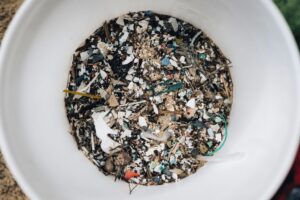
Microplastics Found in Human Arterial Plaque Linked to Heart Attack and Stroke Risk
18/07/2026

Kimchi-derived probiotic shows promise in reducing microplastic accumulation, South Korean lab study finds
19/05/2026

Microwave Plastic Safety: What the Science Actually Shows About Migration Into Food
18/07/2026
Brain imaging reveals speech learning depends on sensory processing, not motor control alone
08/08/2026

Amino Acids Shape Cognition: How Protein Powers Brain Chemistry and Mental Performance
06/08/2026
Why Nutrients Work Better Together: How Coordinated Inputs Reshape Brain Synapses
04/08/2026
Frequently asked questions 12 Q&A — structured for Google featured snippets and AI discovery
Knowledge hub: guidelines, conventions and reports
Organizations working in migration and health
Related health topics
PFAS forever chemicalsEndocrine disruptorsFood safetyWater and sanitationHealth misinformationClimate change and health
About this hub. Produced by the GMJ News Editorial Team as a public-good service. Every statistic is linked to its primary source. Documents are preserved in the GMJ Repository with full attribution. Georgian Medical Journal · Contact the editorial team