


Home › Topics › West Nile Virus
West Nile Virus
GMJ News knowledge hub · last reviewed October 2026 · Georgian Medical Journal
SummaryStatisticsGlossaryGMJ newsFAQDocumentsOrganizationsResearch
West Nile virus (WNV) — transmitted by Culex mosquitoes feeding on infected birds — is the most widespread flavivirus globally, causing periodic outbreaks of febrile illness and severe neurological disease (encephalitis, meningitis, acute flaccid paralysis) across Africa, Europe, the Middle East, Asia and the Americas (WHO). The 2018-2022 European WNV outbreak — the largest ever recorded — caused over 1,500 neuroinvasive cases and 186 deaths across 16 countries, demonstrating that WNV is now permanently established in Europe. No vaccine or specific antiviral treatment is approved for humans; management is supportive.
Key messages
Most widespread flavivirus globally
West Nile virus (WNV) is now the most geographically widespread flavivirus — established on every inhabited continent. Transmitted by Culex mosquitoes feeding on infected birds, it causes periodic outbreaks of febrile illness and neurological disease (WHO).
Most infections asymptomatic
Approximately 80% of WNV infections are asymptomatic. About 20% develop West Nile fever (mild febrile illness). Less than 1% develop severe neuroinvasive disease — West Nile encephalitis, meningitis or acute flaccid paralysis — but this carries 10-15% mortality and significant morbidity.
European spread — new normal
WNV is now permanently established in Europe: the 2018-2022 outbreak caused the largest-ever European WNV epidemic, with >1,500 neuroinvasive cases and 186 deaths across 16 countries. Expanding range driven by Culex mosquito range expansion with climate change.
No treatment or vaccine for humans
There is no approved vaccine or specific antiviral treatment for WNV in humans. Management of neuroinvasive disease is entirely supportive — ICU care, mechanical ventilation, seizure management. Intravenous immunoglobulin is used in some centres without definitive evidence.
Blood safety concern
WNV is transmitted through blood transfusion — causing transfusion-transmitted WNV infection. Blood banks in endemic areas screen donated blood with NAT (nucleic acid testing) during transmission season. Organ transplantation is also a transmission route.
Older adults at highest risk
Risk of severe neuroinvasive WNV disease increases sharply with age: adults over 60 have 20-fold higher risk of encephalitis than young adults. Immunocompromised individuals are also at very high risk.
Key statistics
WNV neuroinvasive disease cases in Europe by year — ECDC
Source: ECDC. 2018 was the record year; WNV is now a regular summer health threat in Europe.
Glossary of key terms
Latest GMJ coverage

New Molecular Diagnostic Kit Offers Rapid Detection for Multiple Arboviruses
23/09/2026
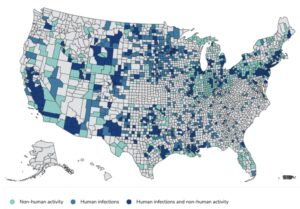
West Nile Virus Cases Hit Record High as CDC Urges Mosquito Protection Over Independence Day
17/09/2026
Climate-Driven Mosquito Season Shifts Earlier, Threatening Disease Spread Across Northern Regions
23/09/2026
Frequently asked questions 12 Q&A — structured for Google featured snippets and AI discovery
Knowledge hub: guidelines, conventions and reports
Organizations working in migration and health
Related health topics
DengueZika virusYellow feverJapanese encephalitisClimate (vector range)Blood safety
About this hub. Produced by the GMJ News Editorial Team as a public-good service. Every statistic is linked to its primary source. Documents are preserved in the GMJ Repository with full attribution. Georgian Medical Journal · Contact the editorial team