Updated 13/09/2026
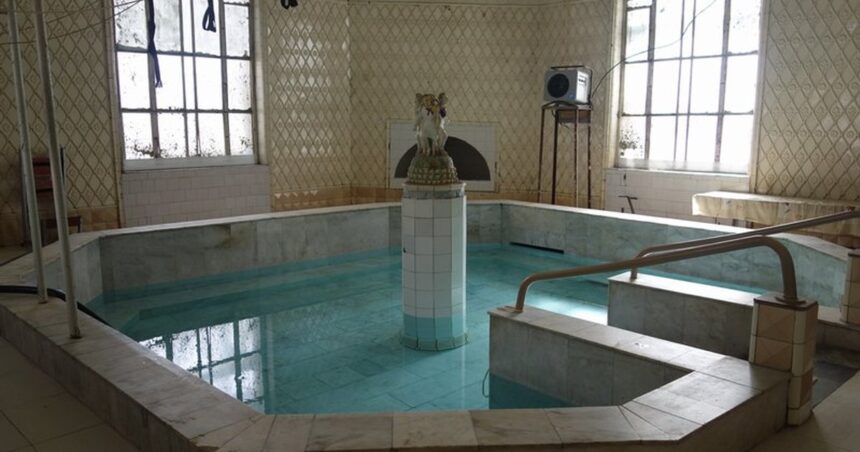
Photo: File:Tskaltubo – Bathhouse Nr. 7 pool area.jpg, by Daniel-tbs (Wikimedia), cropped for layout · Licensed CC BY-SA 3.0 · Source
Plain-language summary of research published in the Georgian Medical Journal. Written for the general public by the GMJ News editorial team.
Spa medicine and balneotherapy are re-emerging worldwide as non-pharmacological tools for rehabilitation and preventive health — but they remain, as this commentary in the Georgian Medical Journal puts it, under-theorised and insufficiently standardised. Using Georgia’s Tskaltubo spa system as a case example, the paper asks what it would actually take to evaluate spa medicine the way modern healthcare evaluates everything else.

A Framework, Not Just a Case Study
The commentary introduces the concept of structured spa-based therapeutic systems (SSTS) — a way of understanding spa medicine as a coordinated, multimodal intervention rather than a loose collection of isolated treatments. SSTS combines natural therapeutic resources, standardised exposure conditions, environmental design, and behavioural structuring within one unified system of care, rather than treating a mineral bath, a rest schedule, and a change of environment as unrelated inputs.
Tskaltubo as the Test Case
Using Tskaltubo as a worked example, the paper examines how a model like SSTS can be critically evaluated and positioned within contemporary evidence-based healthcare — including radon balneotherapy, a defining component of several spa systems, which the paper notes presents its own distinct clinical and regulatory questions given radon’s dual identity as both a therapeutic agent and a radiation exposure requiring careful dosing and oversight.
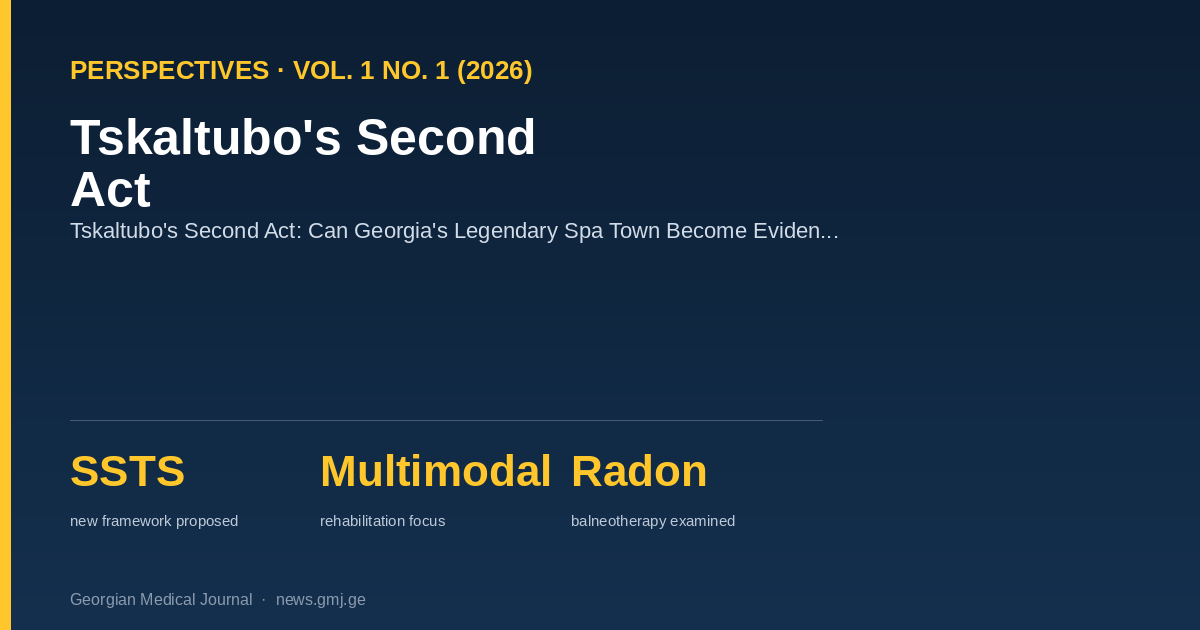
At a glance — the headline figures.
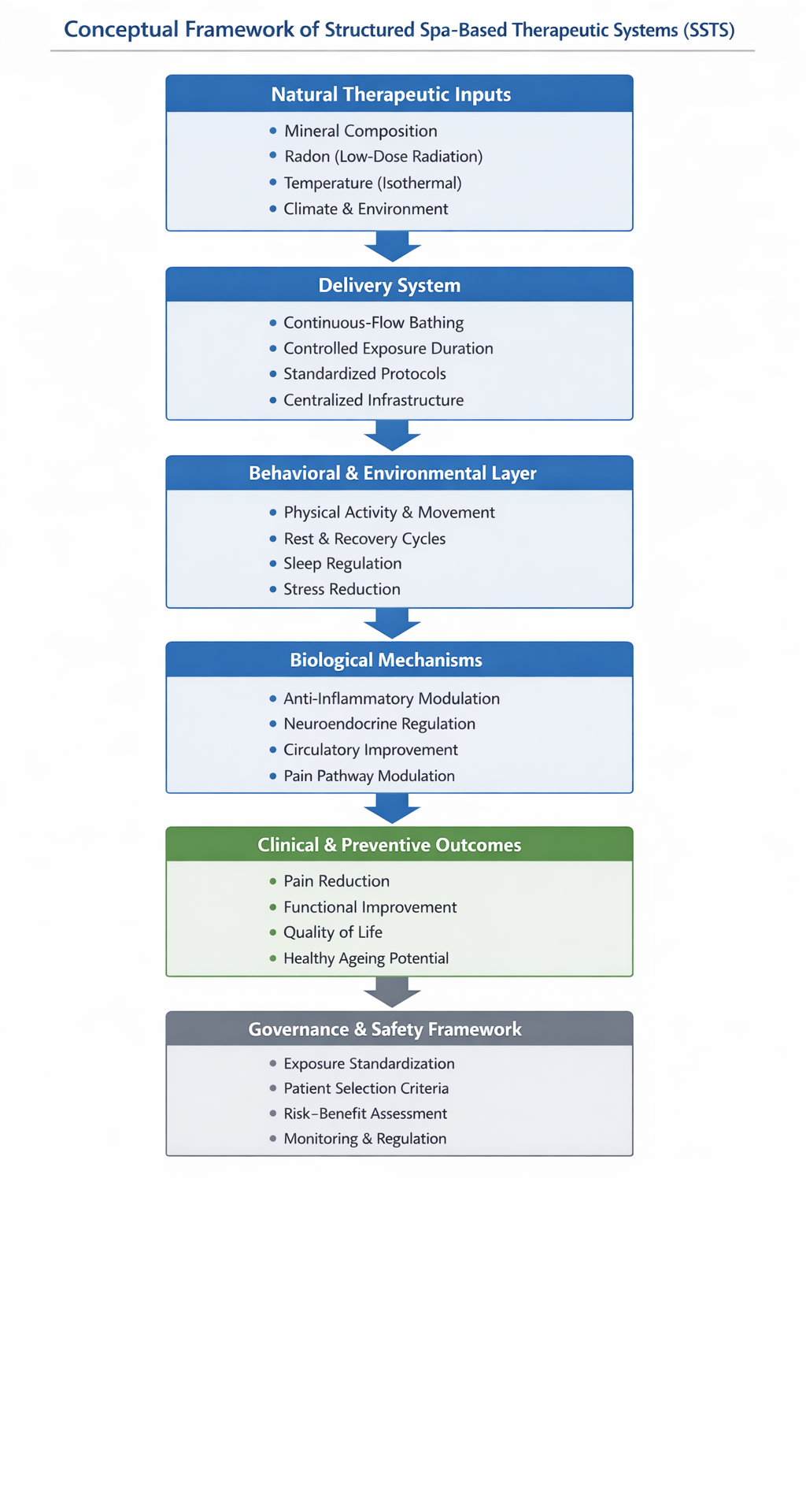
A proposed ITSM-adapted service framework for structuring spa-based healthcare operations. Figure from the commentary. Source: Georgian Medical Journal, Vol. 1 No. 1 (2026), DOI: 10.5281/zenodo.19116251.
The stakes for Georgia are direct: Tskaltubo is a legendary therapeutic destination with a century of tradition behind it, but tradition alone doesn’t satisfy modern evidence standards or attract the kind of international medical tourism and clinical partnership a rigorously standardised spa system could. This commentary is explicitly a framework paper — a way of thinking about the problem — rather than a clinical trial, but it sets out exactly what evaluating Tskaltubo rigorously would require, which is the necessary first step before that evaluation can happen.
🗺️ Find certified Georgian healthcare providers: sheniekimi.ge — Georgia Health Map · 998 clinics · 6,600+ doctors · 2,296 pharmacies
Read the Original Research
Original article: Tskaltubo’s Second Act: Can Georgia’s Legendary Spa Town Become Evidence-Based Medicine?
Published in: Georgian Medical Journal, Vol. 1 No. 1 (2026)
DOI: 10.5281/zenodo.19116251
📄 Read the full article at gmj.ge →
Georgian Medical Journal (GMJ) · ISSN 3088-4322 · gmj.ge · Open Access CC BY 4.0 · Published by the Public Health Institute of Georgia (PHIG). This summary is an independent editorial product of GMJ News; for clinical decisions, consult the original peer-reviewed article and a qualified professional.
Was this article helpful?
Disclaimer. This article is health journalism intended for general information and education. It is not medical advice and is not a substitute for professional diagnosis or treatment. Always consult a qualified healthcare provider about your individual circumstances. Full disclaimer →
Related Coverage



Editorial standards. This article was produced under the GMJ News editorial process, with oversight by the GMJ Editorial Board. Our editorial process. Spotted an error? Contact the editorial team.