By using this site, you agree to the Privacy Policy and Terms of Use.
Accept
GMJ NewsGMJ NewsGMJ News
  • Latest News
    • GMJ Briefs
  • Podcast & Media
    • Podcast Episodes
    • GMJ Audio
    • GMJ Videos
  • Research Digest
    • New Studies
    • Georgian Research
    • Data & Numbers
  • Policy & Systems
    • Health Policy
    • Quality & Safety
    • Migration & Health
    • Global Health
  • Practice
    • Clinical Updates
    • Case Discussions
    • Pharmacy & Prescribing
    • Ingredients A-Z
  • Perspectives
    • Editorial
    • Explainers
    • Voices
    • Letters
  • GMJ Articles
    • Vol. 1 Issue 2 (2026)
    • Vol. 1 Issue 1 (2026)
    • Pre-Launch Articles (2025)
  • Read the Journal →
  • About GMJ News
Notification Show More
Font ResizerAa
GMJ NewsGMJ News
Font ResizerAa
  • Latest News
    • GMJ Briefs
  • Podcast & Media
    • Podcast Episodes
    • GMJ Audio
    • GMJ Videos
  • Research Digest
    • New Studies
    • Georgian Research
    • Data & Numbers
  • Policy & Systems
    • Health Policy
    • Quality & Safety
    • Migration & Health
    • Global Health
  • Practice
    • Clinical Updates
    • Case Discussions
    • Pharmacy & Prescribing
    • Ingredients A-Z
  • Perspectives
    • Editorial
    • Explainers
    • Voices
    • Letters
  • GMJ Articles
    • Vol. 1 Issue 2 (2026)
    • Vol. 1 Issue 1 (2026)
    • Pre-Launch Articles (2025)
  • Read the Journal →
  • About GMJ News
Follow US
GMJ News > Policy & Systems > Health Policy > WHO Kidney Health Resolution Needs Urgent Implementation Framework, Lancet Editorial Warns
Health PolicyPolicy & Systems

WHO Kidney Health Resolution Needs Urgent Implementation Framework, Lancet Editorial Warns

GMJ
Last updated: 23/06/2026 18:42
By
GMJ Policy Desk
Share
7 Min Read
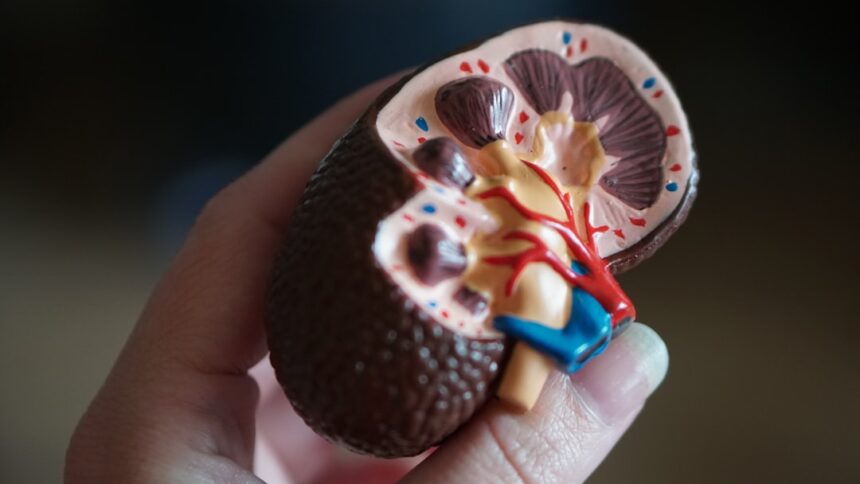
Medical professionals reviewing kidney health policy documents and implementation guidelinesIllustrative image · Photo by Robina Weermeijer on Unsplash (Unsplash License)
WHO's November 2025 kidney health resolution faces implementation challenges that could undermine efforts to address the global CKD crisis. A new Lancet editorial and Health Policy paper provide frameworks for translating policy into action. — Photo by Robina Weermeijer on Unsplash (Unsplash License)
SHARE
🎧 Listen to this article5:54 min · 834 words · GMJ Audio
4 min read|834 words
✓ Reviewed by Prof. Giorgi Pkhakadze, MD, MPH, PhD · ORCID 0000-0001-7609-4515

The World Health Organization’s groundbreaking resolution on kidney health, adopted in November 2025, faces implementation challenges that could undermine its potential to address the global chronic kidney disease crisis, according to a new editorial in The Lancet.

Contents
    • Key takeaways
      • Global Burden of Chronic Kidney Disease
  • From Recognition to Action: The Implementation Challenge
  • Learning from Diabetes: A Proven Integration Model
  • Operational Framework for Global Implementation
  • Critical Next Steps for Global Kidney Health
    • What this means
  • Frequently asked questions
    • What makes chronic kidney disease implementation challenging compared to other NCDs?
    • How would integration with diabetes programmes work in practice?
    • What are the main barriers to implementing the WHO kidney health resolution?

Key takeaways

  • WHO’s November 2025 kidney health resolution marked the first global recognition of CKD as a priority health issue
  • New Health Policy paper provides practical implementation framework drawing from diabetes control successes
  • Integration with existing non-communicable disease programmes offers the most viable path forward
850 million
people worldwide estimated to have chronic kidney disease, according to WHO data

Global Burden of Chronic Kidney Disease

CKD prevalence and mortality impact across regions, 2024 estimates

850m
People with CKD globally
1.2m
Annual deaths from CKD
90%
Deaths in low-middle income countries

Source: WHO Global Health Observatory, 2024 | Georgian Medical Journal News

From Recognition to Action: The Implementation Challenge

The World Health Organization’s resolution on kidney health represented a watershed moment after decades of neglect for chronic kidney disease on the global health agenda. However, The Lancet editorial emphasizes that policy adoption and practical implementation are fundamentally different challenges.

Submit Your Paper
GMJ_Submit_Banner

The editorial points to historical patterns where international health resolutions face “opposition, inertia, and indifference” during operationalisation phases. This concern is particularly acute for CKD, which has traditionally received less attention compared to other non-communicable diseases like diabetes and cardiovascular disease.

🎙️ Related Podcast Episodes
🎬 The Architecture of Migration Health: Inside the GMJ Knowledge Hub | Georgian Medical Journal
🎧 #48 | GMJ Podcast | Launching the Georgian Medical Journal — Transparency, Editorial Standards, and Open-Access Vision · 17m
🎧 #44 | GMJ Podcast | Infant Formula Contamination — Global Food Safety Failure and the Cereulide Outbreak · 21m
🎧 #1 Commentary Patient-centred Care and Professionalism in Medical Facilities Implications for Medical Education, Communication and Empathy · 11m
🎬 NAD⁺ Injections and “NAD Boosters”

Learning from Diabetes: A Proven Integration Model

A Health Policy paper featured in the same issue of The Lancet offers a roadmap based on successful diabetes control programmes. The paper argues that integrating kidney health initiatives within existing non-communicable disease frameworks presents the most pragmatic approach to implementation.

This integration model has proven effective in diabetes management across multiple healthcare systems, particularly in resource-constrained settings. The authors suggest that CKD prevention and management can leverage existing infrastructure, training programmes, and care pathways already established for diabetes care. For more insights on health policy developments, our coverage provides ongoing analysis of global health initiatives.

Operational Framework for Global Implementation

The Health Policy paper outlines specific mechanisms for translating the WHO resolution into actionable programmes. Key recommendations include establishing CKD screening protocols within existing diabetes and hypertension programmes, training healthcare workers on early detection methods, and developing integrated treatment guidelines.

The framework emphasizes the importance of adapting implementation strategies to local healthcare contexts while maintaining core quality standards. This approach recognizes that successful CKD programmes must work within existing health system capacities rather than requiring entirely new infrastructure.

The editorial stresses that without concrete implementation frameworks, the WHO resolution risks becoming another well-intentioned but ineffective policy statement. The authors call for immediate action from WHO member states to begin pilot programmes based on the proposed integration model.

Critical Next Steps for Global Kidney Health

The Lancet editorial identifies several urgent priorities for moving from resolution to results. These include developing standardized implementation toolkits, establishing monitoring and evaluation frameworks, and securing sustained financing mechanisms for integrated NCD programmes.

Particular emphasis is placed on addressing the stark global inequities in CKD care, with the majority of kidney disease deaths occurring in low- and middle-income countries. The editorial argues that the integration approach offers the most realistic path to expanding access to kidney health services in these settings.

The authors also highlight the need for political commitment beyond the initial resolution adoption, noting that sustained implementation requires ongoing advocacy and resource allocation at national levels. For healthcare professionals seeking updates on clinical developments in kidney disease management, our dedicated coverage tracks emerging treatments and guidelines.

“Efforts to implement and operationalise these kinds of agreements are often met with opposition, inertia, and indifference,” highlighting the critical gap between policy adoption and practical action.

— The Lancet Editorial Board (The Lancet, 2026)

What this means

For patients: Integrated CKD screening within diabetes and hypertension programmes could enable earlier detection and treatment access globally
For clinicians: New implementation frameworks provide practical guidance for incorporating kidney health assessments into routine NCD care protocols
For policymakers: The integration model offers cost-effective mechanisms for fulfilling WHO resolution commitments within existing healthcare budgets

Frequently asked questions

What makes chronic kidney disease implementation challenging compared to other NCDs?

CKD has historically received less attention and funding compared to diabetes or cardiovascular disease, resulting in limited infrastructure and awareness. The integration approach leverages existing diabetes programmes to overcome these barriers.

How would integration with diabetes programmes work in practice?

Healthcare workers would screen for kidney function during routine diabetes visits, using existing laboratory networks and training programmes. This approach maximizes efficiency while expanding CKD detection capabilities.

What are the main barriers to implementing the WHO kidney health resolution?

The Lancet editorial identifies opposition, inertia, and indifference as primary challenges, along with resource constraints and competing health priorities in many countries.

The path from the WHO resolution on kidney health to meaningful global action requires immediate implementation of proven integration strategies. Success will depend on political will, sustained funding, and the practical application of lessons learned from diabetes control programmes across diverse healthcare settings.

Source: The next steps for chronic kidney disease

Was this article helpful?

Disclaimer. This article is health journalism intended for general information and education. It is not medical advice and is not a substitute for professional diagnosis or treatment. Always consult a qualified healthcare provider about your individual circumstances. Full disclaimer →

Related Coverage
California Legislator Passes Landmark Ultra-Processed Food Regulations Despite Industry OppositionJul 1, 2026
Arts Engagement Shows Promise as 'Social Prescribing' for Health and Medical EmpathyJun 30, 2026
New US Rules Require Work Activities for Medicaid RecipientsJun 30, 2026
UK A&E Departments See Record 2.4 Million Attendances During May HeatwaveJun 30, 2026
Related reference
  • Chronic Kidney Disease · Condition
  • Hypertension · Condition
  • SAMe · Ingredient
PG
Written by
Prof. Giorgi Pkhakadze, MD, MPH, PhD
Editor-in-Chief, GMJ News
Full profile →  ·  ORCID 0000-0001-7609-4515
Medical disclaimer. This article is health journalism intended for general information. It is not medical advice and is not a substitute for consultation with a qualified healthcare professional. Always seek your physician's advice regarding any medical condition.
Medically reviewed by Prof. Giorgi Pkhakadze, MD, MPH, PhD. Spotted an error? Contact the editorial team.

Get the GMJ News digest
Evidence-based health journalism in your inbox. No spam; unsubscribe anytime.
TAGGED:chronic kidney diseaseglobal-healthhealth policy implementationNCD integrationWHO kidney health
Share This Article
Facebook LinkedIn Bluesky Copy Link Print
GMJ
ByGMJ Policy Desk
Follow:
GMJ Policy Desk is part of GMJ News, the newsroom of the Georgian Medical Journal (gmj.ge), published by the Public Health Institute of Georgia. Every article is editorially reviewed before publication.
Leave a Comment Leave a Comment

Leave a Reply Cancel reply

Your email address will not be published. Required fields are marked *

Submit Your Paper →

Georgia's peer-reviewed open-access medical journal. No APC until January 2027.
Submit Manuscript →
Supermarket Data Reveals Women Buying Less Effective Period Pain Relief

Supermarket purchasing data reveals many women are buying less effective pain medications…

Breastfeeding Support Failures Leave New Mothers Traumatized, UK Survey Reveals

UK mothers report inadequate breastfeeding support causing trauma severe enough to influence…

California Legislator Passes Landmark Ultra-Processed Food Regulations Despite Industry Opposition

California Assembly member Jesse Gabriel has passed more ultra-processed food legislation in…

Submit Your Paper to GMJ

No APC until January 2027.
Submit Manuscript →

You Might Also Like

Climate change and health risks infographic showing temperature trendsIllustrative image · Photo by Feyza Daştan on Pexels (Pexels License)
Global HealthPolicy & Systems

Global Temperatures Likely to Set Records Over Next Five Years, WMO Warns

By
GMJ Policy Desk
16/06/2026
Medical illustration showing kidney and heart protection with finerenone treatmentIllustrative image · Photo by Robina Weermeijer on Unsplash (Unsplash License)
Clinical UpdatesNew StudiesPracticeResearch Digest

Finerenone Shows Cardiovascular Benefits in Non-Diabetic Chronic Kidney Disease Patients

By
GMJ Practice Desk
15/06/2026
SAHPRA South African Health Products Regulatory Authority logo and Citro-Soda product recall announcement
Quality & Safety

South African regulator recalls Citro-Soda batches amid contamination fears

By
GMJ Policy Desk
21/05/2026
Healthcare professionals and diverse patients illustrating language barrier challenges in medical settingsIllustrative image · Photo by Stéf -b. on Pexels (Pexels License)
Policy & SystemsQuality & Safety

Language Barriers in Healthcare: How Communication Gaps Affect Patient Safety and Quality of Care

By
GMJ Policy Desk
19/06/2026
Facebook Twitter Youtube Instagram
Company
  • Privacy Policy
  • Contact US
  • GMJ Journal
  • Submit Manuscript
  • Editorial Team
  • Register at GMJ
  • Terms of Use

Subscribe to GMJ News — Click here

Join Community
© 2026 Georgian Medical Journal (GMJ). Published by the Public Health Institute of Georgia (PHIG). All rights reserved.
Welcome Back!

Sign in to your account

Username or Email Address
Password

Lost your password?

Not a member? Sign Up