By using this site, you agree to the Privacy Policy and Terms of Use.
Accept
GMJ NewsGMJ NewsGMJ News
  • Latest News
    • GMJ Briefs
  • Podcast & Media
    • Podcast Episodes
    • GMJ Audio
    • GMJ Videos
  • Research Digest
    • New Studies
    • Georgian Research
    • Data & Numbers
  • Policy & Systems
    • Health Policy
    • Quality & Safety
    • Migration & Health
    • Global Health
  • Practice
    • Clinical Updates
    • Case Discussions
    • Pharmacy & Prescribing
    • Ingredients A-Z
  • Perspectives
    • Editorial
    • Explainers
    • Voices
    • Letters
  • GMJ Articles
    • Vol. 1 Issue 2 (2026)
    • Vol. 1 Issue 1 (2026)
    • Pre-Launch Articles (2025)
  • Read the Journal →
  • About GMJ News
Notification Show More
Font ResizerAa
GMJ NewsGMJ News
Font ResizerAa
  • Latest News
    • GMJ Briefs
  • Podcast & Media
    • Podcast Episodes
    • GMJ Audio
    • GMJ Videos
  • Research Digest
    • New Studies
    • Georgian Research
    • Data & Numbers
  • Policy & Systems
    • Health Policy
    • Quality & Safety
    • Migration & Health
    • Global Health
  • Practice
    • Clinical Updates
    • Case Discussions
    • Pharmacy & Prescribing
    • Ingredients A-Z
  • Perspectives
    • Editorial
    • Explainers
    • Voices
    • Letters
  • GMJ Articles
    • Vol. 1 Issue 2 (2026)
    • Vol. 1 Issue 1 (2026)
    • Pre-Launch Articles (2025)
  • Read the Journal →
  • About GMJ News
Follow US
GMJ News > Perspectives > Explainers > The ‘8×8 Water Rule’ Has No Scientific Source—Here’s What the Evidence Actually Shows
ExplainersNew StudiesPerspectivesResearch Digest

The ‘8×8 Water Rule’ Has No Scientific Source—Here’s What the Evidence Actually Shows

GMJ
Last updated: 12/07/2026 13:29
By
GMJ Perspectives Desk
Share
9 Min Read
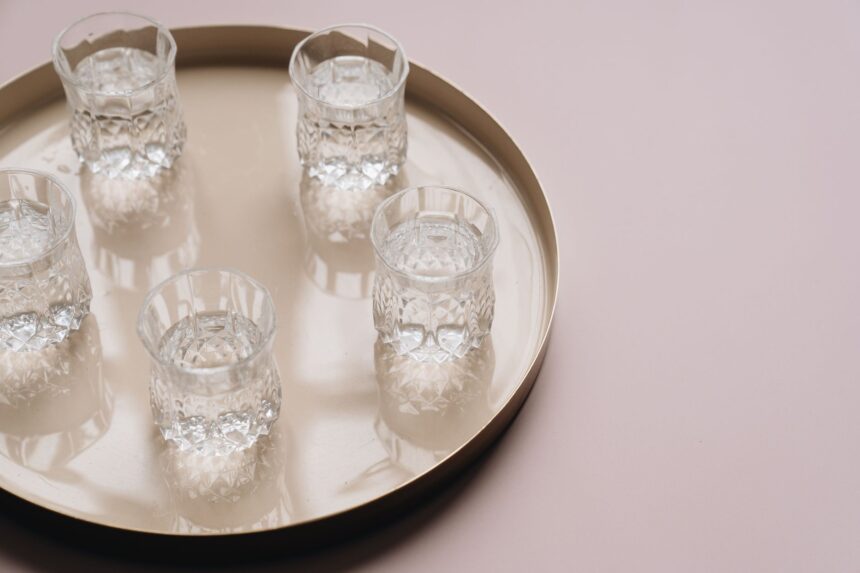
Infographic showing 67% of daily water intake from beverages, 33% from food moisture, based on O'Connor et al. study dataIllustrative image · Photo by alleksana on Pexels (Pexels License)
The ubiquitous recommendation to drink eight 8-ounce glasses of water daily has no traceable scientific source. A Dartmouth kidney physiologist's exhaustive 2002 search found no primary study supporting the rule, while real-world intake data shows people naturally consume adequate fluids through thirst and food moisture. — Photo by alleksana on Pexels (Pexels License)
SHARE
6 min read|1,186 words
✓ Reviewed by Prof. Giorgi Pkhakadze, MD, MPH, PhD · ORCID 0000-0001-7609-4515

🟠 Moderate Evidence

Contents
    • Key takeaways
      • Where Daily Water Intake Comes From
  • The Search for a Scientific Source
  • What People Actually Drink—Real-World Data
  • Does Caffeine Cause Dehydration?
    • What this means
  • Frequently asked questions
    • Is the “8×8” rule actually harmful?
    • How much water do people actually need?
    • If I drink coffee or tea, am I losing water?

One of modern health culture’s most repeated recommendations—drinking eight 8-ounce glasses of water daily—has no traceable scientific origin, according to an exhaustive search published in the American Journal of Physiology. When Dr. Heinz Valtin, a kidney physiologist at Dartmouth Medical School, attempted to find the source of the “8×8” rule in 2002, he searched electronic databases, older literature, and consulted specialist nutritionists—and found nothing. The recommendation appears to have become cultural shorthand without any primary research to support it.

Key takeaways

  • The ubiquitous “8×8” water recommendation lacks any identifiable scientific source or supporting study
  • Real-world fluid intake in adults averages 2.31 litres per day, with 67% from beverages and 33% from food moisture, according to research from the Journal of Human Nutrition and Dietetics
  • Caffeine does not cause net dehydration—habitual coffee drinkers show no difference in total body water whether consuming coffee or plain water, a finding published in PLOS ONE
2.31 L/day
Mean total daily water intake in 1,500 Irish adults measured using food diaries (O’Connor et al., Journal of Human Nutrition and Dietetics, 2014)

Where Daily Water Intake Comes From

Breakdown of total fluid intake sources in representative population sample

Beverages (all types)
67%
Moisture in food
33%

Source: O’Connor et al., Journal of Human Nutrition and Dietetics, 2014 | Georgian Medical Journal News

Submit Your Paper
GMJ_Submit_Banner

The Search for a Scientific Source

Dr. Heinz Valtin’s 2002 investigation in the American Journal of Physiology represents one of the few systematic attempts to trace the “8×8” rule to its origin. Despite consulting specialists in fluid balance nutrition and searching both indexed and non-indexed literature, Valtin found no primary study or controlled trial supporting the recommendation. The rule had achieved cultural ubiquity without scientific grounding—a phenomenon the researcher termed a “myth that refuses to die.”

🎙️ Related Podcast Episodes
🎧 #45 | GMJ Podcast | Tskaltubo Mineral Baths in Osteoarthritis — Microcirculation, Erythrocytes, and Clinical Effects · 18m
🎧 #41 | GMJ Podcast | Hydrochemical Stability and Radiobiology of Tskaltubo Mineral Water — Clinical and Scientific Evaluation · 17m
🎧 #28 | GMJ Podcast | SheniEkimi.ge #1: Top 5 Evidence-Based Public Health News · 19m
🎬 NAD⁺ Injections and “NAD Boosters”
🎬 GMJ Video Series | Rare Case: Lung Cancer & Tuberculosis Coexistence

The absence of a cited source does not mean hydration is unimportant. Rather, it illustrates how health recommendations can become embedded in public consciousness through repetition rather than evidence. This raises important questions about the gap between folk wisdom and evidence-based guidance. For clinicians and public health communicators, the finding underscores the need to verify the pedigree of commonly accepted health claims. See our Explainers section for more on evaluating health claims.

What People Actually Drink—Real-World Data

O’Connor and colleagues conducted a more grounded investigation, measuring total water intake in a nationally representative sample of 1,500 Irish adults using 4-day semi-weighed food records published in the Journal of Human Nutrition and Dietetics. Mean total water intake averaged 2.31 litres per day, with men consuming 2.52 litres and women 2.09 litres. Importantly, this total includes all sources: 67 percent came from beverages of all kinds (tea, coffee, milk, juice, soft drinks, and plain water), while 33 percent came from moisture naturally present in solid foods.

This distinction matters for clinical practice. Plain drinking water constitutes only a fraction of total fluid intake, and thirst—the body’s primary regulatory mechanism—remains a reliable guide for most healthy adults in temperate climates. Clinical guidance should reflect this nuance rather than a fixed numeric target.

Does Caffeine Cause Dehydration?

A related claim—that caffeine-containing beverages cause net dehydration—also lacks empirical support. Killer and colleagues conducted a rigorous 3-day crossover trial published in PLOS ONE, enrolling 50 habitual male coffee drinkers (baseline consumption 3–6 cups daily). Participants consumed either 4 cups of coffee daily (delivering 4 mg/kg of caffeine) or matched volumes of plain water. The researchers measured total body water directly using deuterium oxide dilution and tracked urinary and blood hydration markers over 24 hours.

The result was unambiguous: no significant difference in total body water between the coffee and water trials (51.4 kg versus 51.5 kg). There was no difference in 24-hour urine volume and no difference in hydration biomarkers. For habitual coffee drinkers, the beverage does not produce net fluid loss. This finding should reassure clinicians that counselling patients to avoid coffee as a hydration source is not evidence-based.

The “drink eight glasses of water daily” recommendation has no identifiable primary source. A kidney physiologist’s exhaustive 2002 literature search found no study supporting the rule, suggesting it entered popular health discourse through repetition rather than scientific evidence.

— Dr. Heinz Valtin, Dartmouth Medical School (American Journal of Physiology, 2002)

What this means

For patients: Thirst remains your body’s most reliable hydration signal. Fixed fluid targets are unnecessary for healthy adults in normal climates. If you enjoy coffee or tea, these beverages contribute meaningfully to daily fluid intake and do not cause dehydration. Drink according to thirst and urine colour rather than a numeric prescription.
For clinicians: Counsel patients that individualized hydration guidance based on activity level, climate, and medical conditions is more appropriate than blanket “8×8” recommendations. In hospitalized or elderly patients, fluid intake monitoring remains important, but the target should be set according to clinical context, not cultural mythology.
For policymakers: Public health messaging on hydration should be grounded in physiological evidence and real-world intake data rather than unverified recommendations. Health communications campaigns should cite their sources and acknowledge that fluid needs vary widely by individual, age, and circumstance.

Frequently asked questions

Is the “8×8” rule actually harmful?

For most healthy adults, drinking more water than thirst dictates is not dangerous—excess water is excreted by the kidneys. However, in specific populations (elderly individuals, those with heart or kidney disease, or athletes in endurance events), excessive fluid intake can cause hyponatraemia (dangerously low blood sodium). The real harm is not from the recommendation itself but from the false certainty it creates and the attention it diverts from evidence-based hydration guidance tailored to individual need.

How much water do people actually need?

The evidence suggests natural intake—drinking when thirsty and eating a diet with fruits and vegetables that contain water—meets hydration needs in most healthy adults in temperate climates. According to real-world intake data from O’Connor et al. (2014), typical daily water intake from all sources averages 2.3 litres. Needs increase with physical activity, heat exposure, fever, or diarrhoea, but these are clinical circumstances requiring individualized assessment, not a universal prescription.

If I drink coffee or tea, am I losing water?

No. The Killer et al. (2014) trial demonstrates that habitual coffee drinkers maintain equal total body water whether consuming coffee or plain water. While caffeine is a mild diuretic, the fluid volume in caffeinated beverages more than compensates. Tea, coffee, milk, and juice all count toward daily fluid intake and should not be discouraged on hydration grounds.

The “8×8” story illustrates a broader principle: health recommendations gain authority not only through scientific evidence but through repetition and cultural embedding. As a research-focused news platform, GMJ remains committed to tracing health claims back to their sources and asking the simple question: where is the evidence? For hydration, that evidence points not to a fixed number but to individual physiological need, monitored through thirst and urine colour. In an era of information overload, verification of sources may be the most important public health skill of all.

Source: Valtin H. “Drink at least eight glasses of water a day.” Really? Is there scientific evidence for “8×8”? American Journal of Physiology, 2002; O’Connor et al. Journal of Human Nutrition and Dietetics, 2014; Killer et al. PLOS ONE, 2014

Was this article helpful?

Disclaimer. This article is health journalism intended for general information and education. It is not medical advice and is not a substitute for professional diagnosis or treatment. Always consult a qualified healthcare provider about your individual circumstances. Full disclaimer →

Related Coverage

Short sleep in workers under 45 linked to 55% higher mortality, Israeli 36-year study findsJul 20, 2026
How Your Brain's Cleanup System Works: The Glymphatic System ExplainedJul 20, 2026
B12 deficiency can cause nerve damage despite normal blood tests, landmark study findsJul 20, 2026
CoQ10 supplementation reduces heart failure events by 43%, Q-SYMBIO trial showsJul 20, 2026
Related reference
  • Sodium · Ingredient
PG
Written by
Prof. Giorgi Pkhakadze, MD, MPH, PhD
Editor-in-Chief, GMJ News
Full profile →  ·  ORCID 0000-0001-7609-4515
Medical disclaimer. This article is health journalism intended for general information. It is not medical advice and is not a substitute for consultation with a qualified healthcare professional. Always seek your physician's advice regarding any medical condition.
Medically reviewed by Prof. Giorgi Pkhakadze, MD, MPH, PhD. Spotted an error? Contact the editorial team.

Get the GMJ News digest
Evidence-based health journalism in your inbox. No spam; unsubscribe anytime.
TAGGED:evidence-based healthfluid balancehydrationnutrition mythwater intake
Share This Article
Facebook LinkedIn Bluesky Copy Link Print
GMJ
ByGMJ Perspectives Desk
Follow:
GMJ Perspectives Desk is part of GMJ News, the newsroom of the Georgian Medical Journal (gmj.ge), published by the Public Health Institute of Georgia. Every article is editorially reviewed before publication.
Leave a Comment Leave a Comment

Leave a Reply Cancel reply

Your email address will not be published. Required fields are marked *

Submit Your Paper →

Georgia's peer-reviewed open-access medical journal. No APC until January 2027.
Submit Manuscript →
Short sleep in workers under 45 linked to 55% higher mortality, Israeli 36-year study finds

A 36-year Israeli occupational cohort study of 7,287 workers found that young…

How Your Brain’s Cleanup System Works: The Glymphatic System Explained

Your brain has a continuous housekeeping system called the glymphatic network that…

B12 deficiency can cause nerve damage despite normal blood tests, landmark study finds

A landmark NEJM study found that 28% of patients with B12-related nerve…

Submit Your Paper to GMJ

No APC until January 2027.
Submit Manuscript →

You Might Also Like

Vitamin D supplement bottles showing different dosage amounts
New StudiesResearch Digest

Why Your Vitamin D Dose May Be Wrong: New Research Reveals Flawed Shelf-Based Selection

By
GMJ Research Desk
27/05/2026
MRI brain scan showing relationship between body composition and brain aging patterns
New StudiesResearch Digest

Muscle Mass Linked to Younger Brain Age in New MRI Study of 1,164 Adults

By
GMJ Research Desk
23/05/2026
Community health worker conducting voluntary blood donation in rural Sierra LeoneIllustrative image · Photo by Tahir Xəlfə on Pexels (Pexels License)
Global HealthNew StudiesPolicy & SystemsResearch Digest

Community-led blood donation model cuts costs by 40% in rural Sierra Leone

By
GMJ Policy Desk
10/07/2026
Scientific illustration showing eggs and brain health connection with statistical data
New Studies

Daily Eggs Linked to 27% Lower Alzheimer’s Risk in Major 15-Year Study

By
GMJ Research Desk
21/05/2026
Facebook Twitter Youtube Instagram
Company
  • Privacy Policy
  • Contact US
  • GMJ Journal
  • Submit Manuscript
  • Editorial Team
  • Register at GMJ
  • Terms of Use

Subscribe to GMJ News — Click here

Join Community
© 2026 Georgian Medical Journal (GMJ). Published by the Public Health Institute of Georgia (PHIG). All rights reserved.
Welcome Back!

Sign in to your account

Username or Email Address
Password

Lost your password?

Not a member? Sign Up