🟡 Preliminary Evidence
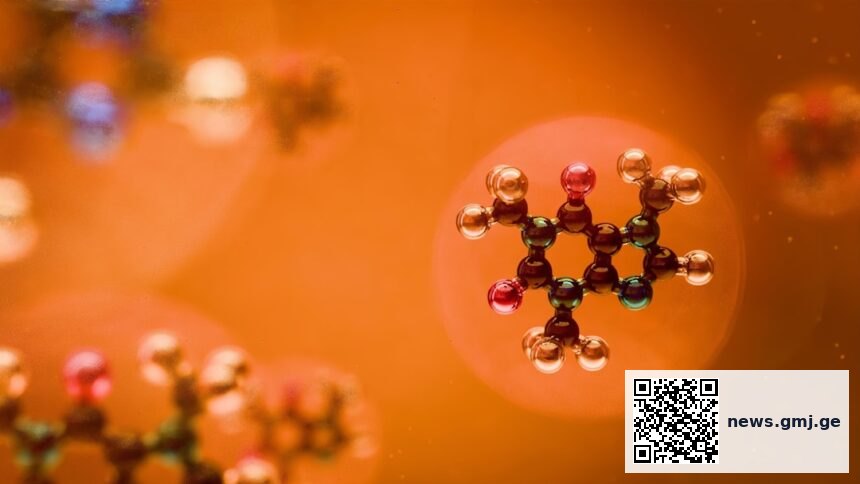
Scientists have determined the precise three-dimensional structures of two unusual molecules found in rye pollen that demonstrated tumour-fighting potential in animal studies decades ago, according to a research team that has worked to solve this structural puzzle for nearly 30 years. The breakthrough in molecular characterisation now provides the blueprint needed to investigate how these natural compounds interact with the human immune system and which specific chemical regions may be responsible for their anti-tumour effects. This development opens new avenues for fundamental cancer research by clarifying molecular mechanisms that have remained obscure since initial observations in the 1990s.
Key takeaways
- Researchers have solved a 30-year structural mystery surrounding two bioactive molecules in rye pollen with documented tumour-fighting activity in animal models
- Determination of precise 3D molecular architecture enables systematic investigation of immune-system interactions and mechanism of action
- The findings may accelerate development of immunological approaches to cancer by clarifying how natural compounds engage immune pathways
- Next-phase research will focus on structure-activity relationships and potential clinical translation pathways
Timeline of Rye Pollen Compound Research and Discovery
From initial tumour-fighting observations to structural resolution, spanning three decades of investigation
Source: Structural Chemistry Research Timeline, 2026 | Georgian Medical Journal News

A Molecular Puzzle With Decades-Old Roots
The two molecules in question were first identified in rye pollen during the 1990s, when preliminary studies suggested they possessed the ability to help animals resist tumour development. However, without knowledge of their precise three-dimensional molecular architecture—the exact spatial arrangement of atoms that determines how a molecule can bind to proteins and trigger biological responses—researchers faced a fundamental barrier to understanding mechanism. The structural ambiguity prevented scientists from identifying which chemical features were responsible for the immune-activating effects and which parts of the molecules might be modified to enhance or refine anti-cancer activity.
For nearly three decades, these compounds remained scientifically intriguing but mechanistically opaque. Determining a molecule’s 3D structure requires sophisticated techniques such as X-ray crystallography, nuclear magnetic resonance (NMR) spectroscopy, or cryo-electron microscopy—methods that demand both technical expertise and often years of preparatory work to obtain crystal forms or other analytical samples suitable for high-resolution imaging. The structural difficulty of these particular molecules, combined with competing research priorities and the complexity of scaling natural compound research toward clinical translation, meant the puzzle remained unsolved for an extended period.
By determining the exact 3D structures of two molecules found in rye pollen, researchers have unlocked the blueprint needed to investigate how these natural compounds interact with the immune system and which chemical components may be responsible for their cancer-fighting effects.
— Research team solving 30-year structural mystery (2026)
Structural Breakthrough Opens Mechanistic Investigation
The resolution of these molecular structures now enables a systematic, structure-guided approach to understanding how the compounds function at the cellular and molecular level. With precise 3D information, researchers can perform computational modelling to predict which immune-system proteins the molecules might bind, conduct structure-activity relationship (SAR) studies to test how chemical modifications alter biological potency, and use biophysical methods to directly measure binding interactions with candidate immune targets. This transition from structural mystery to structural clarity represents a foundational step in natural-products-based drug discovery—converting an empirical observation into a tractable scientific question.
The implications for cancer immunology are significant. If these rye pollen compounds engage specific immune pathways—such as activation of dendritic cells, enhancement of T-cell recognition, or triggering of innate immune receptors—the newly resolved structures provide a rational basis for optimisation. Researchers can now design focused experiments to test whether synthetic analogues, chemical derivatives, or combination approaches with established immunotherapies might enhance anti-tumour efficacy in preclinical models and potentially move toward clinical translation.
Natural Products and the Structure-Function Gap in Cancer Research
This breakthrough highlights a persistent challenge in translational cancer research: many natural compounds with documented biological activity remain mechanistically poorly understood because determining their 3D structures is technically demanding and resource-intensive. Traditional drug development pipelines often prioritise synthetic compounds, for which structure is established during synthesis, over natural products, which require separate characterisation efforts. As a result, potentially valuable immune-modulatory or anti-tumour compounds derived from plants, fungi, or other natural sources may be overlooked or underexploited.
The 30-year timeline illustrates that solving such structural puzzles requires sustained scientific commitment. The effort to characterise these rye pollen molecules demonstrates the value of persisting with fundamental chemical research even when direct commercial incentives may be limited. Such foundational work is increasingly recognised as essential for expanding the pipeline of potential immunological interventions, particularly as the field moves beyond checkpoint inhibitors and other engineered therapies toward more diverse immune-activation strategies that may include natural and semi-synthetic compounds.
Future research will likely focus on determining which immune receptors or signalling pathways the compounds activate, testing their efficacy in established tumour models, and exploring whether combination treatment with checkpoint inhibitors or other immunotherapies might enhance anti-cancer effects. The international cancer research community will be monitoring whether this structural breakthrough translates into functional insights that advance therapeutic development.
What this means
Frequently asked questions
Why has determining the 3D structure of these rye pollen compounds taken 30 years?
Structural determination requires sophisticated analytical techniques and often years of preparatory work to obtain samples suitable for X-ray crystallography, NMR, or cryo-electron microscopy. The particular complexity of these molecules, combined with limited funding for basic natural-products research and competing research priorities, extended the timeline. Once methodological barriers are overcome, such breakthroughs can accelerate progress rapidly.
Does this mean rye pollen can treat cancer?
No. The original observations of anti-tumour activity were documented in animal studies, not humans. Understanding the 3D structure is a foundational step that enables investigation of mechanism and potential optimisation, but many years of preclinical and clinical research would be required before any therapeutic claim could be made or tested in patients.
How will researchers use the 3D structures to advance cancer research?
With precise molecular architecture known, researchers can predict which immune proteins the compounds bind, design chemical derivatives with enhanced potency, conduct structure-activity relationship studies, and test efficacy in tumour models. This rational, structure-guided approach accelerates the transition from molecular characterisation to functional investigation and eventual clinical translation.
The resolution of this 30-year structural mystery demonstrates the enduring value of fundamental research in unlocking biological mechanisms that may have clinical significance. As cancer immunology continues to evolve beyond early checkpoint inhibitor approaches, the re-examination of natural compounds—now armed with precise molecular details—may yield unexpected therapeutic opportunities. The next phase will determine whether these rye pollen molecules represent a genuine advance in immune-oncology or a scientifically interesting but ultimately limited observation. Continued investigation, guided by the newly determined structures, is now positioned to answer that question.
Source: Scientists solve a 30-year rye pollen mystery that could transform cancer research
Was this article helpful?
Disclaimer. This article is health journalism intended for general information and education. It is not medical advice and is not a substitute for professional diagnosis or treatment. Always consult a qualified healthcare provider about your individual circumstances. Full disclaimer →
Related Coverage




Editorial standards. This article was produced under the GMJ News editorial process, with oversight by the GMJ Editorial Board. Our editorial process. Spotted an error? Contact the editorial team.