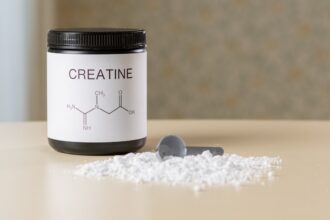
Macrominerals form the structural and metabolic foundation of human physiology, while trace minerals act as precise regulators at the molecular level. Despite their vastly different required quantities, both mineral categories are essential to enzymatic function, gene regulation, and cellular signalling. Understanding their distinct roles—and how they work in concert—is critical for clinical practice and public health guidance.
Key takeaways
- Macrominerals (calcium, phosphorus, magnesium, sodium, potassium, chloride, sulfur) are needed in gram-scale quantities and serve structural and electrolytic roles
- Trace minerals (iron, zinc, copper, manganese, iodine, selenium, molybdenum, chromium) are required in microgram-to-low-milligram amounts but function as enzyme cofactors and gene regulators
- Iron requirements differ by sex: 8 mg/day for men versus 18 mg/day for women of reproductive age, reflecting menstrual blood loss
- Food sources for both categories overlap significantly; whole grains, legumes, and animal proteins deliver multiple minerals simultaneously
Macrominerals: The structural and metabolic scaffolding
Macrominerals are required in quantities measured in hundreds of milligrams to grams per day. The National Institutes of Health Office of Dietary Supplements defines calcium, phosphorus, magnesium, sodium, potassium, chloride, and sulfur as macrominerals based on their abundance in the body and dietary requirements.
Calcium and phosphorus together account for approximately 99% of the body’s mineral mass, primarily in bone and tooth structure. The NIH recommends 1,000 mg/day of calcium for adults aged 19–50 years, with primary sources including dairy products, small fish with edible bones, and fortified plant milks. Phosphorus, required at 700 mg/day, is abundantly present in meat, dairy, legumes, and whole grains—making isolated deficiency rare in populations with adequate protein intake.
Magnesium participates in over 300 enzymatic reactions, including energy production and protein synthesis. The NIH guidelines specify 400–420 mg/day for adult men and 310–320 mg/day for adult women. Leafy greens, nuts, seeds, and whole grains are the primary dietary sources. Clinically, magnesium status affects neuromuscular function and cardiovascular regulation, making assessment relevant in patients with arrhythmia, muscle weakness, or migraine disorders.

Sodium, potassium, and chloride maintain fluid balance, nerve transmission, and muscle contraction. The U.S. Dietary Guidelines recommend 1,500 mg/day of sodium (with an upper limit of 2,300 mg/day), 3,400 mg/day for men and 2,600 mg/day for women of potassium, and 2,300 mg/day of chloride. In clinical contexts, serum electrolyte imbalances—hypernatraemia, hypokalaemia, and hypochloraemia—require targeted intervention and monitoring.
Daily mineral requirements across the lifespan (adults 19–50 years)
Recommended Dietary Allowance (RDA) or Adequate Intake (AI) by mineral category, in milligrams or micrograms
Source: U.S. National Institutes of Health Office of Dietary Supplements, Dietary Reference Intake tables | Georgian Medical Journal News
Trace minerals: Precision regulators at the molecular level
Trace minerals—iron, zinc, copper, manganese, iodine, selenium, molybdenum, and chromium—are required in microgram-to-low-milligram quantities but exert disproportionate biochemical influence. Research on mineral bioavailability and enzymatic function shows that deficiency in any single trace mineral disrupts multiple metabolic pathways simultaneously.
Iron serves as the oxygen-carrying centre of haemoglobin and myoglobin, and acts as a cofactor in cytochrome P450 enzymes involved in drug metabolism. The NIH specifies 8 mg/day for adult men and 18 mg/day for women aged 19–50 years. This sex-based difference reflects menstrual iron loss; the requirement decreases to 8 mg/day in postmenopausal women. Food sources include red meat, shellfish, legumes, and fortified cereals. Clinically, iron-deficiency anaemia remains the most common mineral deficiency globally, with particular prevalence in women of reproductive age, vegetarians, and populations with limited access to fortified foods.
Zinc participates in immune function, wound healing, protein synthesis, and gene expression. The NIH recommends 11 mg/day for adult men and 8 mg/day for adult women. Meat, shellfish, dairy products, whole grains, and legumes are primary sources. Zinc deficiency impairs T-cell-mediated immunity and is associated with increased infection risk, particularly in children and older adults.
Copper is essential for iron metabolism, collagen synthesis, and neuronal myelination. At 900 µg/day, copper requirements are modest but clinically relevant; deficiency causes anaemia and neurological symptoms. Organ meats, shellfish, nuts, and seeds are the principal dietary sources. NIH data indicate that copper toxicity, though rare from food, can occur with zinc supplementation that is not balanced with adequate copper.
Manganese, iodine, selenium, molybdenum, and chromium operate as cofactors in specific enzymatic systems. Iodine, required at 150 µg/day, is indispensable for thyroid hormone synthesis; deficiency causes goitre and cretinism in infants. Selenium, at 55 µg/day, serves as a cofactor in selenoprotein synthesis and antioxidant defence. Iodized salt, seafood, and dairy are reliable iodine sources in most developed nations; however, populations in iodine-deficient regions (particularly parts of South Asia and sub-Saharan Africa) remain at elevated risk.
Macrominerals establish the body’s structural framework and electrolytic balance, while trace minerals fine-tune enzymatic and regulatory function. Both categories are required in precise quantities, and deficiency in either disrupts multiple physiological systems.
— U.S. National Institutes of Health Office of Dietary Supplements, Dietary Reference Intake guidelines
Complementary roles: Why both categories matter
The distinction between macro- and trace minerals reflects not absolute importance but rather required quantity. A single microgram of selenium or iodine missing from the diet can impair thyroid function or antioxidant defence, whereas a gram of calcium provides structural support but no enzymatic cofactor role. Nutritional explainers often emphasize whole-food approaches because single minerals rarely act in isolation; calcium absorption requires vitamin D and adequate magnesium, iron bioavailability is enhanced by vitamin C and inhibited by phytates and tannins, and zinc absorption is optimized in the presence of protein.
Food sources frequently supply multiple minerals simultaneously. For instance, a single serving of legumes (beans, lentils) provides iron, zinc, magnesium, phosphorus, manganese, and molybdenum. Shellfish delivers iron, zinc, copper, and selenium. Whole grains contribute magnesium, phosphorus, manganese, and chromium. This nutritional redundancy means that clinical deficiencies in developed nations typically arise not from limited food access but from specific disease states (malabsorption, chronic diarrhoea), medication interactions (proton-pump inhibitors reducing iron absorption), or restrictive dietary patterns.
For clinical guidance, recent clinical updates highlight that routine mineral supplementation in populations with adequate nutrition offers no documented benefit and may increase risk of adverse effects. Targeted supplementation, however, remains evidence-based for specific populations: iron in pregnant women and children in iron-deficient regions, iodine in endemic goitre areas, and zinc lozenges within 24 hours of cold symptom onset (based on meta-analytic evidence of modest duration reduction).
What this means
Frequently asked questions
Why are iron requirements higher for women than men?
Women aged 19–50 require 18 mg/day of iron compared to 8 mg/day for men, reflecting average menstrual blood loss of 30–40 mL per month. The NIH accounts for this physiological difference in its Dietary Reference Intake recommendations. After menopause, women’s iron requirement decreases to 8 mg/day, matching that of men.
Can you get too much of a trace mineral?
Yes. Excessive selenium (above 400 µg/day) causes selenosis, characterized by nausea, hair loss, and neuropathy. Copper toxicity impairs zinc absorption and causes hepatic damage. Upper limits are established for most trace minerals to prevent toxicity. From food sources alone, toxicity is rare; risk increases with high-dose supplementation.
Are mineral supplements necessary if I eat a balanced diet?
For most people in food-secure settings with varied diets, mineral supplementation offers no additional health benefit. Meta-analyses of supplementation trials show no reduction in cardiovascular disease, cancer, or all-cause mortality in well-nourished populations. Supplements are indicated for documented deficiency or high-risk groups (pregnant women, strict vegetarians, individuals with malabsorption).
The emerging understanding of mineral biochemistry reinforces a principle central to nutritional medicine: no single nutrient acts alone. Macrominerals and trace minerals function as an integrated system, with synergistic interactions and competitive absorption dynamics. Healthcare systems that prioritize food-first nutrition education, coupled with targeted supplementation for high-risk populations and evidence-based monitoring, are most likely to optimize population health outcomes and reduce mineral-related morbidity.
Source: Trace and macrominerals nutritional framework post | Based on U.S. National Institutes of Health Office of Dietary Supplements Dietary Reference Intake guidelines
Was this article helpful?
Disclaimer. This article is health journalism intended for general information and education. It is not medical advice and is not a substitute for professional diagnosis or treatment. Always consult a qualified healthcare provider about your individual circumstances. Full disclaimer →
Related Coverage


Editorial standards. This article was produced under the GMJ News editorial process, with oversight by the GMJ Editorial Board. Our editorial process. Spotted an error? Contact the editorial team.