By using this site, you agree to the Privacy Policy and Terms of Use.
Accept
GMJ NewsGMJ NewsGMJ News
  • Latest News
    • GMJ Briefs
  • Podcast & Media
    • Podcast Episodes
    • GMJ Audio
    • GMJ Videos
  • Research Digest
    • New Studies
    • Georgian Research
    • Data & Numbers
  • Policy & Systems
    • Health Policy
    • Quality & Safety
    • Migration & Health
    • Global Health
  • Practice
    • Clinical Updates
    • Case Discussions
    • Pharmacy & Prescribing
    • Ingredients A-Z
  • Perspectives
    • Editorial
    • Explainers
    • Voices
    • Letters
  • GMJ Articles
    • Vol. 1 Issue 2 (2026)
    • Vol. 1 Issue 1 (2026)
    • Pre-Launch Articles (2025)
  • Read the Journal →
  • About GMJ News
Notification Show More
Font ResizerAa
GMJ NewsGMJ News
Font ResizerAa
  • Latest News
    • GMJ Briefs
  • Podcast & Media
    • Podcast Episodes
    • GMJ Audio
    • GMJ Videos
  • Research Digest
    • New Studies
    • Georgian Research
    • Data & Numbers
  • Policy & Systems
    • Health Policy
    • Quality & Safety
    • Migration & Health
    • Global Health
  • Practice
    • Clinical Updates
    • Case Discussions
    • Pharmacy & Prescribing
    • Ingredients A-Z
  • Perspectives
    • Editorial
    • Explainers
    • Voices
    • Letters
  • GMJ Articles
    • Vol. 1 Issue 2 (2026)
    • Vol. 1 Issue 1 (2026)
    • Pre-Launch Articles (2025)
  • Read the Journal →
  • About GMJ News
Follow US
GMJ News > Policy & Systems > Global Health > Rising Transport Costs Reduce UNICEF’s Capacity to Deliver Child Healthcare Supplies
Global HealthPolicy & Systems

Rising Transport Costs Reduce UNICEF’s Capacity to Deliver Child Healthcare Supplies

GMJ
Last updated: 02/06/2026 19:42
By
GMJ News Desk
Share
5 Min Read
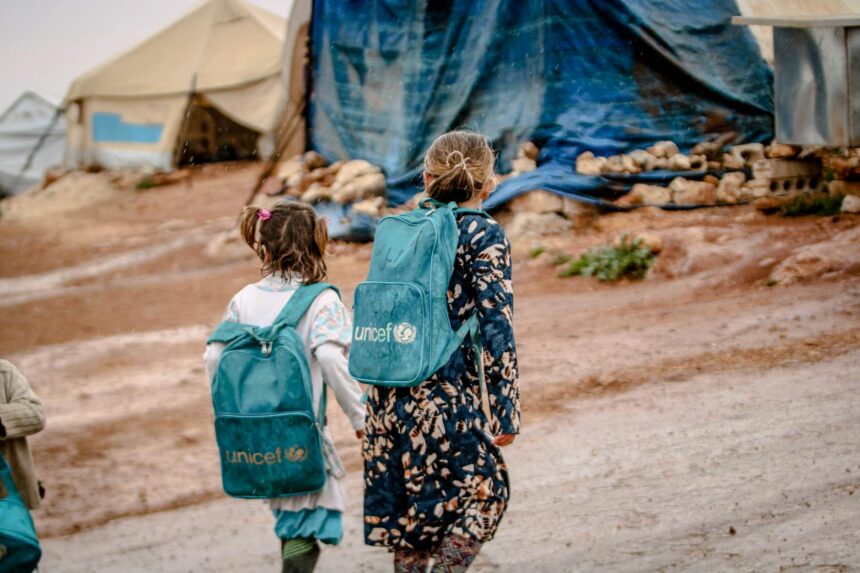
Children receiving medical care showing impact of supply chain disruptions on healthcare delivery
Rising global transport costs are forcing UNICEF to reduce procurement of essential medical supplies for children. The crisis affects vaccines, therapeutic foods, and medical equipment delivery to vulnerable populations worldwide. — Photo: Ahmed akacha / Pexels
SHARE
🎧 Listen to this article4:04 min · 567 words · GMJ Audio
3 min read|567 words
✓ Editorially Reviewed by Prof. Giorgi Pkhakadze, MD, MPH, PhD — GMJ News Desk

Rising global transport costs are forcing UNICEF to reduce procurement of essential medical supplies for children, creating a direct threat to global child health outcomes in 2024.

Contents
    • Key takeaways
  • Global supply chain crisis impacts child health
      • Impact on Essential Child Health Supplies
  • Essential supplies at risk
  • Implications for humanitarian response
    • What this means
  • Frequently asked questions
    • Which supplies are most affected by transport cost increases?
    • How does this affect children in emergency situations?
    • What can be done to address this crisis?

Key takeaways

  • Transport cost increases are reducing UNICEF’s purchasing power for essential child health supplies
  • The crisis affects vaccines, therapeutic foods, and medical equipment delivery to vulnerable populations
  • Supply chain disruptions compound existing challenges in reaching children in humanitarian settings
Reduced capacity
for essential child health supply procurement due to transport cost inflation

Global supply chain crisis impacts child health

The ongoing global supply chain disruption has created unprecedented challenges for humanitarian organizations delivering essential health supplies to children. According to UNICEF’s latest statement, increased transportation costs are directly reducing the organization’s ability to procure lifesaving supplies for vulnerable children worldwide.

This development represents a critical threat to global child health, particularly in regions already facing humanitarian crises. For more analysis on global health supply chains, see our coverage in Global Health.

Impact on Essential Child Health Supplies

Key areas affected by increased transport costs

Submit Your Paper
GMJ_Submit_Banner
Vaccines
High impact
Therapeutic foods
High impact
Medical equipment

Moderate impact

Source: UNICEF, 2024 | Georgian Medical Journal News

Essential supplies at risk

The cost increases particularly affect temperature-sensitive supplies such as vaccines and therapeutic foods, which require specialized cold-chain transport. Medical equipment and essential medicines for treating childhood diseases are also impacted by the transport cost inflation.

🎙️ Related Podcast Episodes
🎧 #54 | GMJ Podcast | The Blueprint of a Medical Journal: Designing an Open-Access Scientific Platform · 19m
🎧 #53 | GMJ Podcast | Palliative Care in Georgia — Health System Gaps, Access Barriers, and Policy Implications · 16m
🎧 #42 | GMJ Podcast | IT Service Management in Healthcare — Governance, Procurement, and Service Delivery · 16m
🎧 #28 | GMJ Podcast | SheniEkimi.ge #1: Top 5 Evidence-Based Public Health News · 19m
🎧 #25 | WHO Warns: Childhood Hearing Loss Must Be Addressed Early · 19m

This situation compounds existing challenges in reaching children in conflict zones and remote areas where transport infrastructure is already compromised. The World Health Organization has previously highlighted how supply chain disruptions disproportionately affect vulnerable populations.

Implications for humanitarian response

The transport cost crisis creates a cascading effect on humanitarian response capacity. Reduced procurement means fewer children can access essential health interventions, potentially reversing decades of progress in child mortality reduction.

Organizations must now make difficult decisions about resource allocation, potentially prioritizing certain supplies over others. This challenge is explored further in our Health Policy coverage.

Transport cost increases are forcing humanitarian organizations to reduce procurement of essential medical supplies, creating direct threats to child health outcomes globally.

— UNICEF (Press Release, 2024)

What this means

For patients: Children in humanitarian settings may face reduced access to essential vaccines, therapeutic foods, and medical care
For clinicians: Healthcare providers in affected regions should prepare for potential supply shortages and develop contingency protocols
For policymakers: Urgent action needed to address transport cost inflation and protect humanitarian supply chains

Frequently asked questions

Which supplies are most affected by transport cost increases?

Temperature-sensitive supplies like vaccines and therapeutic foods are particularly impacted due to their specialized transport requirements. Medical equipment and essential medicines also face procurement challenges due to increased shipping costs.

How does this affect children in emergency situations?

Children in conflict zones and humanitarian crises face the greatest risk, as these areas already have compromised transport infrastructure. Reduced supply availability compounds existing challenges in reaching vulnerable populations.

What can be done to address this crisis?

Solutions require coordinated international action to address transport cost inflation, improve supply chain efficiency, and ensure continued funding for humanitarian organizations to maintain their procurement capacity.

The transport cost crisis represents a critical challenge for global child health that requires immediate attention from the international community. Addressing this issue is essential to prevent reversals in child mortality reduction and ensure continued access to lifesaving supplies for the world’s most vulnerable children.

Source: Increased transport costs mean less money for the lifesaving supplies children need

Was this article helpful?

100% of readers found this helpful (1 votes)

Related Coverage

Federal lawsuits reveal widespread medical neglect in US immigration detention facilitiesJun 2, 2026
Nevada's Medical Meal Program Cuts Healthcare Costs by 11% in Medicaid PopulationJun 2, 2026
US States Pilot Medically Tailored Meals Through Medicaid, Analysis Shows Health and Cost BenefitsJun 2, 2026
Medical School Diversity Gains Not Translating to Diverse Physician WorkforceJun 1, 2026
TAGGED:child healthhumanitarian aidsupply chaintransport costsUNICEF
Share This Article
Facebook LinkedIn Bluesky Copy Link Print
Leave a Comment Leave a Comment

Leave a Reply Cancel reply

Your email address will not be published. Required fields are marked *

Submit Your Paper →

Georgia's peer-reviewed open-access medical journal. No APC until January 2027.
Submit Manuscript →
Federal lawsuits reveal widespread medical neglect in US immigration detention facilities

Federal lawsuits across 33 US states document allegations of medical neglect in…

Nevada’s Medical Meal Program Cuts Healthcare Costs by 11% in Medicaid Population

Nevada's medical meal delivery program reduced healthcare costs by 11% among Medicaid…

Thymus Health May Predict Longevity and Cancer Survival, AI Study Finds

AI analysis of CT scans reveals that thymus health strongly correlates with…

Submit Your Paper to GMJ

No APC until January 2027.
Submit Manuscript →

You Might Also Like

Chart showing TB financing capacity across different country income levels
Health PolicyPolicy & Systems

Three-Quarters of High-Burden Countries Could Self-Fund TB Programs Without Donor Support

By
GMJ News Desk
31/05/2026
WHO officials discussing Ebola outbreak response coordination between DRC and Uganda
Global Health

WHO Declares International Health Emergency as Ebola Spreads to Uganda from DRC

By
GMJ News Desk
22/05/2026
Pharmaceutical pricing policy timeline showing Trump administration drug pricing deal milestones
Health PolicyPolicy & Systems

Trump Drug Pricing Deals Face First Test as New Medications Launch

By
GMJ News Desk
28/05/2026
Tanzania National Oral Health Strategic Plan priorities diagram showing six key implementation areas
Health Policy

Tanzania Launches New Oral Health Strategy to Close Care Gaps and Boost Workforce

By
GMJ News Desk
21/05/2026
Facebook Twitter Youtube Instagram
Company
  • Privacy Policy
  • Contact US
  • GMJ Journal
  • Submit Manuscript
  • Editorial Team
  • Register at GMJ
  • Terms of Use

Subscribe to GMJ News — Click here

Join Community
© 2026 Georgian Medical Journal (GMJ). Published by the Public Health Institute of Georgia (PHIG). All rights reserved.
Welcome Back!

Sign in to your account

Username or Email Address
Password

Lost your password?

Not a member? Sign Up