Updated 28/08/2026
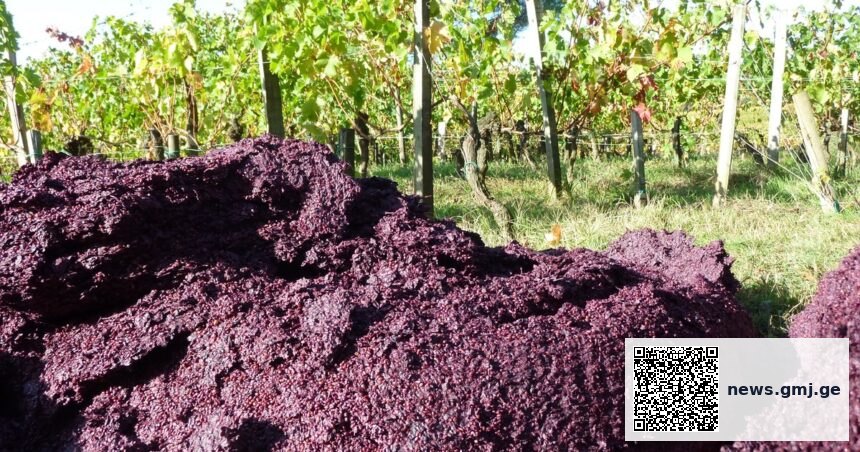
Photo: Pomace in the vineyard after pressing, by davitydave (Wikimedia), cropped for layout · Licensed CC BY 2.0 · Source
Plain-language summary of research published in the Georgian Medical Journal. Written for the general public by the GMJ News editorial team.
Saperavi, Georgia’s signature red grape, leaves behind large quantities of skins and seeds during winemaking in the Kakheti region. A study in the Georgian Medical Journal asks a simple economic and scientific question: how much of the grape’s antioxidant value is actually still sitting in that discarded material?

What Was Compared
Researchers analysed unfermented and fermented Saperavi grape skins and seeds for total phenols, flavonoids, catechins, leucoanthocyanins, and DPPH radical-scavenging activity — comparing what’s left in the solid by-products against what ends up in the finished wine.
Fermentation Strips Out Bioactivity
The results show a clear pattern: unfermented materials retained significantly higher concentrations of bioactive compounds than fermented residues, meaning a substantial share of the grape’s phenolics transfer into the wine itself during fermentation rather than staying in the skins and seeds. Unfermented seeds had the highest phenolic content overall, while skins showed the strongest antioxidant activity specifically.

At a glance — the headline figures.
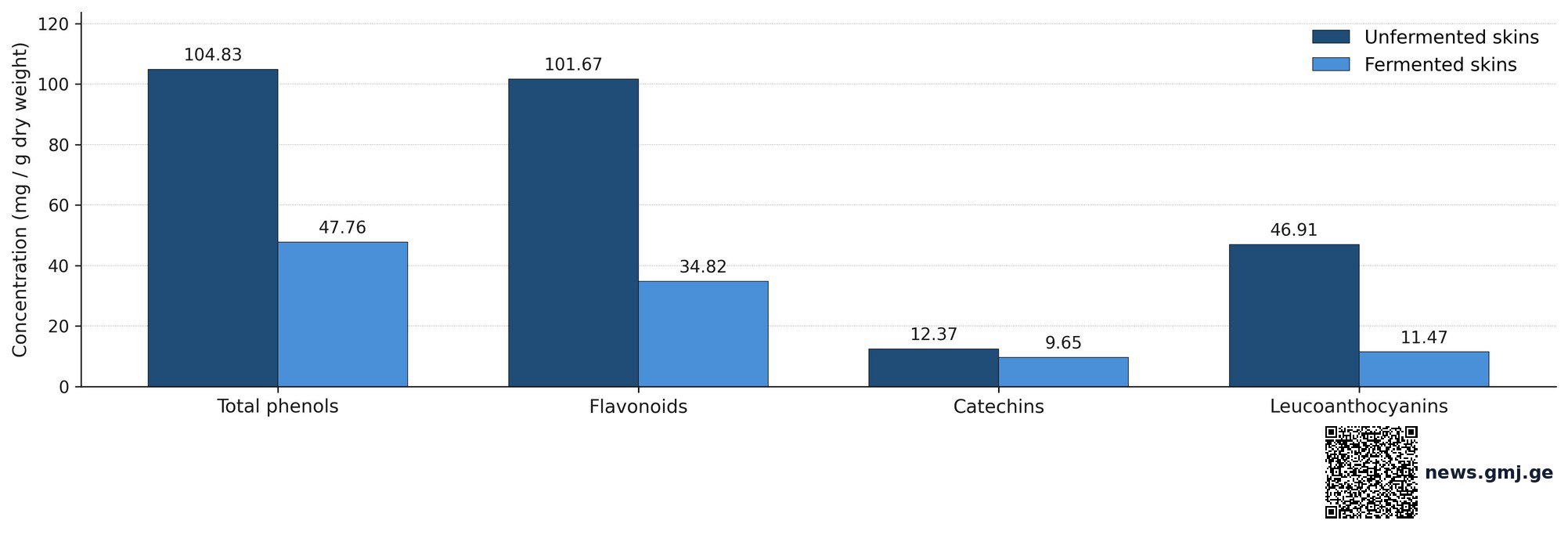
Phenolic compound concentrations across unfermented and fermented Saperavi grape skin and seed fractions. Figure from the study. Source: Georgian Medical Journal, Vol. 1 No. 2 (2026), DOI: 10.66636/gmj.v1.i2.a121.
The framing here is deliberately practical: this is a circular-bioeconomy argument as much as a health-science one. Saperavi by-products — material Kakheti’s wine industry already produces in bulk every harvest — represent a genuinely sustainable raw material for natural antioxidant formulations, positioning Georgian winemaking waste as a potential input for nutraceutical and functional food development rather than simply a disposal problem.
Read the Original Research
Original article: Saperavi’s Second Harvest: Georgian Wine Waste Is Full of Health-Promoting Compounds
Published in: Georgian Medical Journal, Vol. 1 No. 2 (2026)
DOI: 10.66636/gmj.v1.i2.a121
📄 Read the full article at gmj.ge →
Georgian Medical Journal (GMJ) · ISSN 3088-4322 · gmj.ge · Open Access CC BY 4.0 · Published by the Public Health Institute of Georgia (PHIG). This summary is an independent editorial product of GMJ News; for clinical decisions, consult the original peer-reviewed article and a qualified professional.
Was this article helpful?
Disclaimer. This article is health journalism intended for general information and education. It is not medical advice and is not a substitute for professional diagnosis or treatment. Always consult a qualified healthcare provider about your individual circumstances. Full disclaimer →
Related Coverage



Editorial standards. This article was produced under the GMJ News editorial process, with oversight by the GMJ Editorial Board. Our editorial process. Spotted an error? Contact the editorial team.