


Home › Topics › Cardiac Arrest and Resuscitation
Cardiac Arrest and Resuscitation
GMJ News knowledge hub · last reviewed August 2026 · Georgian Medical Journal
SummaryStatisticsGlossaryGMJ newsFAQDocumentsOrganizationsResearch
Out-of-hospital cardiac arrest affects several million people worldwide each year with survival to hospital discharge ranging from under 5% to over 20% between communities — a variation driven almost entirely by bystander response rather than hospital care, since survival falls by approximately 7-10% for every minute that defibrillation is delayed (WHO). The two interventions that determine outcome are immediate high-quality chest compressions and early defibrillation, both of which can be delivered by untrained members of the public: compression-only CPR is as effective as conventional CPR for bystanders in adult cardiac arrest, and automated external defibrillators are designed so that a person with no training can use one safely by following the voice prompts — making the greatest opportunity for saving lives in cardiac arrest a matter of public education, AED placement and dispatcher-assisted CPR rather than of any advance in intensive care.
Key messages
Survival falls 7-10% for every minute defibrillation is delayed
This single fact determines everything about cardiac arrest care. In shockable rhythms, the probability of survival declines by approximately 7-10% per minute without defibrillation, meaning that outcome is largely decided in the first ten minutes — before any ambulance in most systems can arrive. Bystander CPR roughly doubles or triples survival by slowing this decline, and defibrillation within 3-5 minutes can achieve survival rates above 50%. Community survival rates range from under 5% to over 20% between systems, and the variation is explained almost entirely by bystander response rates and AED availability, not by hospital quality.
Compression-only CPR is as effective as conventional CPR for bystanders
For adult out-of-hospital cardiac arrest, hands-only CPR by untrained or briefly instructed bystanders produces survival equivalent to conventional CPR with rescue breaths. This matters enormously because reluctance to perform mouth-to-mouth is a major barrier to bystander action. The message is simple and should be taught universally: push hard and fast in the centre of the chest, at a rate of 100-120 per minute and a depth of 5-6cm, allowing full recoil, and do not stop. Rescue breaths remain important in paediatric arrest, drowning and hypoxic arrest, where the cause is respiratory and oxygen stores are depleted.
AEDs are designed for untrained users — and are under-deployed
Automated external defibrillators analyse the rhythm and will only deliver a shock if one is indicated, making it effectively impossible to shock someone inappropriately. They give spoken step-by-step instructions and require no training to use safely. The evidence for public-access defibrillation programmes is strong — in settings such as airports, casinos and sports facilities with dense AED coverage, survival from witnessed shockable arrest has reached 50-70%. The practical barriers are placement in locations that are locked or inaccessible out of hours, absence of national AED registries linked to ambulance dispatch, and lack of public awareness. Registration of every AED with the emergency service so dispatchers can direct callers to the nearest one is a low-cost, high-yield intervention.
Dispatcher-assisted CPR and community responder systems change outcomes
Emergency call handlers trained to recognise cardiac arrest — including recognising agonal breathing, which is present in up to 40% of arrests and is the commonest reason arrest is missed on the phone — and to coach callers through compressions substantially increase bystander CPR rates. Smartphone-based community first responder systems, which alert trained volunteers near an arrest simultaneously with the ambulance and direct them to the nearest registered AED, have demonstrated increased bystander defibrillation and improved survival in several countries. These interventions cost little relative to their effect, and they act in the interval that actually determines outcome.
Reversible causes — the 4 Hs and 4 Ts
During resuscitation, the systematic search for reversible causes is what converts a futile algorithm into a treatable event. Hypoxia; Hypovolaemia; Hyper- or hypokalaemia and other metabolic causes (hyperkalaemia is a common and rapidly treatable cause, particularly in kidney failure); Hypothermia. Thrombosis (coronary or pulmonary — consider thrombolysis in suspected massive pulmonary embolism, and continue CPR for 60-90 minutes afterwards); Tamponade; Tension pneumothorax; Toxins. Point-of-care ultrasound during rhythm checks can rapidly identify tamponade, right heart strain and hypovolaemia without interrupting compressions if performed by an experienced operator during the pulse check window.
Post-arrest care — targeted temperature and delayed prognostication
Return of spontaneous circulation is the beginning of a distinct syndrome: post-cardiac arrest brain injury, myocardial dysfunction and systemic ischaemia-reperfusion response. Temperature management remains standard, though the TTM2 trial found hypothermia at 33°C no better than targeted normothermia with active fever prevention, which most guidelines have adopted. Crucial principle: NEUROPROGNOSTICATION MUST BE DELAYED — usually at least 72 hours after normothermia and after sedation has cleared — and must be multimodal, combining clinical examination, EEG, somatosensory evoked potentials, neuron-specific enolase and imaging. Early withdrawal of life-sustaining treatment based on a single early finding is a recognised self-fulfilling prophecy and a serious source of avoidable death.
Key statistics
<5% to >20%
range of survival to discharge between communities — driven by bystander response, not hospitals
ILCOR/ResuscitationHands-only
compression-only CPR is equivalent to conventional CPR for adult bystander resuscitation
AHA/ERC~40%
of arrests feature agonal breathing — the commonest reason arrest is missed on emergency calls
ERC/Resuscitation≥72 hours
minimum delay before neuroprognostication — early withdrawal is a self-fulfilling prophecy
ERC-ESICMOut-of-hospital cardiac arrest — survival by response scenario
Source: ILCOR/registry data. Outcome is determined in the first minutes, before professional help arrives.
Glossary of key terms
Latest GMJ coverage
Left and Right Ventricles Show Different Vulnerability During Cardiac Arrest
30/05/2026

Digital health tools increase physical activity in heart disease patients, meta-analysis shows
09/07/2026

Beyond the Powerhouse: How Mitochondria Control Energy, Stress, and Cell Survival
17/07/2026

Cardiorespiratory Fitness: A Stronger Predictor of Longevity Than Blood Pressure or Cholesterol
06/08/2026

The Citric Acid Cycle: How Chemistry Powers Every Cell in Your Body
01/08/2026
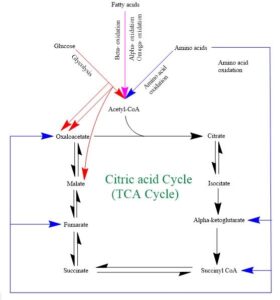
The Citric Acid Cycle: How Cells Convert Food Into Energy
01/08/2026
Frequently asked questions 12 Q&A — structured for Google featured snippets and AI discovery
Knowledge hub: guidelines, conventions and reports
Organizations working in migration and health
Related health topics
Cardiovascular diseaseMyocarditis and sudden cardiac deathInherited cardiomyopathy and arrhythmiaDrowning and hypoxic arrestEmergency care systemsRecovery after cardiac events
About this hub. Produced by the GMJ News Editorial Team as a public-good service. Every statistic is linked to its primary source. Documents are preserved in the GMJ Repository with full attribution. Georgian Medical Journal · Contact the editorial team