


Home › Topics › Multi-Cancer Early Detection
Multi-Cancer Early Detection
GMJ News knowledge hub · last reviewed August 2026 · Georgian Medical Journal
SummaryStatisticsGlossaryGMJ newsFAQDocumentsOrganizationsResearch
The biggest bet in screening history reported its cards in 2026: the 142,000-person NHS-Galleri randomised trial of the Galleri blood test missed its primary endpoint — no significant reduction in stage III and IV cancers combined — while showing a substantial reduction in stage IV diagnoses, a four-fold higher screen-detection rate, and a positive-test cancer yield around fifty percent, leaving the field exactly on the knife-edge between revolution and expensive overdiagnosis engine, with mortality data years away and a national rollout decision hanging on interpretation. What the trial did and did not show is dissected below (see the WHO cancer fact sheet).
Key messages
THE PREMISE: one blood draw, fifty cancers
Multi-cancer early detection tests read tumour-derived fragments in circulating cell-free DNA — chiefly methylation patterns — to flag a shared cancer signal and predict its tissue of origin across dozens of cancer types, most with no screening test of any kind. The appeal is structural: current programmes screen for four or five cancers one organ at a time, while the majority of cancer deaths come from unscreened types, often diagnosed late through emergency presentation. A single annual blood test covering the unscreened majority is the biggest idea in cancer control in a generation — which is precisely why it demands the biggest evidence, and why one company (GRAIL, with its Galleri test) ran the largest randomised screening trial ever attempted to get it.
NHS-GALLERI: what the landmark trial showed
The NHS-Galleri trial randomised over 142,000 English adults aged 50-77 to annual Galleri testing plus standard screening versus standard screening alone, across three yearly rounds. The topline, reported in February 2026 and detailed at ASCO in May: the primary endpoint — a significant reduction in stage III and IV cancers combined — was missed; stage IV diagnoses fell substantially; screen-detection of cancer roughly quadrupled, with reductions in cancers diagnosed through emergency presentation; around half of positive tests led to a cancer diagnosis — an extraordinary positive predictive value for a screening test; no serious test-related adverse events occurred; and an unexpectedly high stage III count in the intervention arm complicated the primary endpoint. Effects strengthened after the first (prevalent) round, and follow-up is being extended. Both enthusiasts and sceptics left the readout with ammunition — the mark of a genuinely informative trial.
THE INTERPRETATION WAR: stage shift versus mortality
The entire debate compresses into one question: does shifting stage at diagnosis translate into fewer deaths? The optimist reading: stage IV reduction plus fewer emergency presentations is exactly the leading indicator a screening benefit shows first, and mortality data need only time. The sceptic reading, armed with the overdiagnosis hub's toolkit: stage shift can be manufactured by lead time and by preferentially detecting slower tumours (length bias), survival and detection counts are structurally untrustworthy, and screening history is littered with stage-shifting tests that never moved mortality — the missed primary endpoint keeps that possibility fully alive. Both readings are legitimate today; only extended follow-up and mortality analyses can arbitrate, and no honest party claims that verdict is in.
THE OVERDIAGNOSIS QUESTION MCED WAS BUILT TO DODGE
MCED's designers aimed the technology away from classic overdiagnosis: methylation signals skew toward aggressive, high-cell-turnover tumours, and the tests deliberately underdetect the indolent reservoir (low-grade prostate, papillary thyroid) that plagues organ-specific screening. The NHS-Galleri PPV — roughly half of positives being cancer, against the single-digit PPVs of urgent-referral pathways — supports the engineering. What no design can dodge: some detected cancers in elderly cohorts would still never have caused death; false positives, though proportionally few, trigger whole-body diagnostic odysseys when the signal's origin prediction is wrong; and a negative test cannot license skipping proven screening, since MCED sensitivity for early-stage disease is modest. The test is additive by design — and additive means adding costs too.
THE POLICY CLIFF: rollout decisions before mortality data
MCED now forces the hardest question in screening policy: act on stage-shift evidence or wait the decade mortality data requires? England's national programme decision rests on NHS-Galleri's interpretation; in the US, Galleri sells at roughly a thousand dollars a year as a lab-developed test while FDA approval, Medicare coverage legislation and the NCI's own Vanguard trial proceed in parallel; and health economists note that even a modestly priced annual test for everyone over 50 would rank among the largest line items in preventive medicine — money with proven alternative uses in vaccination, blood pressure and the screening programmes that already have mortality receipts. Between revolution and rerun of screening's oversold past, the honest position is unusually simple: the trial everyone demanded was run; its answer arrives in instalments; the mortality instalment is not yet here.
PRACTICAL BOTTOM LINE
For individuals: MCED tests are commercially available, plausibly beneficial, unproven on mortality, and never a substitute for established screening — anyone buying one should budget emotionally and financially for the roughly one-in-a-hundred chance of a positive requiring a full diagnostic workup, and treat a negative as no licence to skip mammography or colonoscopy. Highest defensible use today: elevated-risk individuals inside trials or structured programmes. For health systems: the NHS-Galleri readout justifies neither rollout nor abandonment — it justifies the extended follow-up now underway. And for readers of the coming headlines: the claims to trust will cite mortality, not detection counts, survival percentages or stage statistics alone — this site's standing rule, applied to its biggest test case yet.
Key statistics
142,000+
participants in NHS-Galleri — the largest randomised trial of a screening test ever conducted
NHS-Galleri trial (NCT05611632)Missed
the primary endpoint: no significant reduction in stage III and IV cancers combined over three screening rounds
Topline results, February 2026Substantial
reduction in stage IV cancer diagnoses in the Galleri arm — the result both sides now argue over
ASCO 2026 full results presentation~50%
of positive Galleri tests followed by a cancer diagnosis — against ~6% in standard NHS urgent-referral pathways
Queen Mary University of London, May 2026~$1,000/yr
the US list price of annual Galleri testing as a lab-developed test — the economics question at population scale
Commercial pricing, 2024-2026Where the disagreement actually lies
Each claim scored by strength of evidence — not by popularity.
Test detects many unscreened cancers, high PPV (settled)85
Stage IV reduction observed (trial result)75
Primary stage III/IV endpoint met (it was not)15
Stage shift will become mortality benefit (open — the question)45
Negative test licenses skipping proven screening (false)5
Population rollout justified today (premature)25
■ settled / strong ■ genuinely open / contested ■ weak / unsupported / refuted
Source: Editorial synthesis of NHS-Galleri results and screening methodology
Glossary of key terms
Latest GMJ coverage
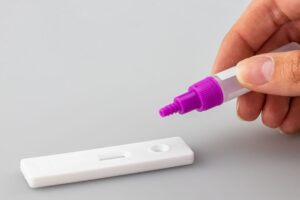
UK Screening Committee Sets Evidence Standards for Multicancer Detection Tests
08/07/2026

Multi-Cancer Screening Test Fails Primary Endpoint but Reveals Promising Early Detection Signals
14/06/2026

Multi-cancer blood tests identify missed cancers in 20% of symptomatic patients, Lancet study finds
12/06/2026
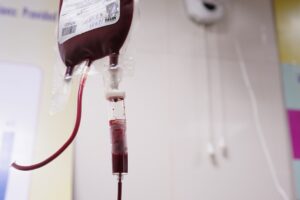
New Blood Tests and Stool Screens Join Colonoscopy as Primary Options for Colorectal Cancer Detection
09/06/2026

H. pylori screening yields fivefold return in gastric cancer prevention, health economics analysis shows
11/08/2026

Iron, folate, and B12: the three nutrients that build your blood
28/07/2026
Frequently asked questions 12 Q&A — structured for Google featured snippets and AI discovery
Knowledge hub: guidelines, conventions and reports
Organizations working in migration and health
Related health topics
OverdiagnosisPSA ScreeningThe Mammography DebateWhole-Body MRI ScreeningPancreatic CancerCancer
About this hub. Produced by the GMJ News Editorial Team as a public-good service. Every statistic is linked to its primary source. Documents are preserved in the GMJ Repository with full attribution. Georgian Medical Journal · Contact the editorial team