🟡 Preliminary Evidence
- Freud’s Predictive Brain: A Theory Ahead of Its Time
- The Predictive Coding Revolution in Modern Neuroscience
- The Theoretical Bridge: Where Psychoanalysis Met Neuroscience
- Implications for Understanding the Mind and Clinical Practice
- Frequently asked questions
- Does this mean Freud was right about everything?
- How does predictive coding relate to common mental health conditions?
- Why is this convergence important if neuroscience already understands the brain?
- The Future of Mind-Brain Integration
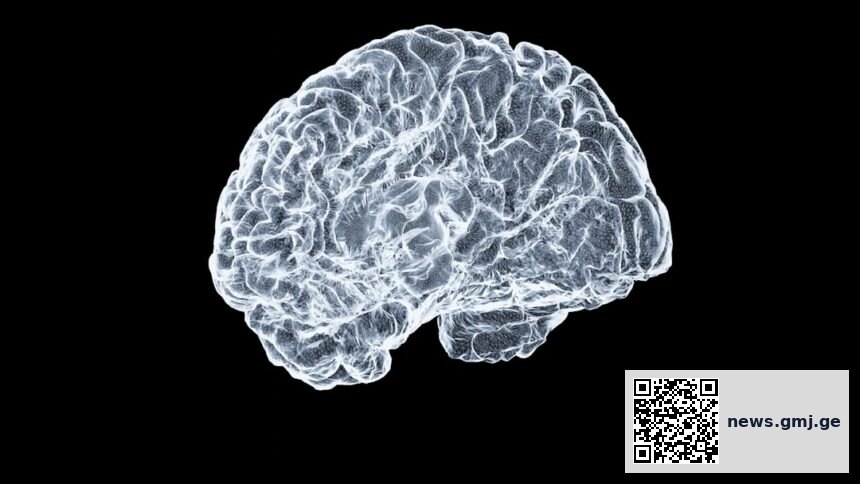
Modern neuroscience is converging on a theory that the brain functions as a prediction machine—a concept Sigmund Freud proposed over 130 years ago. According to a new theoretical paper, contemporary neuroscientific models of how the brain anticipates and processes the world align remarkably with foundational psychoanalytic principles, suggesting that older psychological frameworks may have intuited mechanisms now being mapped by neuroimaging and computational neuroscience.
Key takeaways
- The predictive brain theory—that the brain constantly generates models of the world to anticipate events—parallels Freud’s unconscious mental processes from 1895
- Contemporary neuroscience research using neuroimaging and computational models is now providing empirical support for concepts psychoanalysis explored theoretically for over a century
- This convergence suggests that psychoanalytic intuitions about unconscious mental work may have identified real neurobiological mechanisms that science is only now equipped to measure
- The overlap raises questions about the relationship between historical psychological theory and modern neuroscientific validation
Historical Convergence: Psychoanalysis and Neuroscience Timeline
Key theoretical developments across disciplines, 1895–2026
Source: Theoretical convergence analysis | Georgian Medical Journal News

Freud’s Predictive Brain: A Theory Ahead of Its Time
In 1895, Sigmund Freud proposed that the mind operates through unconscious processes that anticipate and model the external world—a radical idea for the era, when the brain’s mechanisms were largely inaccessible to direct observation. Freud suggested that the unconscious mind continuously generates expectations about experience and adjusts these models based on incoming sensory information, a process he framed as central to how humans navigate reality and manage anxiety.
For most of the 20th century, this theory remained within the domain of psychoanalytic discourse, untested by biological methods and often dismissed by mainstream scientific psychology. However, the emergence of modern neuroimaging, computational neuroscience, and machine-learning models of neural function has given researchers new tools to test predictions about brain architecture—and some of those findings align strikingly with Freud’s intuitions.
The Predictive Coding Revolution in Modern Neuroscience
Over the past two decades, neuroscience has converged on a theory known as predictive coding or predictive processing. According to this framework, the brain is fundamentally a prediction engine: it continuously generates internal models of the world and uses prediction errors—mismatches between expected and actual sensory input—to refine those models. This process occurs largely outside conscious awareness, driven by hierarchical neural circuits that integrate prior beliefs with new information.
Research using functional magnetic resonance imaging (fMRI), electrophysiology, and computational modelling has provided empirical support for elements of this theory. Studies of how the brain processes visual input, sound, and bodily sensation have shown that neurons respond more strongly to unexpected stimuli than to predicted ones, consistent with the prediction-error framework. This evidence has emerged across multiple laboratories and animal models, building a convergent case that the brain’s core computational strategy is prediction.
The brain operates as a prediction machine that continuously generates models of the world and adjusts them based on prediction errors—a mechanism Freud intuited theoretically in 1895 and neuroscience is now validating empirically through neuroimaging and computational methods.
— Theoretical synthesis presented in contemporary neuroscience literature (2020s)
The Theoretical Bridge: Where Psychoanalysis Met Neuroscience
The new paper making this argument observes that Freud’s model of the unconscious mind—as a system that generates expectations, manages discrepancies between expectation and reality, and does so outside conscious awareness—maps onto the modern predictive coding framework in several key respects. Both frameworks propose that mental life is fundamentally about anticipation; both emphasize the role of unconscious processes; and both suggest that the brain’s primary function is not passive perception but active model-building.
Freud’s language was psychological and introspective; contemporary neuroscience employs the language of neural circuits, Bayesian inference, and information theory. Yet the underlying computational logic—that the mind/brain constantly predicts and updates based on error signals—is recognizably similar. This raises a philosophical question: Did Freud, through careful clinical observation and theoretical reasoning, intuit the actual architecture of the brain decades before technology made it visible?
This convergence also highlights a broader pattern in the history of science. Some of the most durable psychological insights have emerged from careful observation and logical inference, even before the mechanisms could be directly measured. The theory of unconscious mental processes, once dismissed as unscientific, is now understood as describing real neural phenomena.
Implications for Understanding the Mind and Clinical Practice
If Freud’s intuitions about the predictive nature of unconscious mental processes are indeed validated by modern neuroscience, this convergence has several implications. First, it suggests that psychoanalytic therapy—which works, in part, by making unconscious patterns explicit and allowing patients to revise ingrained expectations about self and world—may function by helping patients update their internal predictive models. Exposure therapy for anxiety disorders, for instance, works by repeatedly presenting feared scenarios without the anticipated harm, thus correcting mispredicted dangers—a process that aligns with error-correction in predictive coding.
Second, the validation of predictive models of brain function provides a more neurobiologically grounded framework for understanding why psychological interventions work. If the brain is fundamentally a prediction machine, then therapeutic approaches that help patients correct maladaptive predictions—whether through cognitive-behavioural therapy, psychodynamic work, or other modalities—operate on mechanisms that are now understood at a computational and neural level.
Third, this convergence underscores the importance of integrating insights from psychology, psychiatry, and neuroscience rather than treating them as separate domains. Freud’s clinical observations, conducted without modern technology, identified real organizational principles of the brain. This suggests that future progress in mental health may depend on maintaining dialogue between clinical observation, psychological theory, and neuroscientific investigation.
What this means
Frequently asked questions
Does this mean Freud was right about everything?
No. While modern neuroscience validates some of Freud’s core ideas about unconscious prediction and mental model-building, many of his specific theoretical claims and therapeutic methods have not been supported by empirical research. This convergence concerns his foundational insight about how the mind operates, not his entire body of work.
How does predictive coding relate to common mental health conditions?
Anxiety disorders, depression, and trauma-related conditions may involve errors in the brain’s predictive system—either overestimating threat (anxiety), underestimating reward (depression), or being locked into mispredicted associations (trauma). Understanding these conditions through the lens of prediction error offers new insights into why exposing patients to corrected predictions (through therapy and experience) can be therapeutic.
Why is this convergence important if neuroscience already understands the brain?
This convergence matters because it validates the clinical and theoretical observations that psychologists and psychiatrists made without access to modern neuroimaging. It demonstrates that careful observation and logical reasoning can identify real mechanisms, and it encourages integration between neuroscience and clinical psychology—two fields that have sometimes operated in isolation. It also suggests that historical ideas deserve respectful reconsideration in light of new evidence.
The Future of Mind-Brain Integration
The recognition that Freud’s theoretical framework aligns with modern predictive coding models suggests a wider truth: the history of psychology contains insights that warrant renewed investigation in light of contemporary neuroscientific tools. This does not mean wholesale acceptance of psychoanalytic theory, but rather a serious commitment to testing and refining psychological ideas with the methods now available. As clinical neuroscience advances, bridging psychology and biology may prove essential to understanding not only how mental health disorders arise but also why interventions—whether psychological, pharmacological, or behavioural—succeed or fail. The convergence between Freud and modern neuroscience is not an end point but an invitation to deepen our integration of these perspectives.
Source: Modern neuroscience is rediscovering an idea Freud had 130 years ago
Was this article helpful?
Disclaimer. This article is health journalism intended for general information and education. It is not medical advice and is not a substitute for professional diagnosis or treatment. Always consult a qualified healthcare provider about your individual circumstances. Full disclaimer →
Related Coverage



Editorial standards. This article was produced under the GMJ News editorial process, with oversight by the GMJ Editorial Board. Our editorial process. Spotted an error? Contact the editorial team.