


Home › Topics › Venous Thromboembolism and DVT
Venous Thromboembolism and DVT
GMJ News knowledge hub · last reviewed August 2026 · Georgian Medical Journal
SummaryStatisticsGlossaryGMJ newsFAQDocumentsOrganizationsResearch
Deep vein thrombosis and pulmonary embolism together constitute venous thromboembolism, a condition responsible for an estimated hundreds of thousands of deaths annually and, critically, one in which a substantial proportion of hospital-associated cases are preventable through systematic risk assessment and thromboprophylaxis — making failure to assess VTE risk on admission one of the most consequential omissions in inpatient care (WHO). Diagnosis follows a structured pathway of clinical probability scoring followed by D-dimer in low-probability patients and imaging in the rest, and treatment has been transformed by direct oral anticoagulants, which have largely replaced warfarin for most indications; but the decision that matters most in the long term is whether the event was provoked or unprovoked, since unprovoked VTE carries a recurrence risk of roughly 30% at five years after stopping anticoagulation and increasingly justifies extended low-dose therapy, while the substantial burden of post-thrombotic syndrome after DVT remains widely underestimated and undertreated.
Key messages
Hospital-associated VTE is largely preventable — and risk assessment is routinely omitted
A substantial proportion of venous thromboembolism is hospital-associated, arising during or within 90 days of an admission, and much of it is preventable by systematic VTE risk assessment on admission followed by appropriate pharmacological or mechanical prophylaxis. Failure to perform this assessment is one of the most consequential routine omissions in inpatient care, and mandatory risk assessment with audited compliance has been shown at national level to reduce VTE mortality. Prophylaxis must also be reconsidered at each change in clinical state, since risk is dynamic.
Diagnosis follows probability, then D-dimer, then imaging — in that order
Clinical probability scoring comes first: the Wells score for DVT and PE, or the revised Geneva score for PE. In LOW probability patients, a negative D-dimer excludes VTE without imaging. In moderate or high probability, D-dimer must not be used to exclude — proceed directly to imaging (compression ultrasound for DVT, CT pulmonary angiography for PE). Using D-dimer in the wrong probability group is the commonest diagnostic error, in both directions: false reassurance in high-probability patients, and unnecessary imaging generated by a raised D-dimer in patients who never needed the test. Age-adjusted D-dimer thresholds and the PERC rule reduce imaging further in appropriate populations.
Provoked versus unprovoked determines how long anticoagulation continues
The most consequential long-term decision. VTE provoked by a major transient risk factor — surgery, major trauma, immobilisation, pregnancy, oestrogen therapy — carries a low recurrence risk once the provoking factor resolves, and 3 months of anticoagulation is usually sufficient. UNPROVOKED VTE carries a recurrence risk of roughly 10% at one year and 30% at five years after stopping, which increasingly justifies extended anticoagulation, often at reduced dose (apixaban 2.5mg twice daily or rivaroxaban 10mg daily), shown in AMPLIFY-EXT and EINSTEIN-CHOICE to retain most of the protective effect with bleeding rates approaching placebo. Cancer-associated VTE is treated as a separate category requiring continuing therapy while cancer is active.
DOACs have replaced warfarin for most indications
Direct oral anticoagulants — apixaban, rivaroxaban, edoxaban and dabigatran — offer equivalent or superior efficacy with significantly less intracranial haemorrhage, no routine monitoring, and no dietary interaction, and are recommended first-line for most VTE. Important exceptions where DOACs should NOT be used: antiphospholipid syndrome, particularly triple-positive, where rivaroxaban performed worse than warfarin in the TRAPS trial; mechanical heart valves; severe renal impairment (thresholds differ by agent); pregnancy and breastfeeding, where low molecular weight heparin is used; and significant drug interactions with strong P-glycoprotein and CYP3A4 inducers such as rifampicin, carbamazepine and phenytoin.
Post-thrombotic syndrome is common, disabling and neglected
Up to 20-50% of patients develop post-thrombotic syndrome after proximal DVT — chronic limb pain, heaviness, swelling, skin pigmentation, and in severe cases venous ulceration — caused by persistent outflow obstruction and valvular reflux. It is a major determinant of long-term quality of life after DVT and is consistently under-recognised, in part because it develops months to years after the acute event when follow-up has ended. Prevention rests on adequate initial anticoagulation and early mobilisation; graduated compression stockings improve symptoms though the SOX trial did not show prevention of the syndrome itself. Catheter-directed thrombolysis reduces post-thrombotic syndrome in selected patients with extensive iliofemoral DVT, at the cost of bleeding risk.
Unprovoked VTE and cancer — screen sensibly, not exhaustively
Occult cancer is found in around 5-10% of patients with unprovoked VTE, usually within the first year. The SOME trial answered how hard to look: adding comprehensive CT of the abdomen and pelvis to a limited screening strategy — history, examination, basic bloods, chest radiograph and age-appropriate cancer screening — did not increase cancer detection or improve outcomes. The recommendation is therefore a thorough but limited evaluation with attention to ensuring routine screening is up to date, rather than extensive imaging that generates incidental findings, cost and anxiety without benefit. New unexplained VTE should nonetheless prompt careful review of any symptoms suggesting malignancy.
Key statistics
Risk assessment
systematic VTE risk assessment on admission is the key preventable-harm intervention
NICE/WHO20-50%
develop post-thrombotic syndrome after proximal DVT — under-recognised and disabling
ISTH/BloodLow probability only
D-dimer excludes VTE only in low clinical probability — never in high probability
ESC/NICE5-10%
of unprovoked VTE patients have occult cancer — limited screening suffices (SOME trial)
NEJM 2015Not in APS
DOACs performed worse than warfarin in triple-positive antiphospholipid syndrome (TRAPS)
Blood 2018VTE recurrence risk at 5 years after stopping anticoagulation, by provoking factor
Source: ISTH/ACCP. The provoked-unprovoked distinction determines duration of therapy.
Glossary of key terms
Latest GMJ coverage

Direct Oral Anticoagulants Show Promise Over Heparin in Cancer Blood Clots, New Analysis Finds
11/07/2026
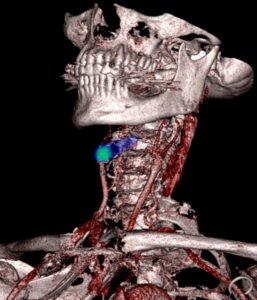
Novel PET Tracer Detects Blood Clots in Legs and Lungs with Single Scan
13/06/2026
Frequently asked questions 12 Q&A — structured for Google featured snippets and AI discovery
Knowledge hub: guidelines, conventions and reports
Organizations working in migration and health
Related health topics
Venous thromboembolism overviewCancer-associated thrombosisAntiphospholipid syndromePregnancy and hormonal VTE riskHospital-acquired VTE preventionTravel-related thrombosis
About this hub. Produced by the GMJ News Editorial Team as a public-good service. Every statistic is linked to its primary source. Documents are preserved in the GMJ Repository with full attribution. Georgian Medical Journal · Contact the editorial team