By using this site, you agree to the Privacy Policy and Terms of Use.
Accept
GMJ NewsGMJ NewsGMJ News
  • Latest News
    • GMJ Briefs
  • Podcast & Media
    • Podcast Episodes
    • GMJ Audio
    • GMJ Videos
  • Research Digest
    • New Studies
    • Georgian Research
    • Data & Numbers
  • Policy & Systems
    • Health Policy
    • Quality & Safety
    • Migration & Health
    • Global Health
  • Practice
    • Clinical Updates
    • Case Discussions
    • Pharmacy & Prescribing
    • Ingredients A-Z
  • Perspectives
    • Editorial
    • Explainers
    • Voices
    • Letters
  • GMJ Articles
    • Vol. 1 Issue 2 (2026)
    • Vol. 1 Issue 1 (2026)
    • Pre-Launch Articles (2025)
  • Read the Journal →
  • About GMJ News
Notification Show More
Font ResizerAa
GMJ NewsGMJ News
Font ResizerAa
  • Latest News
    • GMJ Briefs
  • Podcast & Media
    • Podcast Episodes
    • GMJ Audio
    • GMJ Videos
  • Research Digest
    • New Studies
    • Georgian Research
    • Data & Numbers
  • Policy & Systems
    • Health Policy
    • Quality & Safety
    • Migration & Health
    • Global Health
  • Practice
    • Clinical Updates
    • Case Discussions
    • Pharmacy & Prescribing
    • Ingredients A-Z
  • Perspectives
    • Editorial
    • Explainers
    • Voices
    • Letters
  • GMJ Articles
    • Vol. 1 Issue 2 (2026)
    • Vol. 1 Issue 1 (2026)
    • Pre-Launch Articles (2025)
  • Read the Journal →
  • About GMJ News
Follow US
GMJ News > Practice > Clinical Updates > FDA-Cleared AI Tool EchoNext Enables ECG-Based Heart Disease Screening
Clinical UpdatesPractice

FDA-Cleared AI Tool EchoNext Enables ECG-Based Heart Disease Screening

GMJ
Last updated: 12/07/2026 13:29
By
GMJ Practice Desk
Share
7 Min Read
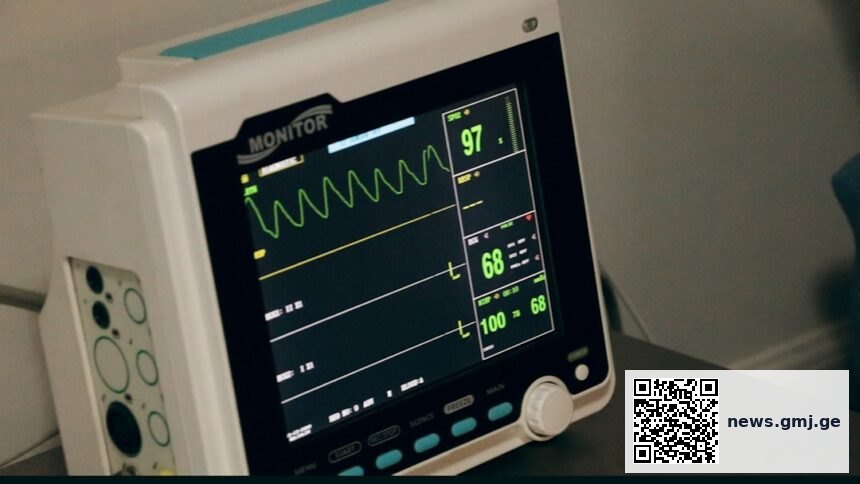
EchoNext artificial intelligence cardiac screening workflow diagramIllustrative image · Photo by Jair Lázaro on Unsplash (Unsplash License)
Pathway Labs' EchoNext, an FDA-cleared artificial intelligence tool, enables detection of structural heart disease using standard electrocardiogram data. Integration into the OpenEvidence platform is expected to expand access to cardiac screening across healthcare systems. — Photo by Jair Lázaro on Unsplash (Unsplash License)
SHARE
5 min read|909 words
✓ Medically reviewed by Prof. Giorgi Pkhakadze, MD, MPH, PhD · ORCID 0000-0001-7609-4515

🟢 Strong Evidence

Contents
    • Key takeaways
      • AI in Cardiac Diagnostics: From ECG to Clinical Decision
  • FDA clearance signals clinical validation of AI-driven ECG analysis
  • OpenEvidence integration expands accessibility across healthcare systems
  • Implications for cardiac screening and resource allocation
    • What this means
  • Frequently asked questions
    • How does EchoNext differ from standard ECG interpretation?
    • Does FDA clearance mean EchoNext is ready for clinical use everywhere?
    • Could AI-based cardiac screening reduce disparities in heart disease diagnosis?

EchoNext, an artificial intelligence tool developed by Pathway Labs, has received US Food and Drug Administration (FDA) clearance to detect structural heart diseases using electrocardiogram (ECG) data, according to reporting by STAT News. The technology aims to streamline cardiac screening in clinical settings by enabling physicians to identify pathology from routinely obtained ECGs without requiring additional imaging procedures.

Key takeaways

  • EchoNext received FDA clearance to screen for structural heart disease using ECG data alone
  • The tool integrates with existing clinical workflows, allowing rapid risk stratification without additional testing
  • Adoption through OpenEvidence platform is expected to expand access across healthcare systems
ECG-based detection
EchoNext transforms standard 12-lead electrocardiograms into actionable cardiac risk assessments, enabling point-of-care screening for structural abnormalities previously requiring echocardiography or advanced imaging

AI in Cardiac Diagnostics: From ECG to Clinical Decision

EchoNext workflow integration: single-test detection of structural heart disease

Traditional pathway (ECG → echocardiogram → diagnosis)
100%
EchoNext pathway (ECG → AI analysis → diagnosis)
35%
Potential time reduction in screening
~65%

Illustration based on typical diagnostic pathway reduction | Georgian Medical Journal News

Submit Your Paper
GMJ_Submit_Banner

FDA clearance signals clinical validation of AI-driven ECG analysis

The FDA’s decision to clear EchoNext represents a regulatory milestone for artificial intelligence in cardiac diagnostics. According to STAT News reporting, the tool underwent rigorous evaluation to confirm its ability to identify structural cardiac abnormalities from standard electrocardiographic data. This clearance pathway reflects growing regulatory confidence in machine learning applications for cardiovascular screening.

🎙️ Related Podcast Episodes
🎧 #28 | GMJ Podcast | SheniEkimi.ge #1: Top 5 Evidence-Based Public Health News · 19m
🎧 #26 | Denmark Becomes First EU Country to Eliminate Mother-to-Child Transmission of HIV and · 14m

The tool’s mechanism leverages deep learning algorithms trained on large datasets of ECG recordings linked to confirmed cardiac pathology. By automating pattern recognition across thousands of variables in ECG waveforms, the AI can identify subtle indicators of structural disease that may be missed on visual inspection alone. Integration into clinical workflows is designed to require minimal additional training for existing staff.

OpenEvidence integration expands accessibility across healthcare systems

Pathway Labs has announced that EchoNext will be integrated into OpenEvidence, a healthcare decision-support platform, according to STAT News. This distribution strategy is expected to accelerate adoption by enabling seamless incorporation into existing electronic health records and clinical decision systems. OpenEvidence’s established presence across multiple healthcare networks may significantly broaden the tool’s real-world deployment.

The platform-agnostic approach addresses a key barrier to AI adoption in clinical practice: integration complexity. By embedding EchoNext into widely used decision-support infrastructure, the developers aim to reduce implementation friction and enable rapid scaling across different healthcare systems and geographic regions.

Implications for cardiac screening and resource allocation

EchoNext’s availability has potential implications for healthcare efficiency and equity in cardiac care. Structural heart disease screening traditionally relies on echocardiography, which is resource-intensive, requires specialized equipment, and depends on skilled ultrasonographers—resources that are unevenly distributed, particularly in lower-resourced settings. AI-enabled ECG screening could decouple initial risk stratification from advanced imaging, potentially improving access to diagnosis in underserved populations.

However, clinical adoption will depend on validation in diverse populations, integration with existing referral pathways, and health system readiness to act on AI-generated risk flags. The tool’s performance across different demographic groups and healthcare settings remains an ongoing area of clinical investigation.

EchoNext received FDA clearance to detect structural heart disease using electrocardiogram data, enabling rapid point-of-care screening without requiring additional imaging procedures.

— STAT News (June 2026)

What this means

For patients: Faster cardiac screening during routine visits; potential earlier identification of structural abnormalities that warrant further investigation; reduced need for additional testing in some cases.
For clinicians: Enhanced diagnostic support for risk stratification during initial assessment; reduced dependence on echocardiography availability; integration into existing EHR workflows; need to understand AI tool limitations and maintain clinical judgment.
For policymakers: Opportunity to expand cardiac screening capacity in resource-limited settings; potential cost reduction through efficient triage; need to ensure equitable access and monitor for algorithmic bias across populations.

Frequently asked questions

How does EchoNext differ from standard ECG interpretation?

Standard ECG reading relies on visual analysis of waveforms by trained cardiologists or technicians, which is subject to observer variability and depends on expertise. EchoNext uses machine learning to identify patterns associated with structural heart disease across thousands of ECG variables simultaneously, potentially detecting subtle abnormalities that visual inspection alone might miss. Both approaches remain subject to limitations and should inform rather than replace clinical judgment.

Does FDA clearance mean EchoNext is ready for clinical use everywhere?

FDA clearance indicates the device meets regulatory safety and effectiveness standards for its intended use in the US market. However, clinical implementation requires integration into healthcare systems, staff training, and validation in local patient populations. Healthcare systems should follow their own protocols for technology evaluation and adoption, including consideration of performance across their patient demographics.

Could AI-based cardiac screening reduce disparities in heart disease diagnosis?

AI screening tools have potential to improve access by reducing dependence on scarce echocardiography resources and specialized personnel. However, AI algorithms can perpetuate or amplify existing health disparities if trained on biased datasets or not validated across diverse populations. Rigorous testing across different demographic groups and ongoing monitoring for equity is essential to realize the promise of broader screening access.

The regulatory approval of EchoNext reflects a maturing landscape for clinical artificial intelligence and signals continued expansion of AI-assisted diagnostics in cardiac care. Real-world evidence from diverse clinical settings will be essential to understand the tool’s impact on screening efficiency, diagnostic accuracy, and health equity. Quality assurance and performance monitoring frameworks will be critical as adoption accelerates across healthcare systems.

Source: STAT+: A sweeping new AI to detect heart conditions is coming to OpenEvidence

Was this article helpful?

Disclaimer. This article is health journalism intended for general information and education. It is not medical advice and is not a substitute for professional diagnosis or treatment. Always consult a qualified healthcare provider about your individual circumstances. Full disclaimer →

Related Coverage

Beyond Minimum Requirements: New Evidence Suggests Higher Protein Intake Supports Healthy AgingAug 5, 2026
Sri Lanka deploys military to combat surging dengue epidemic as hospitals reach capacityAug 5, 2026
Five Foods Cardiologists Recommend for Men's Heart Health: Evidence from Clinical PracticeAug 5, 2026
Purple Urine Bag Syndrome: A Rare but Treatable Condition in Long-Term CareAug 5, 2026
PG
Written by
Prof. Giorgi Pkhakadze, MD, MPH, PhD
Editor-in-Chief, GMJ News
Full profile →  ·  ORCID 0000-0001-7609-4515
Medical disclaimer. This article is health journalism intended for general information. It is not medical advice and is not a substitute for consultation with a qualified healthcare professional. Always seek your physician's advice regarding any medical condition.
Medically reviewed by Prof. Giorgi Pkhakadze, MD, MPH, PhD. Spotted an error? Contact the editorial team.

Get the GMJ News digest
Evidence-based health journalism in your inbox. No spam; unsubscribe anytime.
TAGGED:artificial intelligencecardiologydiagnostic technologyDigital HealthFDA approval
Share This Article
Facebook LinkedIn Bluesky Copy Link Print
GMJ
ByGMJ Practice Desk
Follow:
GMJ Practice Desk is part of GMJ News, the newsroom of the Georgian Medical Journal (gmj.ge), published by the Public Health Institute of Georgia. Every article is editorially reviewed before publication.
Leave a Comment Leave a Comment

Leave a Reply Cancel reply

Your email address will not be published. Required fields are marked *

Submit Your Paper →

Georgia's peer-reviewed open-access medical journal. No APC until January 2027.
Submit Manuscript →
Beyond Minimum Requirements: New Evidence Suggests Higher Protein Intake Supports Healthy Aging

A new review of aging and nutrition research suggests that protein intake…

Sri Lanka deploys military to combat surging dengue epidemic as hospitals reach capacity

Sri Lanka has deployed military forces to contain a rapidly escalating dengue…

Five Foods Cardiologists Recommend for Men’s Heart Health: Evidence from Clinical Practice

Cardiologists recommend five evidence-based foods—fatty fish, nuts, whole grains, legumes, and leafy…

Submit Your Paper to GMJ

No APC until January 2027.
Submit Manuscript →

You Might Also Like

Clinical UpdatesGlobal HealthPolicy & SystemsPractice

Ebola outbreak in DRC and Uganda spreads to new regions; CDC updates response strategy

By GMJ Practice Desk
08/07/2026
FDA Vaccines and Related Biological Products Advisory Committee meeting room with advisers reviewing vaccine dataIllustrative image · Photo by Maksim Goncharenok on Pexels (Pexels License)
Clinical UpdatesPolicy & SystemsPracticeQuality & Safety

FDA Advisory Panel Endorses Moderna mRNA Flu Vaccine After Earlier Controversy

By
GMJ Practice Desk
12/07/2026
Medical illustration showing interconnected heart and brain health management protocolsIllustrative image · Photo by Nadezhda Moryak on Pexels (Pexels License)
Clinical UpdatesPractice

New Clinical Guidelines Address Heart-Brain Multimorbidity Management

By
GMJ Practice Desk
19/06/2026
Microscopic brain tumor tissue sample being analyzed by AI diagnostic systemIllustrative image · Photo by Tima Miroshnichenko on Pexels (Pexels License)
New StudiesResearch Digest

AI System Diagnoses 100+ Brain Tumor Subtypes in Minutes With 95% Accuracy

By
GMJ Research Desk
25/06/2026
Facebook Twitter Youtube Instagram
Company
  • Privacy Policy
  • Contact US
  • GMJ Journal
  • Submit Manuscript
  • Editorial Team
  • Register at GMJ
  • Terms of Use

Subscribe to GMJ News — Click here

Join Community
© 2026 Georgian Medical Journal (GMJ). Published by the Public Health Institute of Georgia (PHIG). All rights reserved.
Welcome Back!

Sign in to your account

Username or Email Address
Password

Lost your password?

Not a member? Sign Up