Updated 28/08/2026
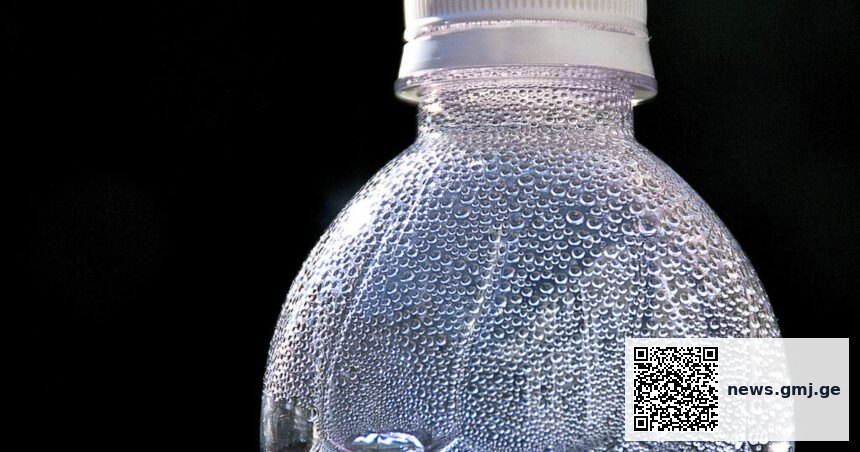
Photo: water bottle, by Muffet (Flickr), cropped for layout · Licensed CC BY 2.0 · Source
Plain-language summary of research published in the Georgian Medical Journal. Written for the general public by the GMJ News editorial team.
Microplastic contamination in bottled water is an emerging environmental health concern — but how well is that risk actually being communicated to the Georgian public? A media analysis in the Georgian Medical Journal tracks environmental health communication on plastic pollution across Georgian platforms over more than two years.

What Was Tracked
Using a mixed-methods approach combining structured literature review, comparative policy analysis, and a media communication dataset, researchers systematically identified environmental health communication addressing plastic pollution and microplastic exposure disseminated across Georgian public health platforms and national media outlets between January 2024 and March 2026.
Who’s Actually Doing the Communicating
Of 31 total publications found, the overwhelming majority — 26, or 83.9% — originated from a single specialised public health communication platform within the PHIG ecosystem, Sheniekimi.ge. Five more appeared in Georgian media outlets quoting or referencing Professor Giorgi Pkhakadze. Targeted screening of major national portals, including Rustavi2 and Imedi News, found only a small number of genuinely independent media reports on the topic.
The Scale of Everyday Exposure
Putting the risk in concrete terms, the analysis cites bottled water as by far the largest source of annual microplastic particle exposure among common routes — an estimated 86,000 particles per year from bottled water alone, ahead of seafood, inhalation, tap water, and other dietary sources combined.
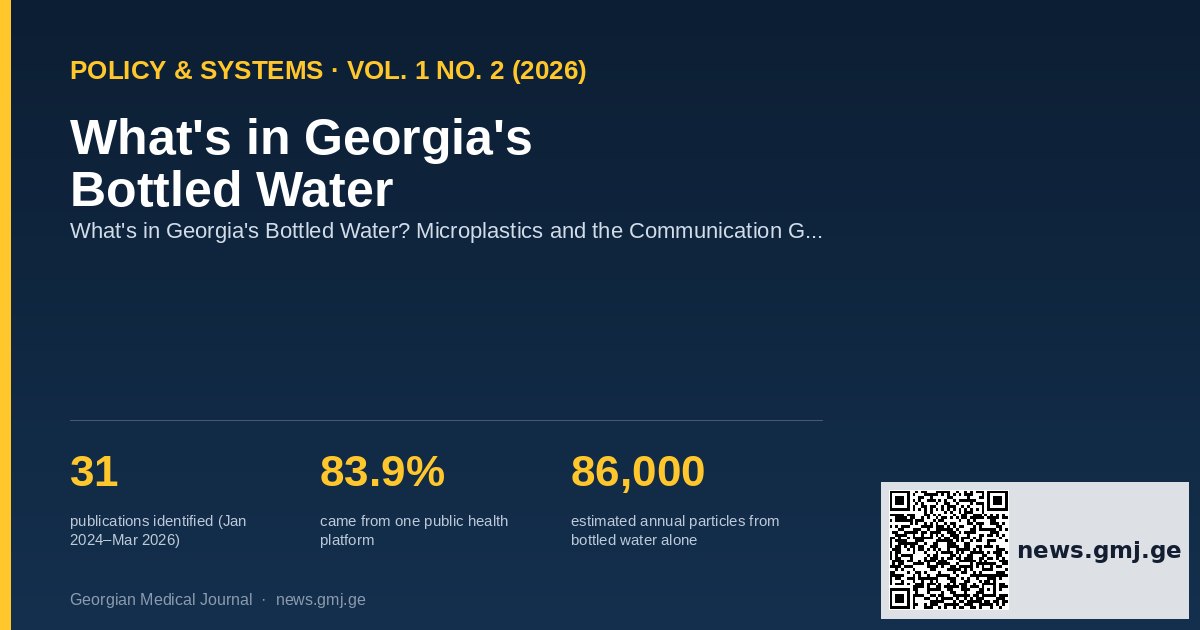
At a glance — the headline figures.
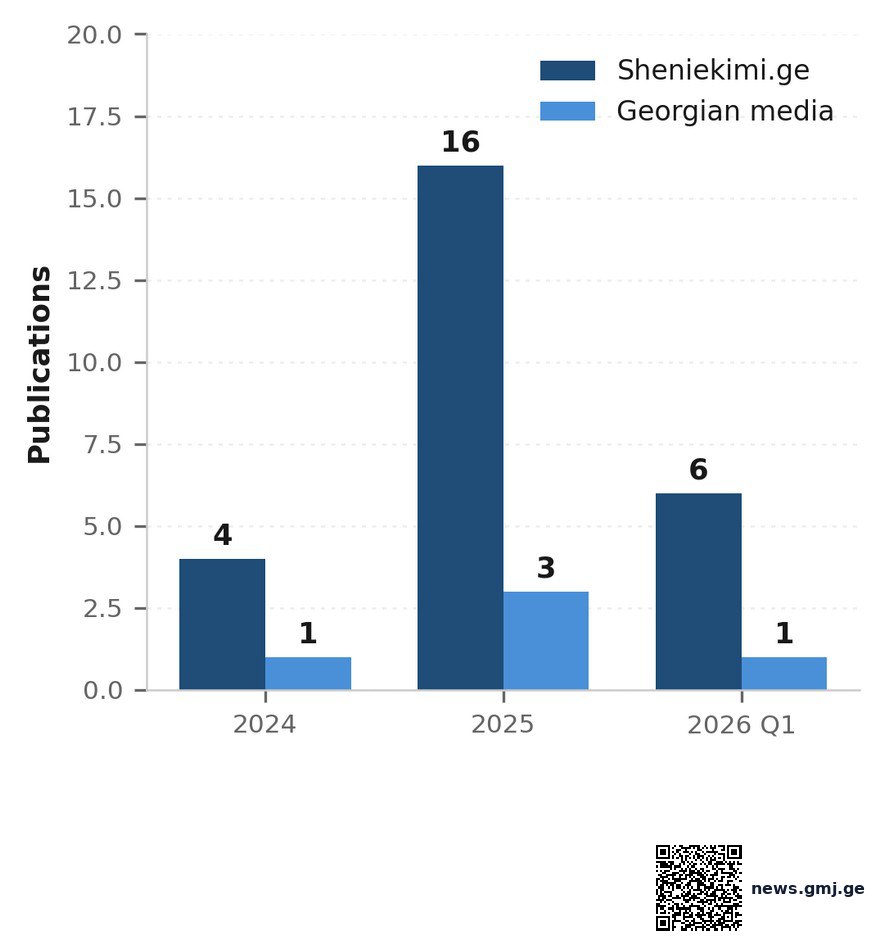
Estimated annual microplastic particle exposure by source, comparing bottled water against other common routes. Figure from the study. Source: Georgian Medical Journal, Vol. 1 No. 2 (2026), DOI: 10.66636/gmj.v1.i2.a34.
The study’s conclusion reads as both a public health finding and an institutional one: environmental health communication on this topic has increased significantly in Georgia in recent years, but it remains heavily concentrated in one specialised platform rather than broad-based independent media coverage. The authors position independent public health institutions as playing an outsized role in strengthening evidence-based risk communication precisely because mainstream coverage hasn’t caught up to the scale of the exposure data yet.
Read the Original Research
Original article: What’s in Georgia’s Bottled Water? Microplastics and the Communication Gap
Published in: Georgian Medical Journal, Vol. 1 No. 2 (2026)
DOI: 10.66636/gmj.v1.i2.a34
📄 Read the full article at gmj.ge →
Georgian Medical Journal (GMJ) · ISSN 3088-4322 · gmj.ge · Open Access CC BY 4.0 · Published by the Public Health Institute of Georgia (PHIG). This summary is an independent editorial product of GMJ News; for clinical decisions, consult the original peer-reviewed article and a qualified professional.
Was this article helpful?
Disclaimer. This article is health journalism intended for general information and education. It is not medical advice and is not a substitute for professional diagnosis or treatment. Always consult a qualified healthcare provider about your individual circumstances. Full disclaimer →
Related Coverage




Editorial standards. This article was produced under the GMJ News editorial process, with oversight by the GMJ Editorial Board. Our editorial process. Spotted an error? Contact the editorial team.