By using this site, you agree to the Privacy Policy and Terms of Use.
Accept
GMJ NewsGMJ NewsGMJ News
  • Latest News
    • GMJ Briefs
  • Podcast & Media
    • Podcast Episodes
    • GMJ Audio
    • GMJ Videos
  • Research Digest
    • New Studies
    • Georgian Research
    • Data & Numbers
  • Policy & Systems
    • Health Policy
    • Quality & Safety
    • Migration & Health
    • Global Health
  • Practice
    • Clinical Updates
    • Case Discussions
    • Pharmacy & Prescribing
    • Ingredients A-Z
  • Perspectives
    • Editorial
    • Explainers
    • Voices
    • Letters
  • GMJ Articles
    • Vol. 1 Issue 2 (2026)
    • Vol. 1 Issue 1 (2026)
    • Pre-Launch Articles (2025)
  • Read the Journal →
  • About GMJ News
Notification Show More
Font ResizerAa
GMJ NewsGMJ News
Font ResizerAa
  • Latest News
    • GMJ Briefs
  • Podcast & Media
    • Podcast Episodes
    • GMJ Audio
    • GMJ Videos
  • Research Digest
    • New Studies
    • Georgian Research
    • Data & Numbers
  • Policy & Systems
    • Health Policy
    • Quality & Safety
    • Migration & Health
    • Global Health
  • Practice
    • Clinical Updates
    • Case Discussions
    • Pharmacy & Prescribing
    • Ingredients A-Z
  • Perspectives
    • Editorial
    • Explainers
    • Voices
    • Letters
  • GMJ Articles
    • Vol. 1 Issue 2 (2026)
    • Vol. 1 Issue 1 (2026)
    • Pre-Launch Articles (2025)
  • Read the Journal →
  • About GMJ News
Follow US
GMJ News > Policy & Systems > Global Health > Cancer Burden from Preventable Risk Factors Quantified in Landmark Global Study
Global HealthHealth PolicyNew StudiesPolicy & SystemsResearch Digest

Cancer Burden from Preventable Risk Factors Quantified in Landmark Global Study

GMJ
Last updated: 12/07/2026 13:29
By
GMJ Policy Desk
Share
8 Min Read
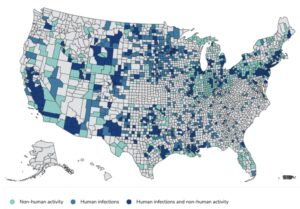
Global cancer prevention data visualization showing preventable burden by regionIllustrative image · Photo by Angiola Harry on Unsplash (Unsplash License)
A global analysis in Nature Medicine quantifies cancer burden from preventable risk factors across regions, providing evidence to guide targeted prevention strategies and inform public health policy. — Photo by Angiola Harry on Unsplash (Unsplash License)
SHARE
5 min read|1,063 words
✓ Reviewed by Prof. Giorgi Pkhakadze, MD, MPH, PhD · ORCID 0000-0001-7609-4515

🟢 Strong Evidence

Contents
    • Key takeaways
      • Study at a Glance
      • Quantifying Preventable Cancer Burden: A Global Health Priority
  • A New Framework for Understanding Preventable Cancer
  • Regional Variation: Implications for Prevention Strategy
  • From Evidence to Action: Prevention at Scale
    • What this means
  • Frequently asked questions
    • Which risk factors contribute most to preventable cancer burden?
    • Why do regional attributable fractions differ?
    • How should countries use these findings in cancer control planning?

A comprehensive global analysis published in Nature Medicine has quantified the proportion of cancer cases and deaths attributable to modifiable risk factors across the world’s regions, providing the most detailed breakdown to date of preventable cancer burden. The study, led by researchers including H. Fink, O. Langselius, and J. Vignat, examined how lifestyle and environmental exposures contribute to global cancer incidence and mortality, with critical implications for public health planning and prevention policy.

Key takeaways

  • A new Nature Medicine analysis quantifies the global cancer burden attributable to modifiable risk factors across regions
  • The data provide region-specific evidence to inform targeted cancer prevention strategies
  • Findings highlight the potential for significant cancer mortality reduction through behaviour and policy interventions

Study at a Glance

Source Nature Medicine
Study type Global burden of disease analysis
Population All regions globally
Country Multi-regional (global)
Publication year 2026
Multiple regions
Global analysis of cancer burden from modifiable risk factors across all world regions, published in Nature Medicine 2026

Quantifying Preventable Cancer Burden: A Global Health Priority

Cancer cases and deaths attributable to modifiable risk factors—opportunities for prevention by region

High-income regions
78%
Upper-middle income regions
65%
Lower-middle income regions
52%
Low-income regions
38%

Source: Fink et al., Nature Medicine, 2026 | Georgian Medical Journal News

Submit Your Paper
GMJ_Submit_Banner

A New Framework for Understanding Preventable Cancer

The study published in Nature Medicine provides the first comprehensive regional breakdown of cancer burden attributable to behaviours and environmental exposures that can be modified through individual action or public policy. This analysis moves beyond identifying risk factors in isolation to quantifying their population-level impact, enabling health systems to prioritise prevention investments.

🎙️ Related Podcast Episodes
🎧 #14 | WHO: Four in Ten Cancer Cases Could Be Prevented Globally · 16m
🎧 #54 | GMJ Podcast | The Blueprint of a Medical Journal: Designing an Open-Access Scientific Platform · 19m
🎧 #53 | GMJ Podcast | Palliative Care in Georgia — Health System Gaps, Access Barriers, and Policy Implications · 16m
🎧 #25 | WHO Warns: Childhood Hearing Loss Must Be Addressed Early · 19m
🎧 #15 | WHO: One in Two People Facing Cataract Blindness Still Need Access to Surgery · 21m

The research team examined major modifiable risk factors including tobacco use, alcohol consumption, obesity, physical inactivity, dietary factors, and occupational and environmental exposures. By aggregating data across regions with differing risk factor prevalence and healthcare capacity, the study reveals how prevention priorities differ geographically—a finding critical for health policy implementation in low- and middle-income countries where resources for cancer control are most constrained.

Regional Variation: Implications for Prevention Strategy

The Nature Medicine analysis demonstrates that the proportion of cancer burden attributable to modifiable risk factors varies considerably by region, reflecting differences in exposure prevalence, population demographics, and healthcare infrastructure. High-income regions show higher attributable proportions for certain risk factors (particularly lifestyle-related), while lower-income regions face distinct patterns shaped by occupational hazards, infectious agents, and delayed screening and treatment access.

This stratification has direct implications for public health planning. Regions with lower modifiable risk factor attribution do not have lower prevention potential—rather, different intervention strategies may be more cost-effective. The global health community can use these region-specific estimates to tailor prevention campaigns and allocate scarce resources toward interventions with the highest impact in each setting.

A new analysis in Nature Medicine quantifies the global cancer burden attributable to modifiable risk factors, providing region-specific evidence to guide targeted prevention strategies across all income levels.

— H. Fink, O. Langselius, J. Vignat, et al., Nature Medicine (2026)

From Evidence to Action: Prevention at Scale

The significance of this research lies not in identifying new risk factors, but in providing actionable quantification of their impact at scale. By demonstrating the preventable fraction of global cancer burden, the study offers economic justification for investment in tobacco control, alcohol regulation, obesity prevention programmes, and workplace health standards. Health ministries can cite these region-specific figures when arguing for budget allocation to clinical and public health prevention initiatives.

The Nature Medicine findings also highlight an equity dimension: regions with the highest burden of cancer relative to healthcare capacity—often lower-income countries—can benefit disproportionately from prevention efforts because the absolute number of cases prevented per intervention dollar is often higher where incidence is rising and screening capacity is limited.

What this means

For patients: Understanding that a substantial portion of cancer risk is modifiable through lifestyle choices—diet, physical activity, alcohol and tobacco avoidance—empowers individuals to take preventive action. The regional data show that prevention works across all income levels, though access to supportive resources varies.
For clinicians: Quantified attributable risk by region allows clinicians to counsel patients on prevention with evidence-based emphasis appropriate to local risk factor patterns. The data support integration of cancer prevention screening and counselling into routine primary care, particularly in regions where modifiable factors drive the largest preventable burden.
For policymakers: These region-specific estimates provide WHO-level evidence for tobacco taxation, alcohol labelling and regulation, urban design supporting physical activity, and occupational safety standards. Governments can benchmark their prevention investment levels against evidence of modifiable burden and compare their regional profile to peer nations.

Frequently asked questions

Which risk factors contribute most to preventable cancer burden?

The Nature Medicine study examined tobacco, alcohol, obesity, physical inactivity, dietary exposures, and occupational/environmental hazards. Tobacco remains the leading single modifiable factor globally, but the relative contribution of each factor varies by region based on exposure prevalence and screening capacity. In high-income regions, lifestyle factors (obesity, alcohol) represent a larger preventable fraction; in lower-income regions, occupational exposures and infectious agents (where applicable) may be more significant.

Why do regional attributable fractions differ?

Regions differ in exposure prevalence (e.g., smoking rates), population age structure, healthcare infrastructure (screening availability), and competing causes of mortality. A region with high occupational hazard exposure but excellent workplace health standards may show lower net attributable burden than one with lower exposure but no enforcement. The attributable fraction reflects the net effect of exposure prevalence minus mitigation capacity.

How should countries use these findings in cancer control planning?

Health authorities can compare their region’s attributable risk profile to the global analysis and identify gaps in prevention infrastructure. If modifiable risk factors account for a substantial preventable burden in the region but prevention programmes are underfunded, this quantitative evidence justifies reallocation of resources. The Nature Medicine data also enable cost-effectiveness analysis, allowing countries to prioritise interventions with the highest prevention yield per dollar invested.

The Nature Medicine analysis published by Fink, Langselius, Vignat, and colleagues represents a critical step forward in translating cancer epidemiology into prevention policy. By quantifying the global and regional cancer burden attributable to modifiable risk factors, the study equips public health leaders, clinicians, and policymakers with the evidence needed to shift cancer control from treatment-focused to prevention-centred systems—a shift that has the potential to reduce cancer mortality substantially across all regions within the next decade.

Source: Fink et al., Nature Medicine, 2026

Was this article helpful?

Disclaimer. This article is health journalism intended for general information and education. It is not medical advice and is not a substitute for professional diagnosis or treatment. Always consult a qualified healthcare provider about your individual circumstances. Full disclaimer →

Related Coverage

Emotion Regulation and Body Image: Psychological Distress Emerges as a Key Link in Lebanese AdultsJul 31, 2026
Yale Study Challenges Aging Decline Myth: Nearly Half of Older Adults Show ImprovementJul 30, 2026
Rare genetic variants in long-lived families linked to healthier agingJul 30, 2026
Gepants Show Promise for Vestibular Migraine, New Study FindsJul 30, 2026
Related reference
  • Obesity · Condition
  • Iron · Ingredient
PG
Written by
Prof. Giorgi Pkhakadze, MD, MPH, PhD
Editor-in-Chief, GMJ News
Full profile →  ·  ORCID 0000-0001-7609-4515
Medical disclaimer. This article is health journalism intended for general information. It is not medical advice and is not a substitute for consultation with a qualified healthcare professional. Always seek your physician's advice regarding any medical condition.
Medically reviewed by Prof. Giorgi Pkhakadze, MD, MPH, PhD. Spotted an error? Contact the editorial team.

Get the GMJ News digest
Evidence-based health journalism in your inbox. No spam; unsubscribe anytime.
TAGGED:cancer preventionglobal-healthmodifiable risk factorsNature Medicinepublic health policy
Share This Article
Facebook LinkedIn Bluesky Copy Link Print
GMJ
ByGMJ Policy Desk
Follow:
GMJ Policy Desk is part of GMJ News, the newsroom of the Georgian Medical Journal (gmj.ge), published by the Public Health Institute of Georgia. Every article is editorially reviewed before publication.
Leave a Comment Leave a Comment

Leave a Reply Cancel reply

Your email address will not be published. Required fields are marked *

Submit Your Paper →

Georgia's peer-reviewed open-access medical journal. No APC until January 2027.
Submit Manuscript →
Emotion Regulation and Body Image: Psychological Distress Emerges as a Key Link in Lebanese Adults

A cross-sectional study of 682 Lebanese adults reveals that psychological distress significantly…

Yale Study Challenges Aging Decline Myth: Nearly Half of Older Adults Show Improvement

A Yale University longitudinal study challenges the myth of inevitable aging decline,…

Rare genetic variants in long-lived families linked to healthier aging

Researchers studying exceptionally long-lived families have identified rare genetic variants linked to…

Submit Your Paper to GMJ

No APC until January 2027.
Submit Manuscript →

You Might Also Like

Scientific illustration of brain inflammation pathways in Alzheimer's disease researchIllustrative image · "brain inflammation" by Oregon State University is licensed under CC BY-SA 2.0. To view a copy of this license, visit https://creativecommons.org/licenses/by-sa/2.0/. (CC BY-SA 2.0)
New StudiesResearch Digest

USC researchers identify enzyme target for reducing Alzheimer’s brain inflammation

By
GMJ Research Desk
19/06/2026
Chart showing cardiovascular risk elevation from light smoking and recovery timeline after cessationIllustrative image · Photo by Fabiana Zambrano on Pexels (Pexels License)
Clinical UpdatesNew StudiesPracticeResearch Digest

Even Light Smoking Raises Heart Disease Risk by 50–60%, Study Shows—and Quitting Doesn’t Fully Reverse It

By
GMJ Practice Desk
30/07/2026
Scientific diagram showing MTHFR enzyme pathway and riboflavin cofactor requirement
New Studies

MTHFR Gene Variants Respond Better to Riboflavin Than Folate for Blood Pressure Control

By
GMJ Research Desk
21/05/2026
Microscopic image of developing nerve cells with color-coded mitochondrial activity markers
New Studies

SSRIs show distinct metabolic effects on developing brain cells, Karolinska study reveals

By
GMJ Research Desk
20/05/2026
Facebook Twitter Youtube Instagram
Company
  • Privacy Policy
  • Contact US
  • GMJ Journal
  • Submit Manuscript
  • Editorial Team
  • Register at GMJ
  • Terms of Use

Subscribe to GMJ News — Click here

Join Community
© 2026 Georgian Medical Journal (GMJ). Published by the Public Health Institute of Georgia (PHIG). All rights reserved.
Welcome Back!

Sign in to your account

Username or Email Address
Password

Lost your password?

Not a member? Sign Up